
No products in the cart.
Return To ShopHDFC BANK ACCOUNT:
- NXFEE INNOVATION,
HDFC BANK, MAIN BRANCH, PONDICHERRY-605004.
INDIA,
ACC NO. 50200090465140,
IFSC CODE: HDFC0000407.
₹16,000.00 Original price was: ₹16,000.00.₹10,000.00Current price is: ₹10,000.00.
Source : Tanner EDA
From : IEEE Transaction on Circuit and System II : Express Brief : Vol. 73, No. 1, January 2026.
Base paper abstract:
This brief presents a 25-Mbps 4-amplitude-shiftkeying (4-ASK) receiver front-end (RFE) for biomedical data telemetry via a series-resonant capacitive link. The RFE incorporates low-power clock and data recovery (CDR) circuitry for synchronization in which a novel highly linear trans conductance (Gm) cell is employed in the phase detector (PD) to mitigate any possible error decisions while comparing the phase difference between the input and feedback signals. The proposed RFE is fabricated in 65 nm 1P8M standard CMOS, the core circuit occupies 0.11 mm2, and consumes 2.9 mA from 1 V. While conducting ex vivo measurements using beef tissue and a series-resonant capacitive link, the proposed RFE is capable of processing 4-ASK data patterns up to 25 Mbps with bit error rate (BER) less than 10−3 and total jitter of ∼42 ns. Index Terms Amplitude-shift-keying (ASK), capacitive wireless data transfer (C–WDT), clock and data recovery (CDR), receiver front-end (RFE), series-resonant capacitive link.
List of the following materials will be included with the Downloaded Backup:
Objectives of the Proposed Work
Proposed abstract:
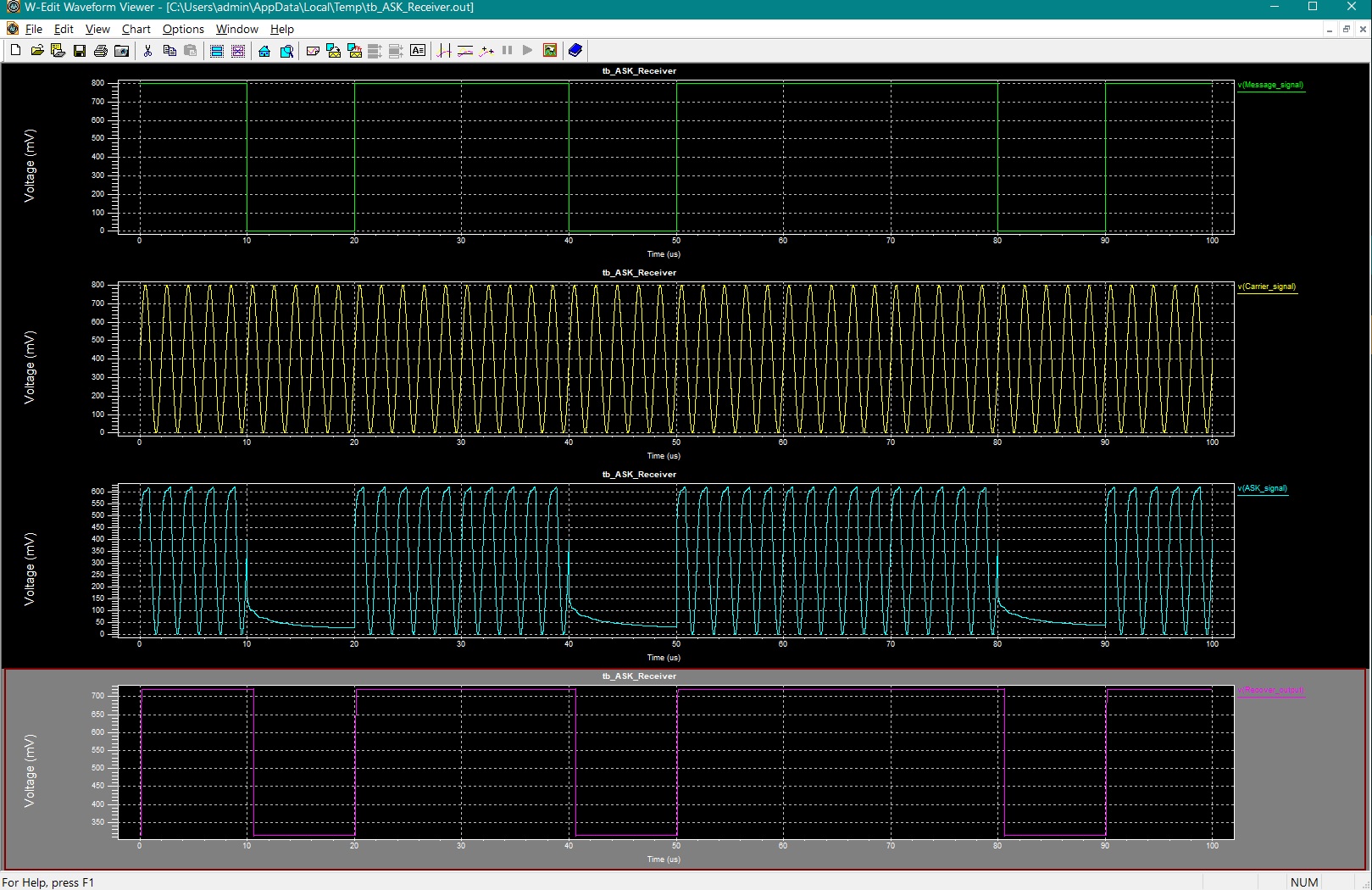
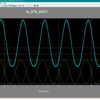
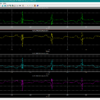
Wireless biomedical implants are increasingly used in applications such as neural monitoring, health sensing, and implant programming, where fast and reliable data transfer with very low power consumption is essential. Capacitive based wireless links offer advantages such as high bandwidth, improved biosafety, and better tolerance to tissue properties compared to inductive and RF links, and making them suitable for high-speed implant communication. However, these links suffer from signal attenuation, distortion through biological tissue, and challenges in accurate with clock and data recovery when multi-level modulation schemes are used. From the Existing ASK traditional and conventional clock and data recovery circuits are mainly designed for binary signals and often experience higher error rates, increased jitter, and unreliable operation when handling weak multi-level signals under varying conditions. But it the recent systems, will have a additional synchronization links with complex architectures are often required, its also have increasing power consumption and system complexity. To address these limitations, this work proposes a low-power, high-speed ASK receiver front-end using a capacitive link, capable of reliably recovering both data and clock from a single received signal. The proposed design converts the received ASK waveform into stable PAM-4 digital levels and employs an improved clock and data recovery architecture with a highly linear trans conductance-based phase detector to enhance phase detection accuracy and reduce jitter. Adaptive biasing techniques are used to maintain linear operation over a wide input range, improving robustness against tissue-induced signal variations. The novelty of this work lies in the combination of PAM-4-based CDR operation and a highly linear phase detection approach optimized for biomedical capacitive links. The proposed receiver is evaluated through circuit-level simulations using Tanner EDA at 45nm CMOS Technology and validated using realistic operating conditions, also demonstrating low power consumption, improved signal integrity, stable clock recovery, and reliable high-speed performance suitable for implantable biomedical applications.
” Thanks for Visit this project Pages – Buy It Soon “
Payment Method :
HDFC BANK ACCOUNT:
₹10,000.00 Original price was: ₹10,000.00.₹6,000.00Current price is: ₹6,000.00.
₹16,000.00 Original price was: ₹16,000.00.₹10,000.00Current price is: ₹10,000.00.
Copyright © 2026 Nxfee Innovation.
A 25-Mb/s 4-ASK Receiver Front...
₹16,000.00 Original price was: ₹16,000.00.₹10,000.00Current price is: ₹10,000.00.