
Recent VLSI IEEE Transactions – Low Power – High Speed – Area Efficient – Image Processing – Network on Chip – System on Chip – Verification
[vc_row background=”secondary”][vc_column][vc_custom_heading text=”VLSI IEEE Transactions ONLINE SHOP” font_container=”tag:h2|font_size:28|text_align:center|color:%23dd394a” google_fonts=”font_family:Coda%3Aregular%2C800|font_style:400%20regular%3A400%3Anormal”][mpc_tabs preset=”mpc_preset_19″ decor_line=”true” decor_color=”#f9f9f9″ decor_active=”#dd3e4e” decor_size=”2″ decor_gap=”8″ font_preset=”mpc_preset_1″ font_color=”#6b6b6b” font_size=”16″ font_line_height=”1.75″ font_transform=”none” font_align=”left” content_padding_divider=”true” content_padding_css=”padding-top:20px;padding-right:0px;padding-left:0px;” padding_css=”padding:30px;” margin_divider=”true” margin_css=”margin-right:10px;margin-left:20px;” mpc_button__font_preset=”mpc_preset_17″ mpc_button__font_color=”#707070″ mpc_button__font_size=”18″ mpc_button__font_transform=”capitalize” mpc_button__font_align=”center” mpc_button__padding_divider=”true” mpc_button__padding_css=”padding-bottom:10px;” mpc_button__hover_font_color=”#0167aa” mpc_button__hover_background_effect=”expand-horizontal” button_margin_divider=”true” button_margin_css=”margin-right:20px;”][mpc_tab title=”Low power VLSI Design” tab_id=”1465008165-1-65″]
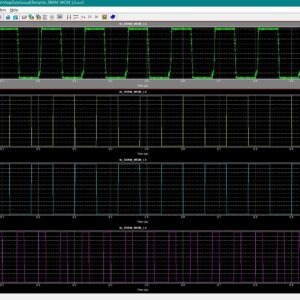
A Fast and Energy-Efficient Level Shifter with Complementary Output Buffer for Energy-Constrained Systems
This brief presents a 55-nm level shifter (LS) that enables wide voltage range conversion from 80 mV to 1.2 V with high energy efficiency and fast transition speed. The proposed design incorporates a complementary output buffer and an assist discharge path to suppress the short-circuit current and enhance the transition speed. A multi threshold transistor strategy is adopted to expand the input range and reduce static power. Measurement results across 15 samples demonstrate robust subthreshold performance with 4.4-ns transition delay and 49.1-fJ/transition energy during 0.3–1.2-V conversion at 1 MHz. The measured average minimum convertible input voltages are 80 and 139 mV at input frequencies of 50 kHz and 1 MHz, respectively. The compact layout occupies only 7.96 µm 2. Compared to the best benchmarked prior work, the proposed LS achieves 33.8% improvement in energy-delay metrics, making it a highly efficient and scalable solution for energy constrained systems and the Internet of Things (IoT). Index Terms: Current mirror (CM), dual supply, level shifter (LS), low power, subthreshold.
List of the following materials will be included with the Downloaded Backup: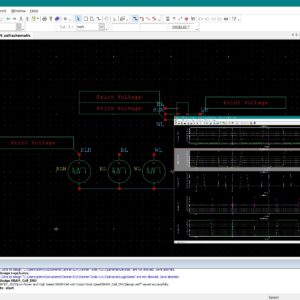
Low-Power and High-Speed SRAM Cells With Double-Node Upset Self-Recovery for Reliable Applications
Transistor sizing and spacing are constantly decreasing due to the continuous advancement of CMOS technology. The charge of the sensitive nodes in the static random access memory (SRAM) cell gradually decreases, making the SRAM cell more and more sensitive to soft errors, such as single node upsets (SNUs) and double node upsets (DNUs). Therefore, two types of radiation-hardened SRAM cells are proposed in this article. First, a low-power DNU self-recovery S6P8N cell is proposed. This cell can realize SNU self-recovery from all sensitive nodes as well as realize partial DNUs self-recovery and has low-power consumption overhead. Second, we propose a high-speed DNU self-recovery S8P6N cell, which has a soft-error tolerance level similar to the S6P8N. Furthermore, it reduces the read access time (RAT) and write access time (WAT). Simulation results show that the proposed cells are self-recovery for all SNUs and most of DNUs. Compared with RHD12, QCCM12T, QUCCE12T, RHMD10T, SEA14T, RHM-12T, S4P8N, S8P4N, RH-14T, HRLP16T, CC18T, and RHM, the average power consumption of S6P8N is reduced by 48.78%, and the average WAT is reduced by 6.62%. While the average power consumption of S8P6N is reduced by 23.64%, and the average WAT and RAT by 9.07% and 36.84%, respectively. Index Terms: Double-node upsets (DNUs), high-speed, low power, self-recovery, static random access memory (SRAM).
List of the following materials will be included with the Downloaded Backup: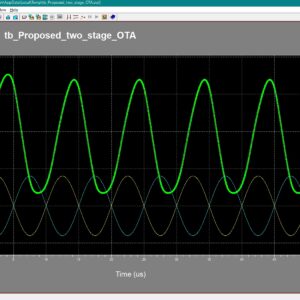
A Two-Stage CMOS Amplifier with High Degree of Stability for All Capacitive Loads
This article presents the conception, design, and realization of a fully differential two-stage CMOS amplifier, that is, unconditionally stable for any value of the capacitive load. This is simply achieved by sending a scaled replica of the output stage current to the amplifier virtual ground in order to create a left half-plane (LHP) zero in the loop gain that either cancels or tracks the output pole in all process, voltage, and temperature (PVT) conditions. Consequently, from a stability point of view, the amplifier behaviour resembles that of a single-pole OTA. Starting from an existing two-stage gain-programmable amplifier, designed in a 0.18-µm bipolar-CMOS-DMOS (BCD) process that was able to drive only 10 pF without encountering into stability issues, a simple circuit has been added to extend the stability to any capacitive load value. An interesting and unusual method, based on the frequency behaviour of the unloaded closed-loop amplifier output impedance, has been introduced to further verify the unconditional stability of this solution. Measurements show a high degree of stability in any load conditions. In the used 0.18-µm BCD technology, silicon area and current consumption of the extra circuit are only 0.0004 mm and 2 µA, respectively, with a 5-V power supply.
List of the following materials will be included with the Downloaded Backup:
Design and analysis of Reversible Approximate Full Adder and its applications with Optimized 4:2, 5:2, 7:2 Compressors for Efficient Approximate Multipliers
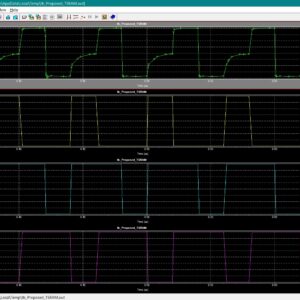
Energy-Efficient Buffer-Based Ternary SRAM Cell With Application to Image Processing
Base Paper Abstract:
This paper presents a design of a variation-resilient and energy-efficient ternary memory cell (TSRAM) suited for power-demanding internet-of-things (IoT) applications that run on batteries. The TSRAM cell utilizes a latch composed of an efficient ternary buffer (TBUF) with positive feedback, a single bit line, and a transmission gate for switching access, with an overall area only about 39% more than binary 6T SRAM. The threshold voltage (Vth) tuning of carbon nanotube field-effect transistor (CNTFET) devices has been explored to achieve the three storage levels. Simulations were conducted using the standard Stanford 32-nm CNTFET model file in the Synopsis HSPICE simulator. The projected design offers substantial reductions of 54.94% in real power, 67.06% in write power, and 21.59% in area compared to the best buffer-based TSRAM designs. These power savings are achieved by minimizing the transistor count and eliminating any direct current path between VDD and ground in the TBUF design for getting logic ‘1’. Furthermore, the proposed design demonstrates the highest logic ‘1’ static noise margin (SNM1) and shows resilience to process, voltage, and temperature (PVT) variations. The TSRAM electrical quality matrix (TEQM), a crucial figure of merit, indicates the superior performance of the proposed design for IoT applications. The study was further extended to conduct simulations and report the performance metrics of the proposed TSRAM array. Ultimately, to evaluate the real-world application of the triple memory structures, the pixel-by-pixel storage process of a grayscale image with three-value data content is performed based on a hardware algorithm. The obtained results demonstrate that the proposed TSRAM architecture has about a 26.3% improvement in hardware performance compared to its highest performing counterpart scheme.
List of the following materials will be included with the Downloaded Backup: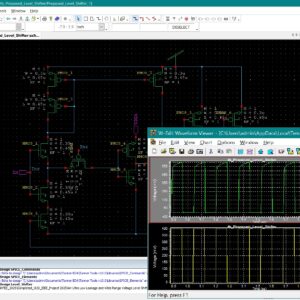
An Ultra-Low Leakage and Wide-Range Voltage Level Shifter for Low-Power Digital CMOS VLSIs
Base Paper Abstract:
This brief presents an ultra-low leakage and fast conversion level shifter with wide-range voltage conversion and frequency. The proposed level shifter adopts the leakage shutoff transistors, which can completely cut off the static current when the circuits stand by. The pull-down network employs the low-threshold transistor for the fast fall transition. The proposed level shifter also solves the swing problem and achieves a fast conversion by using the voltage hysteresis transistor, strengthening the pull-up network to ensure the internal node is fast and fully charged. Measurement results based on the 55 nm process show that the average ultra-low leakage of the proposed level shifter is 34.8 pW when converting from 0.3 V input to 1.2 V output. Meanwhile, the average propagation delay and the average energy per transition of the proposed level shifter are 13.86 ns and 22.71 fJ for an input frequency of 1 MHz, respectively. The maximum conversion range is from 0.13 V to 1.2 V. Index Terms: Level shifter, ultra-low power, multi-supply voltage circuit, sub-threshold operation.
List of the following materials will be included with the Downloaded Backup: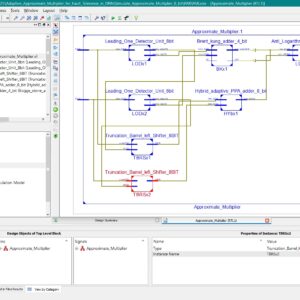
AdAM: Adaptive Approximate Multiplier for Fault Tolerance in DNN Accelerators
Base Paper Abstract:
Deep Neural Network (DNN) hardware accelerators are essential in a spectrum of safety-critical edge-AI applications with stringent reliability, energy efficiency, and latency requirements. Multiplication is the most resource-hungry operation in the neural network’s processing elements. This paper proposes a scalable adaptive fault-tolerant approximate multiplier (AdAM) tailored for ASIC-based DNN accelerators at the algorithm and circuit levels. AdAM employs an adaptive adder that relies on an unconventional use of input Leading One Detector (LOD) values for fault detection by optimizing unutilized adder resources. A gate-level optimized LOD design and a hybrid adder design are also proposed as a part of the adaptive multiplier to improve the hardware performance. The proposed architecture uses a lightweight fault mitigation technique that sets the detected faulty bits to zero. The hardware resource utilization and the DNN accelerator’s reliability metrics are used to compare the proposed solution against the Triple Modular Redundancy (TMR) in multiplication, unprotected exact multiplication, and unprotected approximate multiplication. It is demonstrated that the proposed architecture enables a multiplication with a reliability level close to the multipliers protected by TMR while at the same time utilizing 2.74× less area and with 39.06% less power-delay product compared to the exact multiplier. Moreover, it has similar area, delay, and power consumption parameters compared to the state-of-the-art approximate multipliers with similar accuracy while providing fault detection and mitigation capability. Index Terms Deep neural networks, approximate computing, circuit design, reliability, DNN accelerator.
List of the following materials will be included with the Downloaded Backup: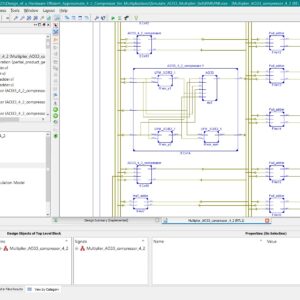
Design of a Hardware Efficient Approximate 4-2 Compressor for Multiplication in Image Processing
Base Paper Abstract:
This letter presents a novel hardware-efficient approximate 4-2 compressor design that significantly enhances accuracy through a systematic analysis of input patterns obtained from practical applications. We incorporate a majority operation and a compound gate in the compressor design to effectively boost hardware efficiency in multiplications. Our design approach results in substantial error reductions, with normalized mean error distance (NMED) and mean relative error distance (MRED) decreasing by up to 74.84% and 82.04%, respectively, compared to existing approximate multipliers discussed in this letter. When implemented in a 32-nm CMOS technology, the approximate multiplier adopting the proposed 4-2 compressor achieves excellent hardware efficiency, reducing area, power, and energy consumption by up to 8.95%, 13.02%, and 13.02%, respectively, compared to the other alternatives. Moreover, our design delivers enhanced performance in image processing tasks, achieving up to a 4.84× increase in peak signal-to-noise ratio (PSNR) compared to other designs, all while optimizing hardware efficiency. Index Terms—Approximate multiplier, majority operation, compound gate, image processing, approximate 4-2 compressor.
List of the following materials will be included with the Downloaded Backup: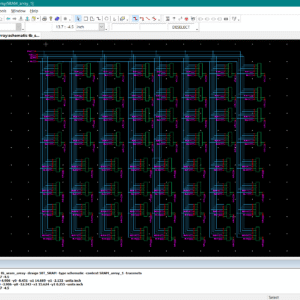
Full-Array Boolean Logic CIM Macro with Self-Recycling 10T-SRAM Cell for AES Systems
Base Paper Abstract:
Computing in memory (CIM), which alleviates the need to transfer a large amount of data between processor and memory, significantly reducing latency and energy consumption, is a promising new computing architecture for addressing the von Neumann bottleneck problem. This article proposes a CIM array structure composed of self-recycling 10T static random access memory (SRAM) cells, which can realize orthogonal data writing, and multiple Boolean logical operations for the entire array. The self-recycling and full-array activation characteristics are extremely suitable for accelerating diverse data processing algorithms such as the Advanced Encryption Standard (AES). A 4-kb SRAM is implemented in 55-nm CMOS technology to verify the effectiveness of the design. Compared with other state-of-threat architectures, the throughput and the operating frequency of the proposed CIM macro are increased to 843 GOPS/kb (2.64×) and 823.7 MHz (2.6×), respectively. The energy efficiency reaches 246.9 TOPS/W. When applied to the AES, the energy consumption is 35.77% less than the digital CIM architecture that is not self-recycling.
List of the following materials will be included with the Downloaded Backup: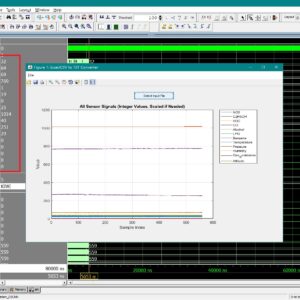
FPGA Implementation for Odor Identification with Depthwise Separable Convolutional Neural Network
Base Paper Abstract:
The integrated electronic nose (e-nose) design, which integrates sensor arrays and recognition algorithms, has been widely used in different fields. However, the current integrated e-nose system usually suffers from the problem of low accuracy with simple algorithm structure and slow speed with complex algorithm structure. In this article, we propose a method for implementing a deep neural network for odor identification in a small-scale Field-Programmable Gate Array (FPGA). First, a lightweight odor identification with depthwise separable convolutional neural network (OIDSCNN) is proposed to reduce parameters and accelerate hardware implementation performance. Next, the OI-DSCNN is implemented in a Zynq-7020 SoC chip based on the quantization method, namely, the saturation-flooring KL divergence scheme (SF-KL). The OI-DSCNN was conducted on the Chinese herbal medicine dataset, and simulation experiments and hardware implementation validate its effectiveness. These findings shed light on quick and accurate odor identification in the FPGA.
List of the following materials will be included with the Downloaded Backup: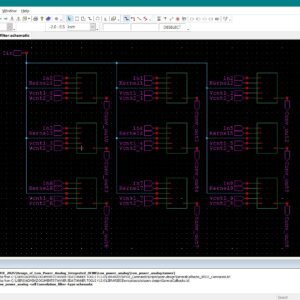
Design of a Low-Power Analog Integrated Deep Convolutional Neural Network
Base Paper Abstract:
In this article, a framework for the analog implementation of a deep convolutional neural network (CNN) is introduced and used to derive a new circuit architecture which is composed of an improved analog multiplier and circuit blocks implementing the ReLU activation function and the argmax operator. The operating principles of the individual blocks, as well as those of the complete architecture, are analysed and used to realize a low-power analog classifier, consuming less than 1.8 µW. The proper operation of the classifier is verified via a comparison with a software equivalent implementation and its performance is evaluated against existing circuit architectures. The proposed architecture is implemented in a TSMC 90-nm CMOS process and simulated using Cadence IC Suite for both schematic and layout design. Corner and Monte Carlo mismatch simulations of the schematic and the physical circuit (post layout) were conducted to evaluate the effect of transistor mismatches and process voltage temperature (PVT) variations and to showcase a proposed systematic method for offsetting their effect.
List of the following materials will be included with the Downloaded Backup: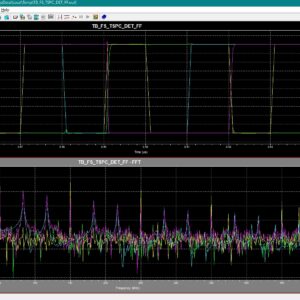
Low-Power, Low-Energy, Static, Contention-Free, TSPC Dual-Edge Triggered Flip-Flops
Base Paper Abstract:
The dual edge-triggered flip-flop samples the data on both the positive and negative edges of the clock. Hence, it can lead to lower clock relative power consumption as compared to the single-edge triggered flip-flop while maintaining the same data throughput. In this paper, we present two low-power, low-energy dual-edge triggered TSPC flip-flops based on latch-mux type methodology. These two flip-flops, Low-Power at Low Data Activity (LPLD-DET), and Low-Power at High Data Activity (LPHD-DET) are suitable for low-power application. These flip-flops are fully static and contention-free. The post-layout simulation results in TSMC CMOS 65 nm technology suggest that the proposed LPLD-DET is the most power-efficient dual-edge triggered flip-flop for low data activities up to 30%, and LPHD-DET is the most power-efficient dual-edge triggered flip-flop for higher data activities from 45% compared to the other state of-the-art dual-edge triggered TSPC flip-flops.
List of the following materials will be included with the Downloaded Backup: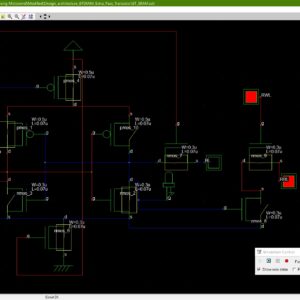
Low voltage high speed 8T SRAM cell for ultra-low power applications
Proposed Abstract:
The usage of portable devices increasing rapidly in the modern life has led us to focus our attention to increase the performance of the SRAM circuits, especially for low power applications. Basically in Six-Transistor (6T) SRAM cell either read or write operation can be performed at a time whereas, in 7T SRAM cell using single ended write operation and single ended read operation both write and read operations will be accomplished simultaneously at a time respectively. When it comes to operate in sub threshold region, single ended read operation will be degraded severely and single ended write operation will be severely degraded in terms of write-ability at lower voltages. To encounter these complications, an eight transistor SRAM cell is proposed. It performs single ended read operation and single ended write operation together even at sub threshold region down to 0.1V with improved read-ability using read assist and improved dynamic write-ability which helps in reducing the consumption of power by attaining a lower data retention voltage point. To reduce the total power consumption in the circuits, two extra access transistors are used in 8T SRAM cell which also helps in reducing the overall delay.
List of the following materials will be included with the Downloaded Backup: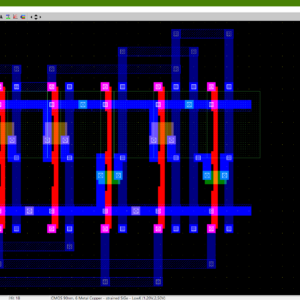
Design and Implementation of Arithmetic Logic Unit in DSCH3 and Microwind
Proposed Abstract:
The Arithmetic Logic Unit (ALU) is a fundamental component in digital systems, particularly in the central processing units (CPUs) of microprocessors, where it executes essential arithmetic and logical functions. This paper presents the design and implementation of an 8-bit Arithmetic Logic Unit (ALU) using CMOS technology, developed and simulated in DSCH3 and Microwind environments. The primary goal of this research is to design an efficient and compact ALU optimized for performance and area efficiency. The 8-bit ALU performs eight operations: ripple carry addition, ripple borrow subtraction, multiplication, XOR, left shift, right shift, NAND, and NOR. Each logic gate within the ALU is constructed using CMOS logic to enhance power efficiency and integration density. This paper provides a detailed description of the ALU's CMOS-based architecture, its key components, and the control mechanism for operation selection. Performance metrics, including speed, area efficiency, and power consumption, are analyzed to assess the ALU’s effectiveness in CMOS technology.
List of the following materials will be included with the Downloaded Backup: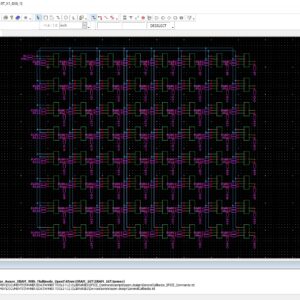
Soft-Error-Aware SRAM with Multinode Upset Tolerance for Aerospace Applications
Base Paper Abstract:
As technology scales down, the critical charge (QC) of vulnerable nodes decreases, making SRAM cells more susceptible to soft errors in the aerospace industry. This article proposes a Soft-Error-Aware 16T (S8P8N) SRAM cell for aerospace applications to address this issue. The properties of S8P8N are evaluated and compared with 6T, DICE, QUCCE12T, WEQUATRO, RHBD10T, RHBD12T, S4P8N, SEA14T, and SRRD12T. Simulation results indicate that all vulnerable nodes and key node pairs of the proposed cell can recover to their original states when affected by a soft error. Additionally, it can recover from key multinode upsets. The write speed of the proposed cell is found to be reduced by 20.3%, 50.1%, 74.1%, 63.7%, and 50.41% compared to 6T, DICE, QUCCE12T, WEQUATRO, and RHBD10T, respectively. The read speed of the proposed cell is found to be reduced by 56.6%, 52.2%, 62.5%, and 35.2% compared to 6T, SRRD12T, RHBD12T, and S4P8N, respectively. It also shows that the hold power of the proposed cell is found to be reduced by 14.1%, 13.8%, 17.7%, and 23.4% compared to DICE, WEQUATRO, RHBD10T, and RHBD12T. Furthermore, the read static noise margin (RSNM) of the proposed cell is found to be enhanced by 157%, 67%, and 32% compared to RHBD12T, SEA14T, and SRRD12T. All these improvements are achieved with a slight area penalty.
List of the following materials will be included with the Downloaded Backup: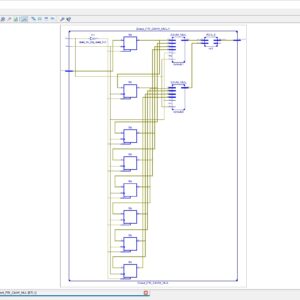
Hybrid Protection of Digital FIR Filters
Base Paper Abstract:
A digital finite impulse response (FIR) filter is a ubiquitous block in digital signal processing applications and its behavior is determined by its coefficients. To protect filter coefficients from an adversary, efficient obfuscation techniques have been proposed, either by hiding them behind decoys or replacing them by key bits. In this article, we initially introduce a query attack that can discover the secret key of such obfuscated FIR filters, which could not be broken by the existing prominent attacks. Then, we propose a first of its kind hybrid technique, including both hardware obfuscation and logic locking using a point function for the protection of parallel direct and transposed forms of digital FIR filters. Experimental results show that the hybrid protection technique can lead to FIR filters with higher security while maintaining the hardware complexity competitive or superior to those locked by prominent logic locking methods. It is also shown that the protected multiplier blocks and FIR filters are resilient to existing attacks. The results on different forms and realizations of FIR filters show that the parallel direct form FIR filter has a promising potential for a secure design.
List of the following materials will be included with the Downloaded Backup: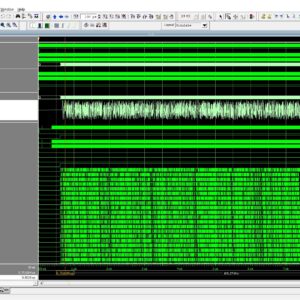
A Lightweight True Random Number Generator for Root of Trust Applications
Base Paper Abstract:
There are many schemes proposed to protect integrated circuits (ICs) against an unauthorized access and usage, or at least to mitigate security risks. They lay foundations for hardware roots of trust whose crucial security primitives are generators of truly random numbers. In particular, such generators are used to yield one-time challenges (nonces) supporting the IC authentication protocols employed to counteract potential threats such as untrusted users accessing ICs. However, IC vendors raise several concerns regarding the complexity of these solutions, both in terms of area overhead, the impact on the design flow, and testability. These concerns have motivated this work presenting a simple, yet effective, all-digital lightweight and self-testable random number generator to produce a nonce. It builds on a generic ring generator architecture, i.e., an area and time optimized version of a linear feedback shift register, driven by a multiple-output ring oscillator. A comprehensive evaluation, based on three statistical test suits from NIST and BSI, show feasibility and efficiency of the proposed scheme and are reported herein.
List of the following materials will be included with the Downloaded Backup: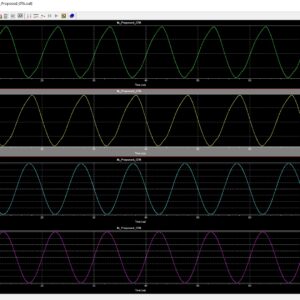
Implementation of a Multipath Fully Differential OTA in 0.18-μm CMOS Process
Base Paper Abstract:
This brief implements a highly efficient fully differential trans conductance amplifier, based on several input-to-output paths. Some traditional techniques, such as positive feedback, nonlinear tail current sources, and current mirror-based paths, are combined to increase the trans conductance, thus leading to larger dc gain and higher gain bandwidth (GBW) product. Two flipped voltage-follower (FVF) cells are employed as variable current sources to provide class-AB operation and adaptive biasing of all other drivers. The proposed structure includes several input-to-output paths that play the role of dynamic current boosters during the slewing phase, thus improving the slew rate (SR) performance. The circuit was fabricated in a TSMC 0.18-µm CMOS process with a silicon area of 54.5 × 30.1 µm. Experimental results show a GBW of 173.3 MHz, a dc gain of 72.7 dB, and an SR of 139.4 V/µs for a capacitive load of 2 × 5 pF. The proposed circuit consumes 619 µW of power, under a supply voltage of 1.8 V.
List of the following materials will be included with the Downloaded Backup: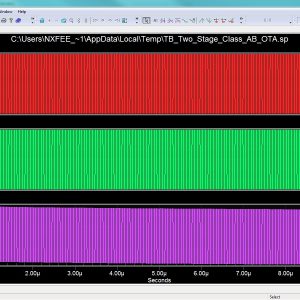
Two-Stage OTA With All Subthreshold MOSFETs and Optimum GBW to DC-Current Ratio
Base Paper Abstract:
An approach for the design of two-stage class AB OTAs with sub-1µA current consumption is proposed and demonstrated. The approach employs MOS transistors operating in subthreshold and allows maximum gain-bandwidth product (GBW) to be achieved for a given DC current budget, by setting optimum distribution of DC currents in the two amplifier stages. Following this strategy, a class AB OTA was designed in a standard 0.5-µm CMOS technology supplied from 1.6-V and experimentally tested. Measured GBW was 307 kHz with 980-nA DC current consumption while driving an output capacitance of 40 pF with an average slew rate of 96 V/ms.
List of the following materials will be included with the Downloaded Backup: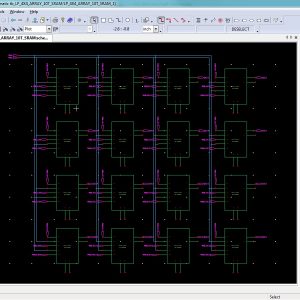
A Reliable Low Standby Power 10T SRAM Cell With Expanded Static Noise Margins
Abstract:
This paper explores a low standby power 10T (LP10T) SRAM cell with high read stability and write-ability (RSNM/WSNM/WM). The proposed LP10T SRAM cell uses a strong cross-coupled structure consisting standard inverter with a stacked transistor and Schmitt-trigger inverter with a double-length pull-up transistor. This along with the read path separated from true internal storage nodes eliminates the read-disturbance. Furthermore, it performs its write operation in pseudo differential form through write bit line and control signal with a write-assist technique. To estimate the proposed LP10T SRAM cell’s performance, it is compared with some state-of-the-art SRAM cells using HSPICE in 16-nm CMOS predictive technology model at 0.7 V supply voltage under harsh manufacturing process, voltage, and temperature variations. The proposed SRAM cell offers 4.65X/1.57X/1.46X improvement in RSNM/WSNM/WM and 4.40X/1.69X narrower spread in RSNM/WM compared to the conventional 6T SRAM cell. Furthermore, it shows 1.26X/1.08X/1.01X higher RSNM/WSNM/WM and 1.71X/1.25X tighter/wider spread in RSNM/WM compared to the best studied SRAM cells. The proposed SRAM cell indicates 74.48%/1.41% higher/lower read/write delay compared to the 6T SRAM cell. Moreover, it exhibits the third-(second-) best read (write) dynamic power, consuming 29.69% (26.87%) lower than the 6T SRAM cell. The leakage power is minimized by the proposed design, which is 37.35% and 12.08% lower than that of the 6T and best studied cells, respectively. Nonetheless, the proposed LP10T SRAM cell occupies 1.313X higher area compared to the 6T SRAM cell.
List of the following materials will be included with the Downloaded Backup: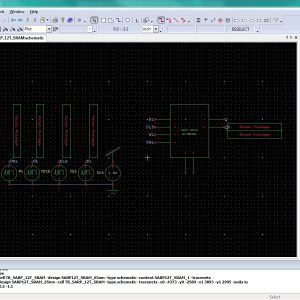
Soft-Error-Aware Read-Stability-Enhanced Low-Power 12T SRAM With Multi-Node Upset Recoverability for Aerospace Applications
Abstract:
With the advancement of technology, the size of transistors and the distance between them are reducing rapidly. Therefore, the critical charge of sensitive nodes is reducing, making SRAM cells, used for aerospace applications, more vulnerable to soft-error. If a radiation particle strikes a sensitive node of the standard 6T SRAM cell, the stored data in the cell are flipped, causing a single-event upset (SEU). Therefore, in this paper, a Soft-Error-Aware Read-Stability-Enhanced Low Power 12T (SARP12T) SRAM cell is proposed to mitigate SEUs. To analyze the relative performance of SARP12T, it is compared with other recently published soft-error-aware SRAM cells, QUCCE12T, QUATRO12T, RHD12T, RHPD12T and RSP14T. All the sensitive nodes of SARP12T can regain their data even if the node values are flipped due to a radiation strike. Furthermore, SARP12T can recover from the effect of single event multi-node upsets (SEMNUs) induced at its storage node pair. Along with these advantages, the proposed cell exhibits the highest read stability, as the ‘0’-storing storage node, which is directly accessed by the bit line during read operation, can recover from any upset. Furthermore, SARP12T consumes the least hold power. SARP12T also exhibits higher write ability and shorter write delay than most of the comparison cells. All these improvements in the proposed cell are obtained by exhibiting only a slightly longer read delay and consuming slightly higher read and write energy.
List of the following materials will be included with the Downloaded Backup: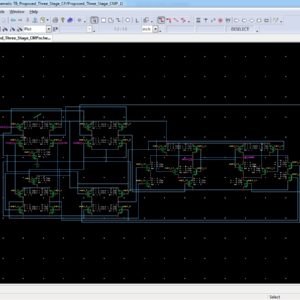
A Three Stage Comparator and Its Modified Version With Fast Speed and Low Kickback
Abstract:
This brief presents a three-stage comparator and its modified version to improve the speed and reduce the kickback noise. Compared to the traditional two-stage comparators, the three-stage comparator in this work has an extra amplification stage, which enlarges the voltage gain and increases the speed. Unlike the traditional two-stage structure that uses pMOS input pair in the regeneration stage, the three-stage comparator makes it possible to use nMOS input pairs in both the regeneration stage and the amplification stage, further increasing the speed. Furthermore, in the proposed modified version of three-stage comparator, a CMOS input pair is adopted at the amplification stage. This greatly reduces the kickback noise by canceling out the nMOS kickback through the pMOS kickback. It also adds an extra signal path in the regeneration stage, which helps increase the speed further. For easy comparison, both the conventional two-stage and the proposed three-stage comparators are implemented in the same 130-nm CMOS process. Measured results show that the modified version of three-stage comparator improves the speed by 32%, and decreases the kickback noise by ten times. This improvement is not at the cost of increased input referred offset or noise.
List of the following materials will be included with the Downloaded Backup: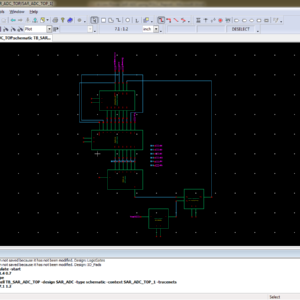
A 2.5-V 8-Bit Low power SAR ADC using POLC and SMTCMOS D-FF for IoT Applications
Abstract:
A 2.5-V 8-bit low force and efficient Successive Approximation Register Analog-to-Digital converter (SAR-ADC) utilizing a Principled Open Loop Comparator (POLC) and Switched Multi-Threshold Complementary Metal Oxide Semiconductor (SMTCMOS) D-FF shift Register. In light of high proficiency and low force applications SAR-ADC is increasingly well known, yet it experience the ill effects of resolution and speed confinements. To defeat the above issue proposed a systematic methodology uses low force POLC based SAR-ADC is structured. Considering about the resolution, speed and compact design of 8- bit SAR-ADC, the proposed POLC strategy reasonably diminishes the propagation delay by 37% and decreases the force utilization by 62% appeared differently in relation to the standard system. A D-flip flop is planned to employ SMTCMOS procedure which has low force utilization and productively decline the leakage power. All the above circuits are simulated by using TANNER-EDA tool in 0.25μm CMOS technology produces 97% Efficiency.
List of the following materials will be included with the Downloaded Backup: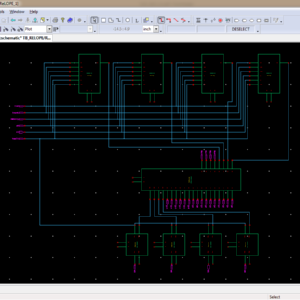
ReLOPE: Resistive RAM-Based Linear First-Order Partial Differential Equation Solver
Abstract:
Data movement between memory and processing units poses an energy barrier to Von-Neumann-based architectures. In-memory computing (IMC) eliminates this barrier. RRAM-based IMC has been explored for data-intensive applications, such as artificial neural networks and matrix-vector multiplications that are considered as “soft” tasks where performance is a more important factor than accuracy. In “hard” tasks such as partial differential equations (PDEs), accuracy is a determining factor. In this brief, we propose ReLOPE, a fully RRAM crossbar-based IMC to solve PDEs using the Runge–Kutta numerical method with 97% accuracy. ReLOPE expands the operating range of solution by exploiting shifters to shift input data and output data. ReLOPE range of operation and accuracy can be expanded by using fine-grained step sizes by programming other RRAMs on the BL. Compared to software-based PDE solvers, ReLOPE gains 31.4× energy reduction at only 3% accuracy loss.
List of the following materials will be included with the Downloaded Backup: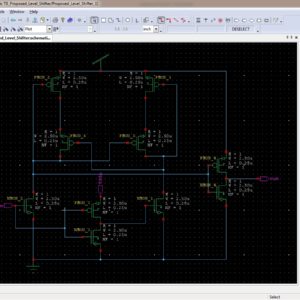
A Low Power and High Speed Voltage Level Shifter Based on a Regulated Cross Coupled Pull Up Network
Abstract:
In this brief, a fast and very low power voltage level shifter (LS) is presented. By using a new regulated cross-coupled (RCC) pull-up network, the switching speed is boosted and the dynamic power consumption is highly reduced. The proposed (LS) has the ability to convert input signals with voltage levels much lower than the threshold voltage of a MOS device to higher nominal supply voltage levels. The presented LS occupies a small silicon area owing to its very low number of elements and is ultra-low-power, making it suitable for low-power applications such as implantable medical devices and wireless sensor networks. Results of the post-layout simulation in a standard 0.18-μm CMOS technology show that the proposed circuit can convert up input voltage levels as low as 80 mV. The power dissipation and propagation delay of the proposed level shifter for a low/high supply voltages of 0.4/1.8 V and input frequency of 1 MHz are 123.1 nW and 23.7 ns, respectively.
List of the following materials will be included with the Downloaded Backup:
Design of a Scalable Low Power 1 bit Hybrid Full Adder for Fast Computation
Abstract:
A novel design of a hybrid Full Adder (FA) using Pass Transistors (PTs), Transmission Gates (TGs) and Conventional Complementary Metal Oxide Semiconductor (CCMOS) logic is presented. Performance analysis of the circuit has been conducted using Cadence toolset. For comparative analysis, the performance parameters have been compared with twenty existing FA circuits. The proposed FA has also been extended up to a word length of 64 bits in order to test its scalability. Only the proposed FA and five of the existing designs have the ability to operate without utilizing buffer in intermediate stages while extended to 64 bits. According to simulation results, the proposed design demonstrates notable performance in power consumption and delay which accounted for low power delay product. Based on the simulation results, it can be stated that the proposed hybrid FA circuit is an attractive alternative in the data path design of modern high-speed Central Processing Units.
List of the following materials will be included with the Downloaded Backup:
Low-Voltage Bandgap Reference Circuit in 28nm CMOS
Abstract:
This paper presents a hybrid adjusted temperature compensation circuit for reducing the temperature drift of the bandgap reference. Combining first-order bandgap current, nonlinear compensation current, and temperature curvature compensation current together, a temperature insensitive reference voltage can be obtained in proposed circuit. Designed and verified in UMC 28nm CMOS technology with Cadence IC615, the proposed circuit achieves a post-layout simulation temperature drift of 5.48 ppm/°C in the range of -20°C to 120°C with a supply voltage of 1.05-V.
List of the following materials will be included with the Downloaded Backup:
A Sub-200nW All-in-One Bandgap Voltage and Current Reference without Amplifiers
Abstract:
This brief presents a low-power and high-precision bandgap voltage and current reference (BGVCR) in one simple circuit for battery-powered applications. All the amplifiers have been eliminated in the proposed circuit. The voltage reference is derived from the bandgap topology, and the current reference is obtained by summing a proportional-to-absolute-temperature (PTAT) current and a complementary-to-absolute-temperature (CTAT) current. Therefore, the temperature coefficient of the current reference can be optimized. Besides, a pseudo-cascode structure and a simple line sensitivity enhancement circuit are adopted to improve the current mirror accuracy and line sensitivity. The proposed circuit is fabricated in a 0.18-μm deep N-well CMOS process with an active area of 0.063 mm2. The measured VREF and IREF are 1.2 V and 51 nA, respectively. The VREF and IREF show measured average temperature coefficients of 32.7 ppm/℃ and 89 ppm/℃ at a temperature of -45 to 125 ℃ and standard deviations of 0.17 % and 1.15 %, respectively. In the supply voltage range of 2 to 5 V, the line sensitivities of voltage and current are 0.058%/V and 1.76%/V, respectively. The minimum supply voltage is 2 V with a total power consumption of 192 nW at room temperature.
List of the following materials will be included with the Downloaded Backup:
A Compact 0.3 V Class AB Bulk Driven OTA
Abstract:
In this article, a new solution for an ultralow-voltage (ULV) ultralow-power (ULP) operational transconductance amplifier (OTA) is presented. Thanks to the combination of a low-voltage bulk-driven nontailed differential stage with the multipath Miller zero compensation technique, a simple class AB power-efficient ULV structure has been obtained, which can operate from supply voltages less than the threshold voltages of the employed MOS transistors, while offering rail-to-rail input common-mode range at the same time. The proposed OTA was fabricated using the 180-nm CMOS process from Taiwan Semiconductor Manufacturing Company (TSMC) and can operate from VDD ranging from 0.3 to 0.5 V. The 0.3-V version dissipates only 12.6 nW of power while showing a 64.7-dB voltage gain at 1-Hz, 2.96-kHz gain-bandwidth product, and a 4.15-V/ms average slew-rate at 30-pF load capacitance. The measured results agree well with simulations.
List of the following materials will be included with the Downloaded Backup: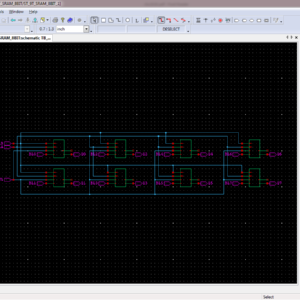
One-Sided Schmitt-Trigger-Based 9T SRAM Cell for Near-Threshold Operation
Abstract:
This paper presents a one-sided Schmitt-trigger based 9T static random access memory cell with low energy consumption and high read stability, write ability, and hold stability yields in a bit-interleaving structure without write-back scheme. The proposed Schmitt-trigger-based 9T static random access memory cell obtains a high read stability yield by using a one-sided Schmitt-trigger inverter with a single bit-line structure. In addition, the write ability yield is improved by applying selective power gating and a Schmitt-trigger inverter write assist technique that controls the trip voltage of the Schmitt-trigger inverter. The proposed Schmitt-trigger-based 9T static random access memory cell has 0.79, 0.77, and 0.79 times the area, and consumes 0.31, 0.68, and 0.90 times the energy of Chang’s 10T, the Schmitt-trigger-based 10T, and MH’s 9T static random access memory cells, respectively, based on 22-nm Fin FET technology.
List of the following materials will be included with the Downloaded Backup: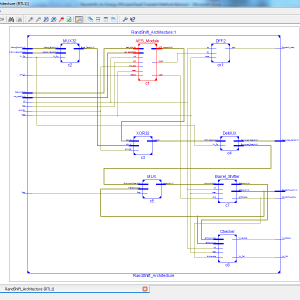
RandShift: An Energy-Efficient Fault Tolerant Method in Secure Nonvolatile Main Memory
Abstract:
In this article, we present a simple, yet energy- and area-efficient method for tolerating the stuck-at faults caused by an endurance issue in secure-resistive main memories. In the proposed method, by employing the random characteristics of the encrypted data encoded by the Advanced Encryption Standard (AES) as well as a rotational shift operation, a large number of memory locations with stuck-at faults could be employed for correctly storing the data. Due to the simple hardware implementation of the proposed method, its energy consumption is considerably smaller than that of other recently proposed methods. The technique may be employed along with other error correction methods, including the error correction code (ECC) and the error correction pointer (ECP). To assess the efficacy of the proposed method, it is implemented in a phase-change memory (PCM)- based main memory system and compared with three error tolerating methods. The results reveal that for a stuck-at fault occurrence rate of 10−2 and with the uncorrected bit error rate of 2 × 10⁻³, the proposed method achieves 82% energy reduction compared to the state-of-the-art method. More generally, using a simulation analysis technique, we show that the fault coverage of the proposed method is similar to that of the state-of-the-art method.
List of the following materials will be included with the Downloaded Backup: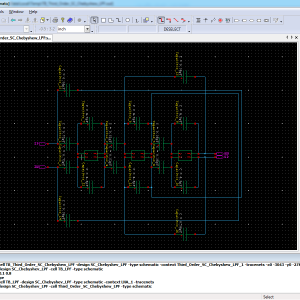
Vital-Sign Processing Receiver With Clutter Elimination Using Servo Feedback Loop for UWB Pulse Radar System
Abstract:
This brief presents a vital-sign processing circuit for simultaneous dc/near-dc elimination and out-of-band interference rejection without any digital signal processing or algorithm assistance for the ultra wideband (UWB) pulse-based radar system. An intrinsic self balanced MOS diode (SBMD) was proposed as a stable and balanced pseudo resistor applied under a servo feedback loop in a vital-sign receiver of the sensing radar to perform as a high-pass filter (HPF) with an ultralow corner frequency lower than 0.5 Hz for removing undesired clutters of the reflected signals and input dc-offset voltages from innate circuit offsets. A third-order switched-capacitor (SC) Chebyshev low-pass filter (LPF) with leap-frog topology as the subsequent stage was adopted to suppress the out-band noises, thereby establishing an integrated vital-sign processing circuit with band pass frequency response and incorporating it into a radar module to verify its viability.
List of the following materials will be included with the Downloaded Backup: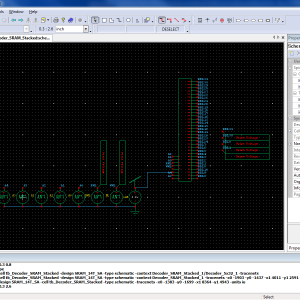
Radiation-Hardened 0.3–0.9-V Voltage-Scalable 14T SRAM and Peripheral Circuit in 28-nm Technology for Space Applications
Abstract:
Conventional radiation-hardened cells of static random access memory (SRAM) are not robust enough in 28 nm technology, due to partial immunity of single-event upset (SEU) effect (Quatrobased cells) or insufficient critical charges in sensitive nodes (conventional stacked cells). The reduction of read noise margin (RNM) at the low supply voltage (VDD) confines these cells from low VDD applications. We propose a novel interleaving stacked-14T (ILS-14T) cell which prevents voltage transient from propagating to other redundancies. The ILS-14T cell can be resilient to both 0–1 and 1–0 upsets by injecting 12 mA in sensitive nodes. The critical charges of the ILS-14T cell are substantially larger than most other hardened cells at VDD from 0.3 to 0.9 V. The RNM of the ILS-14T cell is two times of most Quatro-based cells at 0.3 V VDD and larger than most cells at 0.6 and 0.9 V VDD. The area of occupation is 334% of the conventional 6T cell, which equals other 14T cells. The static–dynamic decoder array with 20%–40% area penalty and 116%–132% delay of rising edge, when compared with the conventional one, reduces the read failure rate by preventing single event transients (SETs) from propagating to unexpected word lines (WLs).
List of the following materials will be included with the Downloaded Backup: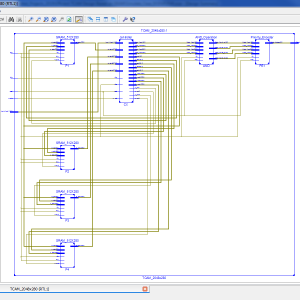
Efficient TCAM Design Based on Multipumping Enabled Multiported SRAM on FPGA
Abstract:
Ternary content-addressable memory (TCAM)-based search engines play an important role in networking routers. The search space demands of TCAM applications are constantly rising. However, existing realizations of TCAM on field-programmable gate arrays (FPGAs) suffer from storage inefficiency. This paper presents a multipumping-enabled multiported SRAM-based TCAM design on FPGA, to achieve an efficient utilization of SRAM memory. Existing SRAM-based solutions for TCAM reduce the impact of the increase in the traditional TCAM pattern width from an exponential growth in memory usage to a linear one using cascaded block RAMs (BRAMs) on FPGA. However, BRAMs on state-of-the-art FPGAs have a minimum depth limitation, which limits the storage efficiency for TCAM bits. Our proposed solution avoids this limitation by mapping the traditional TCAM table divisions to shallow sub-blocks of the configured BRAMs, thus achieving a memory-efficient TCAM memory design. The proposed solution operates the configured simple dual-port BRAMs of the design as multiported SRAM using the multipumping technique, by clocking them with a higher internal clock frequency to access the sub-blocks of the BRAM in one system cycle. We implemented our proposed design on a Virtex-6 xc6vlx760 FPGA device. Compared with existing FPGA-based TCAM designs, our proposed method achieves up to 2.85 times better performance per memory.
List of the following materials will be included with the Downloaded Backup: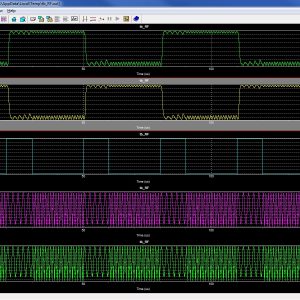
Highly Linear Low-Power Wireless RF Receiver for WSN
Abstract:
This paper introduces a low-power wireless RF receiver for the wireless sensor network. The receiver has improved linearity with incorporated current-mode circuits and high-selectivity filtering. The receiver operates at the 900-MHz industrial, scientific, and medical band and is implemented in 130-nm CMOS technology. The receiver has a frequency multiplication mixer, which uses a 300-MHz clock from a local oscillator (LO). The LO is implemented using vertical delay cells to reduce power consumption. The receiver conversion gain is 40 dB and the receiver noise. The receiver’s input third-order intercept point (IIP3) is −6 dBm and the total power consumption is 1.16 mW.
List of the following materials will be included with the Downloaded Backup: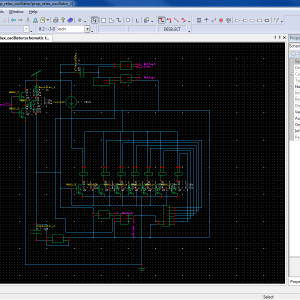
A 13.4-MHz Relaxation Oscillator With Temperature Compensation
Abstract:
A low-phase-noise relaxation oscillator uses a digital compensation loop to reduce its temperature coefficient (TC). This relaxation oscillator is fabricated in the 0.18-µm CMOS process. The measured average oscillation frequency is 13.4 MHz. The whole oscillator consumes 157.8 µW under a 1.2-V supply. The measured average TCs of the oscillation frequency with and without compensation are 193.15 and 1098.7 ppm/◦C, respectively. The TC achieves an improvement of 5.7 times. The measured frequency variation is within ±2% from −20 ◦C to 100 ◦C by using the digital compensation loop. The measured phase noise at 100-kHz offset frequency is −104.82 dBc/Hz, and the measured figure of merit (FOM) is −154.4 dBc/Hz
List of the following materials will be included with the Downloaded Backup:
Column-Selection-Enabled 10T SRAM Utilizing Shared Diff-VDD Write and Dropped-VDD Read for Power Reduction
Abstract:
A non-destructive column-selection-enabled 10T SRAM for aggressive power reduction is presented in this brief. It frees a half-selected behavior by exploiting the bit line-shared data-aware write scheme. The differential-VDD (Diff-VDD) technique is adopted to improve the write ability of the design. In addition, its decoupled read bit lines are given permission to be charged and discharged depending on the stored data bits. In combination with the proposed dropped-VDD biasing, it achieves the significant power reduction. The experimental results show that the proposed design provides the 3.3× improvement in the write margin compared with the standard Diff-10T SRAM. A 5.5-kb 10T SRAM in a 65-nm CMOS process has a total power of 51.25 µW and a leakage power of 41.8 µW when operating at 6.25 MHz at 0.5 V, achieving 56.3% reduction in dynamic power and 32.1% reduction in leakage power compared with the previous single-ended 10T SRAM.
List of the following materials will be included with the Downloaded Backup:
Instantaneous Power Consuming Level Shifter for Improving Power Conversion Efficiency of Buck Converter
Abstract:
An instantaneous power consuming level shifter is presented in this paper to increase the DC converter efficiency. The level shifter is used in a high-side power switch driver to remove the external capacitor which is used in bootstrap technique. The level shifter consumes power only during the transition period. A delay cell is used to turn the level shifter off to reduce the power consumption period. An output voltage detector is added to turn the level shifter off even before the delay time. An asynchronous discontinuous conduction mode buck converter is designed to verify the performance of the level shifter. Simulation results show that the power consumption of the proposed level shifter decreased by 66%, while the converter efficiency increased by the maximum of 9% compared to results obtained for a conventional level shifter. The converter is fabricated using the TSMC 0.18-µm BCD process and it operates within an input range of 2–5 V when the current varies from 400 µA to 18 mA and delivers an output voltage of 1.8 V.
List of the following materials will be included with the Downloaded Backup:
Many-Objective Sizing Optimization of a Class-C/D VCO for Ultralow-Power IoT and Ultralow Phase-Noise Cellular Applications
Abstract:
In this paper, the performance boundaries and corresponding tradeoffs of a complex dual-mode class-C/D voltage controlled oscillator (VCO) are extended using a framework for the automatic sizing of radio frequency integrated circuit blocks, where an all-inclusive test bench formulation enhanced with an additional measurement processing system enables the optimization of “everything at once” toward its true optimal tradeoffs. VCOs embedded in the state-of-the-art multi standard transceivers must comply with extremely high performance and ultralow power requirements for modern cellular and Internet of Things applications. However, the proper analysis of the design tradeoffs is tedious and impractical, as a large amount of conflicting performance figures obtained from multiple modes, test benches, and/or analysis must be considered simultaneously. Here, the dual-mode design and optimization conducted provided 287 design solutions with figures of merit above 192 dBc/Hz, where the power consumption varies from 0.134 to 1.333 mW, the phase noise at 10 MHz from −133.89 to −142.51 dBc/Hz, and the frequency pushing from 2 to 500 MHz/V, on the worst case of the tuning range. These results pushed this circuit design to its performance limits on a 65-nm CMOS technology, reducing 49% of the power consumption of the original design while also showing its potential for ultralow power with more than 93% reduction. In addition, worst case corner criteria were also performed on the top of the worst case tuning range optimization, taking the problem to a human-untrea table LXVI-D performance space.
List of the following materials will be included with the Downloaded Backup: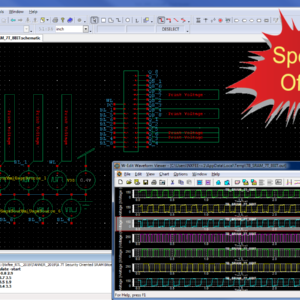
A 7T Security Oriented SRAM Bitcell
Abstract:
Power analysis (PA) attacks have become a serious threat to security systems by enabling secret data extraction through the analysis of the current consumed by the power supply of the system. Embedded memories, often implemented with six-transistor (6T) static random access memory (SRAM) cells, serve as a key component in many of these systems. However, conventional SRAM cells are prone to side-channel power analysis attacks due to the correlation between their current characteristics and written data. To provide resiliency to these types of attacks, we propose a security-oriented 7T SRAM cell, which incorporates an additional transistor to the original 6T SRAM implementation and a two-phase write operation, which significantly reduces the correlation between the stored data and the power consumption during write operations. The proposed 7T SRAM cell was implemented in a 28 nm technology and demonstrates over 1000× lower write energy standard deviation between write ‘1’ and ‘0’ operations compared to a conventional 6T SRAM. In addition, the proposed cell has a 39%–53% write energy reduction and a 19%–38% reduced write delay compared to other power analysis resistant SRAM cells.
List of the following materials will be included with the Downloaded Backup:
Energy-Quality Scalable Adders Based on Non-zeroing Bit Truncation
Abstract:
Approximate addition is a technique to trade off energy consumption and output quality in error-tolerant applications. In prior art, bit truncation has been explored as a lever to dynamically trade off energy and quality. In this brief, an innovative bit truncation strategy is proposed to achieve more graceful quality degradation compared to state-of-the-art truncation schemes. This translates into energy reduction at a given quality target. When applied to a ripple-carry adder, the proposed bit truncation approach improves quality by up to 8.5 dB in terms of peak signal-to-noise ratio, compared to traditional bit truncation. As a case study, the proposed approach was applied to a discrete cosine transform engine. In comparison with prior art, the proposed approach reduces energy by 20%, at insignificant delay and silicon area overhead.
List of the following materials will be included with the Downloaded Backup: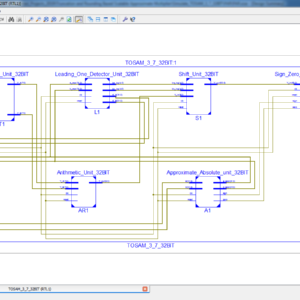
TOSAM: An Energy-Efficient Truncation- and Rounding-Based Scalable Approximate Multiplier
Abstract:
A scalable approximate multiplier, called truncation- and rounding-based scalable approximate multiplier (TOSAM) is presented, which reduces the number of partial products by truncating each of the input operands based on their leading one-bit position. In the proposed design, multiplication is performed by shift, add, and small fixed-width multiplication operations resulting in large improvements in the energy consumption and area occupation compared to those of the exact multiplier. To improve the total accuracy, input operands of the multiplication part are rounded to the nearest odd number. Because input operands are truncated based on their leading one-bit positions, the accuracy becomes weakly dependent on the width of the input operands and the multiplier becomes scalable. Higher improvements in design parameters (e.g., area and energy consumption) can be achieved as the input operand widths increase. To evaluate the efficiency of the proposed approximate multiplier, its design parameters are compared with those of an exact multiplier and some other recently proposed approximate multipliers. Results reveal that the proposed approximate multiplier with a mean absolute relative error in the range of 11%–0.3% improves delay, area, and energy consumption up to 41%, 90%, and 98%, respectively, compared to those of the exact multiplier. It also outperforms other approximate multipliers in terms of speed, area, and energy consumption. The proposed approximate multiplier has an almost Gaussian error distribution with a near-zero mean value. We exploit it in the structure of a JPEG encoder, sharpening, and classification applications. The results indicate that the quality degradation of the output is negligible. In addition, we suggest an accuracy configurable TOSAM where the energy consumption of the multiplication operation can be adjusted based on the minimum required accuracy.
List of the following materials will be included with the Downloaded Backup: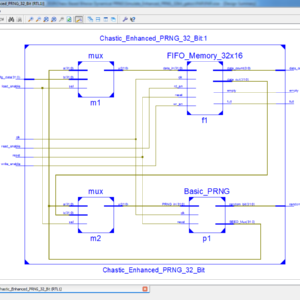
Chaos-Based Bitwise Dynamical Pseudorandom Number Generator on FPGA
Abstract:
In this paper, a new pseudorandom number generator (PRNG) based on the logistic map has been proposed. To prevent the system to fall into short period orbits as well as increasing the randomness of the generated sequences, the proposed algorithm dynamically changes the parameters of the chaotic system. This PRNG has been implemented in a vertex 7 field-programmable gate array (FPGA) with a 32-bit fixed point precision, using a total of 510 lookup tables (LUTs) and 120 registers. The sequences generated by the proposed algorithm have been subjected to the National Institute of Standards and Technology (NIST) randomness tests, passing all of them. By comparing the randomness with the sequences generated by a raw 32-bit logistic map, it is shown that, by using only an additional 16% of LUTs, the proposed PRNG obtains a much better performance in terms of randomness, increasing the NIST passing rate from 0.252 to 0.989. Finally, the proposed bitwise dynamical PRNG is compared with other chaos-based realizations previously proposed, showing great improvement in terms of resources and randomness.
List of the following materials will be included with the Downloaded Backup: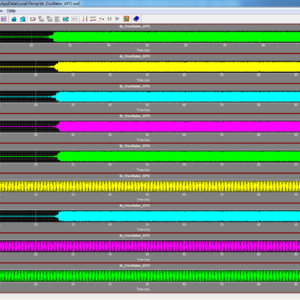
A System of Two Coupled Oscillators With a Continuously Controllable Phase Shift
Abstract:
We present a novel generalization of quadrature oscillators (QVCO) which we call “arbitrary phase oscillator” or APO for short. In contrast to a QVCO which generates only quadrature phases, the APO is capable of continuously generating any desired phase at its output. The proposed structure employs a novel coupling mechanism to generate arbitrary phase shifts between two coupled oscillators without the need for an explicit phase shifter. A rigorous nonlinear dynamic analysis is presented to give a closed-form formula for the generated phase shifts, and the theory is verified by numerical simulation as well as measurement results of a prototype chip fabricated in 130-nm CMOS technology. The prototype APO has a frequency tuning range of 4.90–5.65 GHz and is continuously phase tunable from 0◦ to 360◦ across the entire frequency range. The APO structure can be used in designing novel coupled-oscillator-based phased arrays for 5G wireless communications.
List of the following materials will be included with the Downloaded Backup: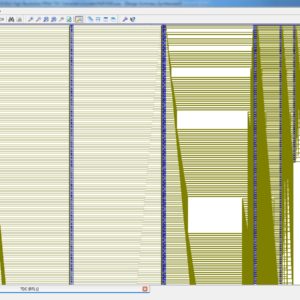
A High Resolution FPGA TDC Converter with 2.5 ps Bin Size and -3.79~6.53 LSB Integral Non linearity
Abstract:
As a traditional digital platform, Field Programmable Gate Array (FPGA) is seldom used for analog applications. Since there is no way to fine tune the gate property or circuit structure, the performance of FPGA analog application is usually inferior to its counterparts based on full-custom or even cell-based design. Nevertheless, a high performance FPGA time-to-digital Converter (TDC) is proposed in this paper to expand the FPGA territory into high-end analog applications. The test time signal is sampled by a serious timing references generated by feeding the original clock into a tapped delay line. According to periodicity, the delays among those timing references are wrapped into a single reference period and the effective TDC resolution can be made much smaller than the clock period to compete even with the state-of the art full-custom TDCs in performance. After measurement, the effective resolution is as fine as 2.5 ps. The corresponding differential nonlinearity (DNL) is -1.90~1.66 LSB and the integral nonlinearity (INL) is -3.79~6.53 LSB only.
List of the following materials will be included with the Downloaded Backup: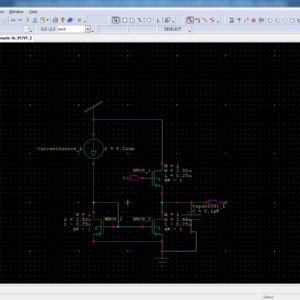
Analysis, Comparison, and Experimental Validation of a Class AB Voltage Follower With Enhanced Bandwidth and Slew Rate
Abstract:
This paper describes a bandwidth (BW)- and slew rate (SR)-enhanced class AB voltage follower (VF). A thorough small signal analysis of the proposed and a state-of-the-art AB-enhanced VF is presented to compare their performance. The proposed circuit has 50-MHz BW, 19.5-V/µs SR, and a BW figure of merit of 41.6 (MHz × pF/µW) for CL = 50 pF. It provides 13 times higher current efficiency and 15 times higher BW than the conventional VF with equal 60-µW static power dissipation. The experimental and simulation results of a fabricated test chip in the 130-nm CMOS technology validate the proposed circuit.
List of the following materials will be included with the Downloaded Backup: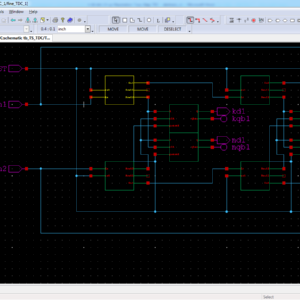
A 16-bit 2.0-ps Resolution Two-Step TDC in 0.18-μm CMOS Utilizing Pulse-Shrinking Fine Stage
Abstract:
This paper proposes a time-to-digital converter (TDC) that achieves wide input range and fine time resolution at the same time. The proposed TDC utilizes pulse-shrinking (PS) scheme in the second stage for a fine resolution and two-step (TS) architecture for a wide range. The proposed PS TDC prevents an undesirable non-uniform shrinking rate issue in the conventional PS TDCs by utilizing a built-in offset pulse and an offset pulse width detection schemes. With several techniques, including a built-in coarse gain calibration mechanism, the proposed TS architecture overcomes a nonlinearity due to the signal propagation and gain mismatch between coarse and fine stages. The simulation results of the TDC implemented in a 0.18-µm standard CMOS technology demonstrate 2.0-ps resolution and 16-bit range that corresponds to ∼130-ns input time interval with 0.08-mm2 area. It operates at 3.3 MS/s with 18.0 mW from 1.8-V supply and achieves 1.44-ps single-shot precision. Index Terms— Built-in calibration, pulse shrinking (PS), time-to-digital conversion, two step (TS).
List of the following materials will be included with the Downloaded Backup: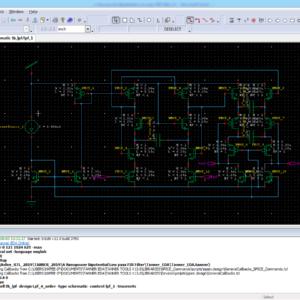
A Nanopower Biopotential Lowpass Filter Using Subthreshold Current-Reuse Biquads With Bulk Effect Self-Neutralization
Abstract:
A nanopower CMOS 4th-order lowpass filter suitable for biomedical applications is presented. The filter is formed by cascading two types of subthreshold current-reuse biquadratic cell. Each proposed cell is capable of neutralizing the bulk effect that induces the passband attenuation. The nearly 0-dB passband gain can thus be maintained, while the entire filter circuit remains compact and power-efficient. Designed for electrocardiogram detection as an example of application, the filter prototype has been fabricated in a 0.35 µm CMOS process occupying 269 µm × 383 µm chip area. Measurements verify that the filter can operate from a 1.5-V single supply and consumes 5.25 nW, while providing a cutoff frequency of 100 Hz and input-referred noise of 39.38 µVrms. The intermodulation-free dynamic range of 51.48 dB is obtained from a two-tone test of 50 and 60 Hz input frequencies. Compared with state-of-the-art nanopower lowpass filters using the most relevant and reasonable figure of merit, the proposed filter ranks the best.
List of the following materials will be included with the Downloaded Backup: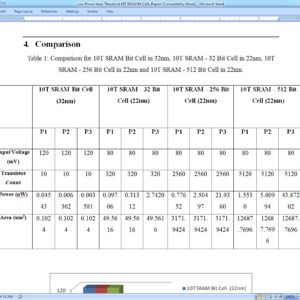
Low-Power Near-Threshold 10T SRAM Bit Cells With Enhanced Data-Independent Read Port Leakage for Array Augmentation in 32-nm CMOS
Abstract:
The conventional six-transistor static random access memory (SRAM) cell allows high density and fast differential sensing but suffers from half-select and read-disturb issues. Although the conventional eight-transistor SRAM cell solves the read-disturb issue, it still suffers from low array efficiency due to deterioration of read bit-line (RBL) swing and Ion/Ioff ratio with increase in the number of cells per column. Previous approaches to solve these issues have been afflicted by low performance, data dependent leakage, large area, and high energy per access. Therefore, in this paper, we present three iterations of SRAM bit cells with nMOS-only based read ports aimed to greatly reduce data dependent read port leakage to enable 1k cells/RBL, improve read performance, and reduce area and power over conventional and 10T cell-based works. We compare the proposed work with other works by recording metrics from the simulation of a 128-kb SRAM constructed with divided-word line-decoding architecture and a 32-bit word size. Apart from large improvements observed over conventional cells, up to 100-mV improvement in read-access performance, up to 19.8% saving in energy per access, and up to 19.5% saving in the area are also observed over other 10T cells, thereby enlarging the design and application gamut for memory designers in low-power sensors and battery-enabled devices.
List of the following materials will be included with the Downloaded Backup: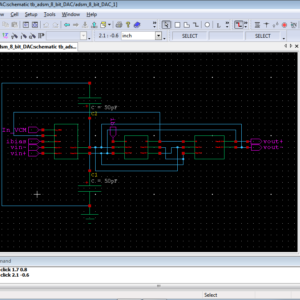
A 0.3-V 37-nW 53-dB SNDR Asynchronous Delta–Sigma Modulator in 0.18-μm CMOS
Abstract:
A new solution for an ultralow-voltage bulk driven (BD) asynchronous delta–sigma modulator is described in this paper. While implemented in a standard 0.18-µm CMOS process from the Taiwan Semiconductor Manufacturing Company and supplied with VDD = 0.3 V, the circuit offers a 53.3-dB signal-to-noise and distortion ratio, which corresponds to 8.56-bit resolution. In addition, the total power consumption is 37 nW, the signal bandwidth is 62 Hz, and the resulting power efficiency is 0.79 pJ/conversion. The above-mentioned features have been achieved employing a highly linear transconductor and a hysteretic comparator based on nontailed BD differential pair.
List of the following materials will be included with the Downloaded Backup: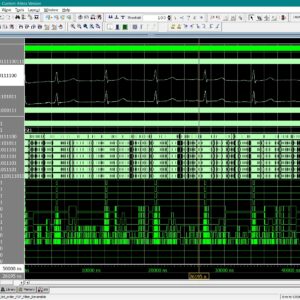
Design and Implementation of a Low-Complexity Continuously Variable Digital Filter
Base Paper Abstract:
Variable filters with adjustable bandwidth are vital components in diverse communication scenarios. This paper presents an innovative architecture for a continuously variable bandwidth filter using a fixed hardware. Our approach integrates a fixed finite impulse response filter between two arbitrary fractional delay filters implemented through a novel Farrow Equivalent-Newton structure. The proposed architecture provides a low-complexity implementation structure compared to the state-of-the-art approaches. A precise mapping equation for the edge frequencies of the filters generated from the proposed continuously variable bandwidth filter, in terms of a variable parameter called the resampling ratio, is also formulated. Validation experiments encompass the design of continuously variable bandwidth filters tailored to various wireless communication standards. The hardware utilisation report of the proposed continuously variable bandwidth filter obtained by synthesising the structure using Xilinx Vivado 2020.2 on a Kintex-7 device is also included, which proves the hardware complexity reduction and efficiency of the proposed structure.
List of the following materials will be included with the Downloaded Backup: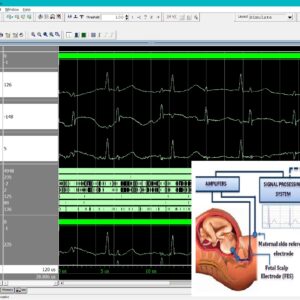
Invasive RLS-Based Fetal ECG Extraction with Optimized Shift-and-Add Multiplier for Area-Efficient FPGA Implementation
Base Paper Abstract:
This article proposes a fetal electrocardiogram (FECG) separation approach based on an energy-dependent recursive least-square (RLS) filtering approach that uses the mother’s R-peaks collected from both the abdomen and the thorax. This approach initially identifies the mother’s R-peaks from the thorax electrocardiogram (ECG), which is used to represent the mother’s R-peaks in both the abdominal and thorax channels. Instead of using the recent abdominal and thorax ECG (TECG) samples, the proposed filter also considers the energy of L1 number of mother’s past R-peak abdominal and thorax samples along with the energy of L2 number of non-R-peak abdominal samples for estimating the R-peak energy factor. The energy factor is estimated for each sample for the updating of weights in the RLS filter. An architecture for the filter is also proposed, which can be used in hardware implementation. The evaluation of the proposed filtering approach was performed using datasets such as Synthetic and Daisy with the evaluation metrics, namely, correlation coefficient, fetal R-peak detection accuracy (PDA), fetal-to-maternal signal-to-noise ratio (SNR), and percent root-mean-square difference. With filter length P = 24, the proposed filter results in correlation, SNR, and percent root-mean-square difference of 0.9901, 9.03 dB, and 80.84%, respectively. For the Daisy and Synthetic datasets, the PDA was estimated as 96.4% and 98.12% respectively. The architecture of the proposed filter was implemented in Virtex VC707 hardware, which utilizes a power of 1.378 W, resulting in a maximum clock frequency and throughput (TP) of 128.43 MHz and 31.5 Mb/s, respectively, with a word length of L = 24 bits.
List of the following materials will be included with the Downloaded Backup: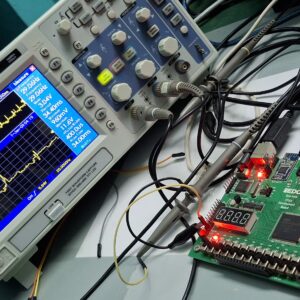
FPGA Implementation of a ECG-DAC-SPI Interface for Medical Applications
Proposed Abstract:
This project presents the design and implementation of an ECG-DAC-SPI interface for medical applications using the Xilinx Spartan-6 FPGA platform and the MCP4921 12-bit SPI DAC. The objective is to process pre-recorded ECG signals from the MIT-BIH database, reconstruct the signal digitally, and output it as an accurate analog waveform suitable for real-time monitoring and simulation. The system is designed to meet the stringent requirements of medical-grade signal fidelity and low-latency processing. The FPGA-based implementation comprises several key modules, including digital ECG data acquisition, optional noise filtering, and a custom SPI communication controller. The ECG signal, preloaded into FPGA memory, is scaled and quantized to match the 12-bit resolution of the MCP4921 DAC. A low-pass FIR filter is implemented on the FPGA to enhance signal quality by removing high-frequency noise, ensuring smooth signal. A Verilog HDL-based SPI controller facilitates precise communication with the DAC, synchronizing data transfer and ensuring real-time signal conversion. The reconstructed analog ECG waveform is visualized on an oscilloscope to validate its fidelity to the original dataset. The DAC, interfaced via the FPGA’s SPI controller, is chosen for its high resolution and compatibility with low-latency applications. The design is synthesized, implemented, and tested on the Xilinx Spartan-6 FPGA platform. The project includes extensive simulation and hardware testing, evaluating parameters such as SPI throughput, waveform accuracy, and system latency. Results demonstrate that the system achieves precise signal reconstruction and reliable analog output, suitable for medical applications. This work highlights the use of FPGA technology and the MCP4921 DAC for scalable and reconfigurable ECG signal processing systems. It provides a robust platform for integration into advanced medical devices, including real-time ECG monitors, simulators, and portable diagnostic tools. Future extensions of the design could include integration of live ECG sensors, advanced noise filtering, or wireless transmission for telemedicine applications.
List of the following materials will be included with the Downloaded Backup: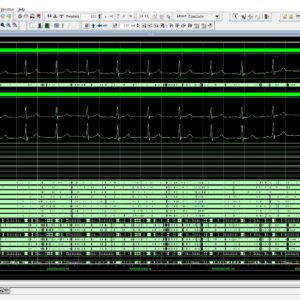
High Performance FIR and IIR Filters Based on FPGA for 16 Hz Signal Processing
Base Paper Abstract:
The goal of the research to design and implement digital filters (Finite Impulse Response (FIR) and Infinite Impulse Response (IIR)) based on Field Programmable Gate Array (FPGA) by using the copulation between MATLAB/Simulink and Xilinx ISE Design Suite programs. low pass digital filter was implemented with different types of windowing methods that calculate the filter coefficient of FIR filter and different types of IIR filter with three numbers of filter order that are (5th order, 8th order, and 10th order). These different types of digital filters and filter orders are applied with the addition of a sine signal with a frequency of 16 Hz and a random noise signal. The work was done by two approaches: the first by simulation method through coupling between MATLAB/Simulink and Xilinx ISE Design Suite programs. While the second is by the practical method of loading these simulation block diagrams on FPGA. The performance of the work is measured by the difference between the sine signal and filtered signal and by the difference between the simulation results and practical results. Using FPGA with digital filters in this research gives a major advantage which is the simulation results equal to the practical results (Difference equal to zero).
List of the following materials will be included with the Downloaded Backup: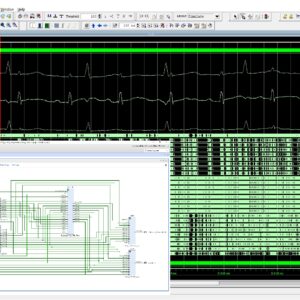
Extraction of Fetal ECG from Abdominal and Thorax ECG Using a Non-Causal Adaptive Filter Architecture
Base Paper Abstract:
Extracting the Electrocardiogram (ECG) of a fetus from the ECG signal of the maternal abdomen is a challenging task due to different artifacts. The paper proposes a N-tap non-causal adaptive filter (NC-AF) that update the weight by considering the N number of past weights and N − 1 number of the reference signal and error signal samples after the processing sample number n. Using the maternal abdominal signal as the primary signal and thorax signal as the reference input, the output e(n) is obtained from the mean of N number of errors. The filtering performance of NC-AF was evaluated using the Synthetic dataset and Daisy dataset with the metrics such as correlation coefficient (γ), peak root mean square difference (PRD), the output signal to noise ratio (SNR), root mean square error (RMSE), and fetal R-peak detection accuracy (FRPDA). The NC-AF provides a maximum correlation coefficient, PRD, SNR, RMSE and FRPDA of 0.9851, 83.04%, 8.52 dB, 0.208 and 97.09% respectively with filter length N = 38. The paper also proposes the architecture of NC-AF that can be implemented in hardware like FPGA. Further, the NC-AF was implemented on Virtex-7 FPGA and its performance is evaluated in terms of resource utilization, throughput, and power consumption. For filter length N = 38 and word length L = 24, the maximum performance of the filter can be attained with a power consumption of 1.287W and a maximum clock frequency of 139.47 MHz.
List of the following materials will be included with the Downloaded Backup: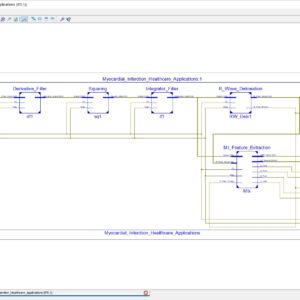
MInSC: A VLSI Architecture for Myocardial Infarction Stages Classifier for Wearable Healthcare Applications
Base Paper Abstract:
Myocardial Infarction (MI) is a critical heart abnormality causing millions of fatalities worldwide every year. MI progress in three stages based on its severity causing several changes in an Electrocardiogram (ECG) signal. It is very critical to capture these variations, which requires continuous monitoring of the ECG signal of the patient. Therefore, it becomes imperative to develop a low power VLSI architecture to address the prognosis of MI. In this brief, for the first time, an area and power efficient design of a five stage classifier is proposed, which detects the progression of various stages of MI using ECG beats in real time. The proposed architecture has an area and total power utilization of 1.38mm2 and 5.12µW, respectively at SCL 180nm Bulk CMOS technology. The low power and area requirements and multiclass classification capability of the proposed design make it suitable to be used in wearable devices.
List of the following materials will be included with the Downloaded Backup: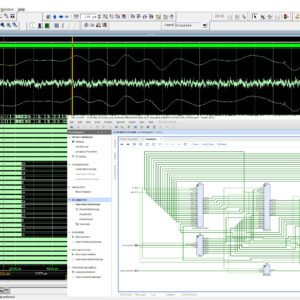
Fast and Hardware-Efficient Variable Step Size Adaptive Beamformer
Base Paper Abstract:
Constant step size least mean square (CSS-LMS) is one of the most popular adaptive beamforming algorithms. However, for varying channel signal-to-noise ratios (SNRs), the CSS algorithms are not effective, and there is a need for variable step size (VSS) algorithms. The VSS algorithms provide extremely deep nulls for the interferences; however, they are complex to implement on hardware. Hence, this paper proposes two hardware-efficient variable step size algorithms, namely, efficient variable step size LMS (EVSS-LMS) and reduced complexity parallel LMS (EVSS-RC-pLMS). The proposed EVSS algorithms eliminate the complex operations of VSS algorithms like division and exponential and approximate them to simpler operations. Further, MATLAB simulations demonstrate accelerated convergence, deep nulls, a lower error floor, and better performance in varying SNR environments for the proposed algorithms. Additionally, the finite precision radiation patterns are similar to infinite precision. Hardware synthesis results show the outstanding performance of EVSS in terms of resource utilization on the Xilinx Artix-7 FPGA.
List of the following materials will be included with the Downloaded Backup: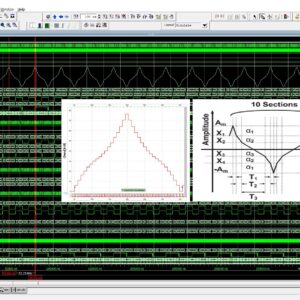
FPGA Implementation of Spread Spectrum Clock Generator with Onion Modulation
Proposed Abstract:
A Spread Spectrum Clock Generator (SSCG) is used in electronics to purposefully vary the frequency of a clock signal via modulation. Modulation is accomplished by dispersing the energy of the signal throughout a spectrum of frequencies rather than focusing it on a certain frequency. The main objective of using the spread spectrum approach in clock generation is to minimize electromagnetic interference (EMI) and enhance electromagnetic compatibility (EMC) in electronic systems. The main reason for using many layers of modulation in spread spectrum clock production, regardless of whether the name "Onion Modulation" is used, is to provide a more advanced and adaptable method for reducing electromagnetic interference. The primary design feature of the onion wave is that the core portion of the waveform has the least steep slope, which serves to generate the output. In order to optimize the frequency effect design, the conventional approach involves using a memory ROM to regulate the slope and obtain the desired onion waveform. This current methodology necessitates substantial memory allocation and an intricate architecture, resulting in higher power consumption. The proposed method presents a unique architecture for onion modulation, which offers reduced logic size and power usage. This architecture was created using Verilog HDL, tested using Modelsim, and implemented using the Xilinx Vertex-5 FPGA.
List of the following materials will be included with the Downloaded Backup: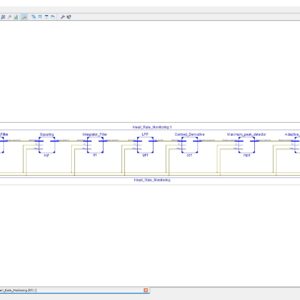
FPGA Heart Rate Monitoring (Pre Processing – QRS Detection Stage)
Base Paper Abstract:
The continuous monitoring of cardiac patients requires an ambulatory system that can automatically detect heart diseases. This study presents a new field programmable gate array (FPGA)-based hardware implementation of the QRS complex detection. The proposed detection system is mainly based on the Pan and Tompkins algorithm, but applying a new, simple, and efficient technique in the detection stage. The new method is based on the centered derivative and the intermediate value theorem, to locate the QRS peaks. The proposed architecture has been implemented on FPGA using the Xilinx System Generator for digital signal processor and the Nexys-4 FPGA evaluation kit. To evaluate the effectiveness of the proposed system, a comparative study has been performed between the resulting performances and those obtained with existing QRS detection systems, in terms of reliability, execution time, and FPGA resources estimation. The proposed architecture has been validated using the 48 half-hours of records obtained from the Massachusetts Institute of Technology - Beth Israel Hospital (MITBIH) arrhythmia database. It has also been validated in real time via the analogue discovery device.
List of the following materials will be included with the Downloaded Backup: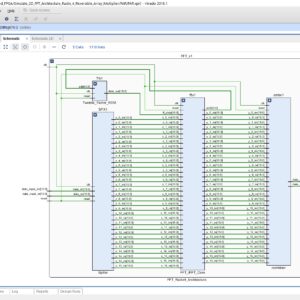
Design of SEU Tolerant 2D-FFT in SRAM-based FPGA
Base Paper Abstract:
2-Dimensional fast Fourier transform (FFT) has been widely used in radar signal process. Due to the need for high performance, field programmable gate array (FPGA) is an ideal hardware device for this application. For space-borne radar platform such as synthetic aperture radar (SAR), single-event upsets (SEUs) can cause lots of soft errors in static random access memory (SRAM) based FPGA. As to this, protecting the 2D-FFT implemented in FPGA from SEUs is very important. In this article, we analyze the critical weakness induced by SEUs in the 2D-FFT process, and then a 2D-FFT design with high SEU resilience is presented. The design utilizes the advantage of several anti-SEU methods. For butterfly control in FFT, partially triple modular redundancy (TMR) is used. For data buffers, error correction code (ECC) is applied to read and write operation. Furthermore, safe finite state machine (FSM) is adopted by important control registers. Fault injection results show that all these reinforcement technologies contribute to enhance the ability to mitigate the SEU effects.
List of the following materials will be included with the Downloaded Backup: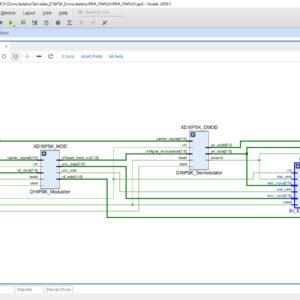
FPGA Implementation of D8PSK Demodulator
Base Paper Abstract:
Differential phase shift keying (DPSK) is a modulation scheme that facilitates non coherent demodulation and is employed for various applications such as Wireless Local Area Networks (WLANs), Bluetooth and RFID communication. In this paper, design, development and hardware implementation of a new demapping scheme for Differential 8-PSK (D8PSK) demodulator on a Zynq 7000 FPGA based ZED board is proposed using the concepts of model based design. The proposed work can be easily extended to other M-ary DPSK schemes.
List of the following materials will be included with the Downloaded Backup: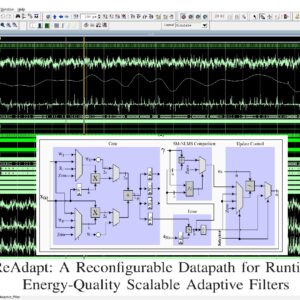
ReAdapt: A Reconfigurable Datapath for Runtime Energy-Quality Scalable Adaptive Filters
Base Paper Abstract:
This paper proposes ReAdapt–a reconfigurable datapath architecture for scaling the energy-quality trade-off of adaptive filtering at runtime. The ReAdapt can dynamically select four adaptive filtering algorithms for gradating complexity levels during runtime by reconfiguring the processing flow in its datapath and by blocking the switching activity (e.g., reducing the CMOS dynamic power) of unused modules with data-gating. The ReAdapt proposal can scale the energy-quality trade-off by choosing the following four different levels of filter algorithms complexity: 1) least mean square (LMS); 2) partial update normalized LMS (PU-NLMS); 3) set-membership normalized LMS (SM-NLMS); 4) normalized LMS (NLMS). The ReAdapt architecture reuses common modules of each adaptive filter, resulting in a compact VLSI hardware implementation. The ReAdapt architecture operation is implemented in a case-study for interference mitigation for electroencephalogram (EEG) signal processing. The hardware synthesis results show an increase of 6.80 times in throughput and at least a reduction of 2.84 times in energy per operation compared with the state-of-the-art adaptive filters. This paper also investigates the benefits of dynamically reconfiguring the four ReAdapt operating modes at runtime for different levels of signal-to-noise ratio (SNR) for the processed signals. We also demonstrate that dynamically reconfiguring the ReAdapt operating modes during runtime results in an optimal energy-quality trade-off which is advantageous over the conventional single static mode.
List of the following materials will be included with the Downloaded Backup:
A Pipelined Reduced Complexity Two Stages Parallel LMS Structure for Adaptive Beam forming
Base Paper Abstract:
In this paper, we propose a reduced complexity parallel least mean square structure (RC-pLMS) for adaptive beamforming and its pipelined hardware implementation. RC-pLMS is formed by two least mean square (LMS) stages operating in parallel (pLMS), where the overall error signal is derived as a combination of individual stage errors. The pLMS is further simplified to remove the second independent set of weights resulting in a reduced complexity pLMS (RC-pLMS) design. In order to obtain a pipelined hardware architecture of our proposed RC-pLMS algorithm, we applied the delay and sum relaxation technique (DRC-pLMS). Convergence, stability and quantization effect analysis are performed to determine the upper bound of the step size and assess the behavior of the system. Computer simulations demonstrate the outstanding performance of the proposed RC-pLMS in providing accelerated convergence and reduced error floor while preserving a LMS identical O(N) complexity, for an antenna array of N elements. Synthesis and implementation results show that the proposed design achieves a significant increase in the maximum operating frequency over other variants with minimal resource usage. Additionally, the resulting beam radiation pattern show that the finite precision DRC-pLMS implementation presents similar behavior of the infinite precision theoretical results.
List of the following materials will be included with the Downloaded Backup:
A VLSI-Based Hybrid ECG Compression Scheme for Wearable Sensor Node
Base Paper Abstract:
During smart long-term monitoring of any biomedical signal in wireless body area networks, wearable sensor nodes generate and transmit a large amount of data, increasing transmission power consumption. In order to reduce data storage and power consumption, a lossless data compression technique for an electrocardiogram signal monitoring system is presented in this letter. For this, a hybrid lossless compression algorithm based on Run-length coding and Golomb–Rice coding is proposed to enhance the bit compressing rate. The lossless encoding scheme is implemented on the MIT-BIH arrhythmia database, achieving a compression ratio of 2.91. A VLSI-based architecture of the data compression algorithm is implemented in 90nm CMOS technology that consumes power of 18.78 µW at 100 MHz operating frequency and 1.2 V supply voltage, occupying an area of 0.0051 mm2.
List of the following materials will be included with the Downloaded Backup: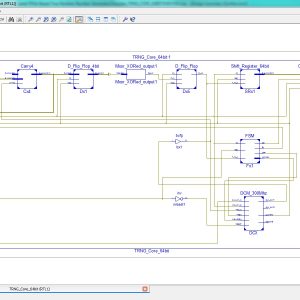
A High-Speed FPGA-based True Random Number Generator using Metastability with Clock Managers
Base Paper Abstract:
True random number generators (TRNGs) are fundamentals in many important security applications. Though they exploit randomness sources that are typical of the analog domain, digital-based solutions are strongly required especially when they have to be implemented on Field Programmable Gate Array (FPGA)-based digital systems. This paper describes a novel methodology to easily design a TRNG on FPGA devices. It exploits the runtime capability of the Digital Clock Manager (DCM) hardware primitives to tune the phase shift between two clock signals. The presented auto-tuning strategy automatically sets the phase difference of two clock signals in order to force on one or more flip-flops (FFs) to enter the metastability region, used as a randomness source. Moreover, a novel use of the fast carry-chain hardware primitive is proposed to further increase the randomness of the generated bits. Finally, an effective on-chip post-processing scheme that does not reduce the TRNG throughput is described. The proposed TRNG architecture has been implemented on the Xilinx Zynq XC7Z020 System on Chip (SoC). It passed all the National Institute of Standards and Technology (NIST) SP 800-22 statistical tests with a maximum throughput of 300×106 bit per second. The latter is considerably higher than the throughput of other previously published DCMbased TRNGs.
List of the following materials will be included with the Downloaded Backup: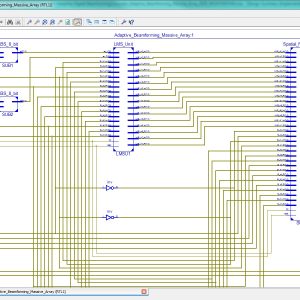
FPGA Implementation of the Adaptive Digital Beamforming for Massive Array
Base Paper Abstract:
With the rise of 5G networks and the increasing number of communication devices, improving communication quality is essential. One approach is adaptive digital beamforming, which adjusts an antenna array’s radiation pattern based on the desired received signal. Adaptation based on Least-Mean Squared (LMS) and its variants is still one of the most common literature methods. Although LMS techniques present good computational performance, the increase in antennas’ numbers led to high-performance hardware. Platforms such as Field Programmable Gate Arrays (FPGAs), designed for massive array systems, enables high-performance energy-efficient architectures. This work proposes a parallel implementation of a massive array beamforming composed of a spatial filter and adaptation unit based on LMS on FPGA. The proposed design presents ten times fewer hardware requirements and 30 times less power consumption than state of the art.
List of the following materials will be included with the Downloaded Backup: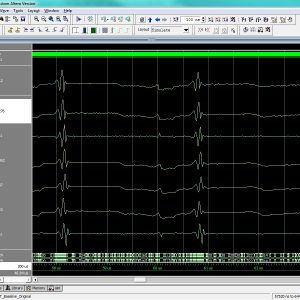
Approximate Pruned and Truncated Haar Discrete Wavelet Transform VLSI Hardware for Energy-Efficient ECG Signal Processing
Abstract:
The approximate computing paradigm emerged as a key alternative for trading off accuracy and energy efficiency. Error-tolerant applications, such as multimedia and signal processing, can process the information with lower-than-standard accuracy at the circuit level while still fulfilling a good and acceptable service quality at the application level. The automatic detection of R-peaks in an electrocardiogram (ECG) signal is the essential step preceding ECG processing and analysis. The Haar discrete wavelet transform (HDWT) is a low-complexity pre-processing filter suitable to detect ECG R-peaks in embedded systems like wearable devices, which are incredibly energy constrained. This work presents an approximate HDWT hardware architecture for ECG processing at very high energy efficiency. Our best-proposal employing pruning within the approximate HDWT hardware architecture requires just seven additions. The use of a truncation technique to improve energy efficiency is also investigated herein by observing the evolution of the signal-to-noise ratio and the ultimate impact in the ECG peak-detection application. This research finds that our HDWT approximate hardware architecture proposal accepts higher truncation levels than the original HDWT. In summary: Our results show about 9 times energy reduction when combining our HDWT matrix approximation proposal with the pruning and the highest acceptable level of truncation while still maintaining the R-peak detection performance accuracy of 99.68% on average.
List of the following materials will be included with the Downloaded Backup: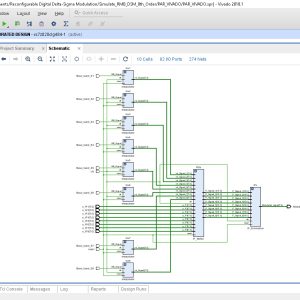
Reconfigurable Digital Delta-Sigma Modulation Transmitter Architecture for Concurrent Multi-Band Transmission
Abstract:
This paper presents a reconfigurable delta-sigma modulation (DSM) architecture for concurrent multi-band transmission. The reconfigurability in terms of carrier spacing and the number of simultaneous carrier transmission is useful for applications such as carrier aggregation in 5G. This paper uses 4th order reconfigurable multi-band DSM (RMB-DSM) such that the zeros of the noise transfer function can be reconfigured to fall at multiple frequencies, where the carriers are being aggregated. The quantization noise between the transmission bands is a critical issue in the case of multi-band transmission. Therefore, a multi-band additional noise shaping (ANS) function is also introduced, which generates notches around each carrier and reduces the noise level between the multiple pass-bands. The proposed scheme has been validated in simulation, as well as in experiment for aggregating up to four 15 MHz long term evolution (LTE) signals with an overall aggregated bandwidth of 60 MHz. Measurement results show a 10-25% improvement in coding efficiency and 15-35 dB improvement in noise level near the operating frequency band using the proposed multiband augmented noise shaping technique, as compared to the standard DSM. The corresponding improvement of 8% in the overall efficiency is observed by using the proposed multi-band augmented noise shaping technique.
List of the following materials will be included with the Downloaded Backup:
FPGA Based High Definition SPWM Generation With Harmonic Mitigation Property
Abstract:
High-resolution sinusoidal pulse width modulation (SPWM) switching is beneficial in order to achieve compact size and fine sinusoidal output of dc–ac converters. In this article, a novel field-programmable gate array (FPGA) based high-definition SPWM (HD-SPWM) architecture is proposed for adopting a scheme of integrating a lower frequency PWM train to a high-frequency SPWM train in order to suppress inverter output harmonics while achieving high resolution output. An optimized FPGA based two-stage finite-state-machine (FSM) architecture is designed, where the initial stage decides pulse widths of a lower frequency PWM train based on the premeditated pulse width of the high-frequency SPWM train, whereas in the final stage, lower frequency PWM pulse widths are integrated with the high-frequency SPWM pulse widths to generate updated pulse widths of high-frequency SPWM, i.e., HD-SPWM. Moreover, a pre-formulation mathematical model is established for the calculation of duty-cycle count values of pulse trains to support the online adjustment of modulation index (MI) of the HD-SPWM. The proposed generation has the benefits of harmonic mitigation, online fine adjustment of MI, low-processing time, and requirement of a minor segment of a medium-sized FPGA; thereby, providing a good tradeoff between larger designs and higher performance. Theoretical calculations, characteristics, and design contemplations are specified, and the HD-SPWM generation is demonstrated through experimentation with a Xilinx Spartan-3 FPGA board.
List of the following materials will be included with the Downloaded Backup:
FPGA Implementation of Epileptic Seizure Detection Using ELM Classifier Detection Using ELM Classifier
Abstract:
Electroencephalography (EEG) Signals are widely used to determine the brain disorders. The Electrical activity of human brain is recorded in the form of EEG signal. The abnormal Electrical activity of the human brain is called as epileptic seizure. In epilepsy patients, the seizure occurs at unpredictable times and it causes sudden death. Detection and Prediction of Epileptic seizure is performed by analyzing the EEG signal. The EEG signal of human brain is random in nature, hence detection of seizure in EEG signal is challenging task. Hardware implementation of Epileptic seizure detection system is necessary for real time applications. In this work an accurate approach is used to identify the Epileptic seizure and that is implemented in FPGA (Field Programmable Gate Array).The hardware implementation of epileptic seizure detection algorithm is done using Xilinx System generator tool. In the first step the EEG signal is extracted from the human brain and it is filtered by using Finite Impulse response (FIR) band pass filter. The band pass filter separates the EEG signal into delta, theta, alpha, beta and gamma brain rhythms. The band separated brain signal is modeled by linear prediction theory. In the next step features are extracted from the modeled EEG signal and the classification of normal or seizure signal is done by using Extreme Learning Machine (ELM) classifier. The EEG signals used in this paper were obtained from Epilepsy Center at the University of Bonn, Germany. The hardware architecture, Look up tables, resource utilization, Accuracy and power consumption of the algorithm is analyzed using xilinx zynq7000 all programmable soc.
List of the following materials will be included with the Downloaded Backup:
Design and FPGA Implementation of Lattice Wave Digital Notch Filter with Minimal Transient Duration
Abstract:
In this study, the design and field-programmable gate array (FPGA) implementation of the digital notch filter with the lattice wave digital filter (LWDF) structure is presented. For reducing the initial signal transient, the variable notch bandwidth filter is designed. During the initial samples, the notch filter has a wide bandwidth in order to diminish signal transient. As time moves forward, the notch bandwidth reduces to attain the possible minimum width. This results in minimized transient duration notch filter with a sufficiently high-quality factor. Previously, the IIR structure has been used for implementing the time varying bandwidth notch filter. Such a filter requires two variable coefficients for varying the notch width with time. The advantage of using a LWDF structure is that only one coefficient has variable values to vary the notch width with time. Therefore, the number of memory locations required to implement the proposed design is reduced by half. Moreover, the LWDF is less sensitive to the word-length effects. Thus, the proposed lattice wave digital notch filter (LWDNF) produces better results compared to the existing literature in terms of error analysis. The suggested LWDNF is then implemented on a field-programmable gate array using a Xilinx system generator for the DSP design suite.
List of the following materials will be included with the Downloaded Backup:
Sparse FIR Filter Design via Partial 1-Norm Optimization
Abstract:
Electrocardiogram (ECG) is a form of cardiovascular measurement, for the diagnosis of different heart rate conditions. However, numerous noises usually harm the amplitude and time period of the signal from the ECG signal, at following a transition of the analog ECG signal from the sensor module into a digital format. The appropriate digital filter may be used to remove different forms of noise such as Baseline Wander, Power line interference, High frequency noise and Physiological Artifacts. The Digital FIR filter will have prospected to reduced the artifacts in the ECG signals. The signals taken from the MIT-BIH data base which contains the normal and abnormal waveforms. This Digital FIR filter can have more performance by using more TAP numbers such as multiplying, delaying and getting more effectiveness. This proposed work would implement a 1 norm minimization in the FIR filter with liner step method to minimize sparse complexity and reduce the mini-max approximation error for sparse maximization. Given these facts, several rules for selecting indicators of potential zero coefficients to be used in 1 standard optimization are adopted in the proposed algorithm. The efficacy of the proposed design algorithm was developed in Verilog HDL, simulated in Modelsim software and synthesized in Xilinx vertex 5 FPGA, and finally prove all the parameters in terms of area, delay and power.
List of the following materials will be included with the Downloaded Backup: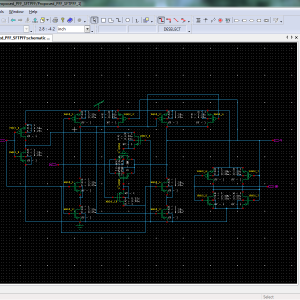
A Highly Efficient Conditional Feed through Pulsed Flip Flop for High Speed Applications
Abstract:
A novel type of highly efficient conditional feed through pulse-triggered flip-flop (P-FF) is proposed and demonstrated. The data-to-output (D-to-Q) delay in this circuit was highly optimized using pre discharging and conditional signal feed through schemes. Power consumption was also reduced using a shared pulse generator and an output feedback-controlled conditional keeper, which diminished the floating status of the internal node. The driving strength of this design was further enhanced by including an additional pull-down path at the output node. Various post layout simulation results applied to 16-nm Fin FET technology demonstrated a higher energy efficiency (at all input data toggle rates) for the proposed topology than comparable P-FF devices. Notably, the proposed model achieved a 62% D-to-Q delay reduction, compared to a transmission gate FF, outperforming the device by more than 66% in terms of power efficiency and 87% in energy efficiency (at a 50% input data toggle rate). Improvements were even more significant in comparison with other conventional P-FFs. These results suggest the proposed design to be a viable new option for high-efficiency sequential elements in high-speed applications.
List of the following materials will be included with the Downloaded Backup: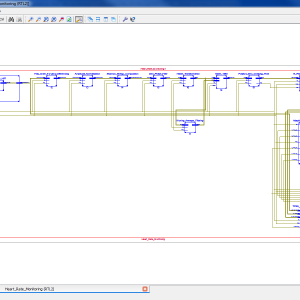
FPGA-Based System For Heart Rate Monitoring
Abstract:
The continuous monitoring of cardiac patients requires an ambulatory system that can automatically detect heart diseases. This study presents a new field programmable gate array (FPGA)-based hardware implementation of the QRS complex detection. The proposed detection system is mainly based on the Pan and Tompkins algorithm, but applying a new, simple, and efficient technique in the detection stage. The new method is based on the centred derivative and the intermediate value theorem, to locate the QRS peaks. The proposed architecture has been implemented on FPGA using the Xilinx System Generator for digital signal processor and the Nexys-4 FPGA evaluation kit. To evaluate the effectiveness of the proposed system, a comparative study has been performed between the resulting performances and those obtained with existing QRS detection systems, in terms of reliability, execution time, and FPGA resources estimation. The proposed architecture has been validated using the 48 half-hours of records obtained from the Massachusetts Institute of Technology - Beth Israel Hospital (MITBIH) arrhythmia database. It has also been validated in real time via the analogue discovery device.
List of the following materials will be included with the Downloaded Backup: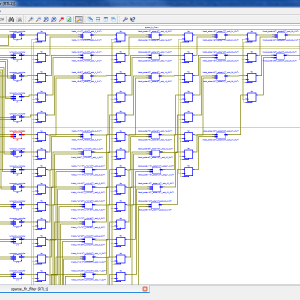
Design of Sparse FIR Filters With Reduced Effective Length
Abstract:
In this paper, an exchange algorithm is proposed to design sparse linear phase finite impulse response (FIR) filters with reduced effective length. The sparse FIR filter design problem is formally an l0-norm minimization problem. This original design problem is re-formulated by encoding the filter coefficients using a binary encoding vector, which represents the locations of the zero and non-zero filter coefficients. An iterative 0-1 exchange process with proper direction control is proposed to propel the minimax approximation error toward the specified upper bound of error for sparsity maximization. The effective length is optimized with a lower priority than sparsity in the proposed algorithm. Simulation results show that the proposed algorithm is superior to the existing algorithms in terms of both sparsity and/or effective length in most cases.
List of the following materials will be included with the Downloaded Backup: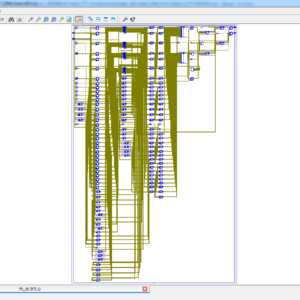
World’s Fastest FFT Architectures: Breaking the Barrier of 100 GS/s
Abstract:
This paper presents the fastest fast Fourier transform (FFT) hardware architectures so far. The architectures are based on a fully parallel implementation of the FFT algorithm. In order to obtain the highest throughput while keeping the resource utilization low, we base our design on making use of advanced shift-and-add techniques to implement the rotators and on selecting the most suitable FFT algorithms for these architectures. Apart from high throughput and resource efficiency, we also guarantee high accuracy in the proposed architectures. For the implementation, we have developed an automatic tool that generates the architectures as a function of the FFT size, input word length and accuracy of the rotations. We provide experimental results covering various FFT sizes, FFT algorithms, and field-programmable gate array boards. These results show that it is possible to break the barrier of 100 GS/s for FFT calculation.
List of the following materials will be included with the Downloaded Backup: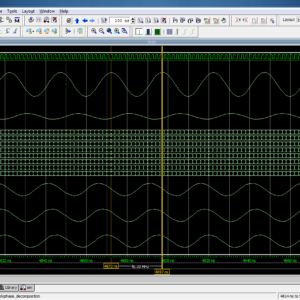
Low-Complexity 2-D Digital FIR Filters Using Polyphase Decomposition and Farrow Structure
Abstract:
This paper proposes a novel realization technique for quadrantally symmetric 2-D finite impulse response filters with a guaranteed reduction in the hardware complexity. Here, the concept of Farrow structure-based interpolation filter design using the polyphase decomposition of the 1-D filter transfer function is effectively utilized in the 2-D domain. The proposed 2-D filter makes use of row-wise polyphase decomposition of the 2-D transfer function or frequency response, followed by the polynomial approximation of the individual polyphase coefficients resulting in Farrow structures corresponding to each row filter. The final coefficients are implemented by varying the delay values in all the Farrow structures, followed by the interpolation of the coefficients obtained from each delay value, which in turn forms the rows in the 2-D kernel. The major highlight of the proposed method is the highly reduced implementation complexity in terms of the number of multipliers and adders, with a low normalized root-mean-square error. Design examples of the circularly symmetric and fan-type filters have been considered to show the efficiency of the approach. The results show a drastic reduction in the implementation complexity of the 2-D filters of upto 20%, with significantly low normalized root-mean-square error lesser than 0.5%.
List of the following materials will be included with the Downloaded Backup: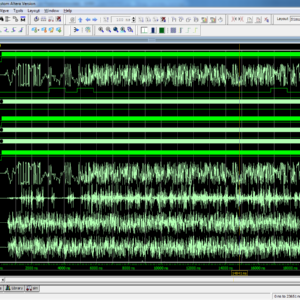
VLSI Design of SVM-Based Seizure Detection System With On-Chip Learning Capability
Abstract:
Portable automatic seizure detection system is very convenient for epilepsy patients to carry. In order to make the system on-chip trainable with high efficiency and attain high detection accuracy, this paper presents a very large scale integration (VLSI) design based on the nonlinear support vector machine (SVM). The proposed design mainly consists of a feature extraction (FE) module and an SVM module. The FE module performs the three level Daubechies discrete wavelet transform to fit the physiological bands of the electroencephalogram (EEG) signal and extracts the time–frequency domain features reflecting the non stationary signal properties. The SVM module integrates the modified sequential minimal optimization algorithm with the table-driven-based Gaussian kernel to enable efficient on-chip learning. The presented design is verified on an Altera Cyclone II field-programmable gate array and tested using the two publicly available EEG datasets. Experiment results show that the designed VLSI system improves the detection accuracy and training efficiency.
List of the following materials will be included with the Downloaded Backup: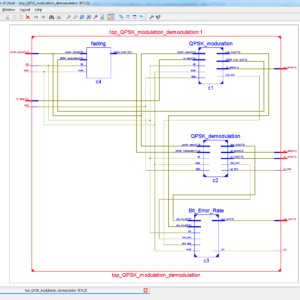
A Low Complexity I/Q Imbalance Calibration Method for Quadrature Modulator
Abstract:
This brief presents a low-complexity I/Q (in-phase and quadrature components) imbalance calibration method for the transmitter using quadrature modulation. Impairments in analog quadrature modulator have a deleterious effect on the signal fidelity. Among the critical impairments, I/Q imbalance (gain and phase mismatches) deteriorates the residual sideband performance of the analog quadrature modulator degrading the error vector magnitude. Based on the theoretical mismatch analysis of the quadrature modulator, we propose a low-complexity I/Q imbalance extraction algorithm. After the parameter extraction, the transmitter is calibrated by imposing the counter imbalanced mismatch of the transmitter through the digital baseband. In comparison with existing I/Q imbalance calibration methods, the novelty of the proposed method lies in that: 1) only three spectrum measurements of the device-under-test are needed for extraction and calibration of gain and phase mismatches; 2) due to the blind nature of the calibration algorithm, the proposed approach can be readily applicable to an existing I/Q transmitter; 3) no extra hardware that degrades the calibration accuracy is required; and 4) due to the non-iterative nature, the proposed method is faster and computationally more efficient than previously published methods.
List of the following materials will be included with the Downloaded Backup: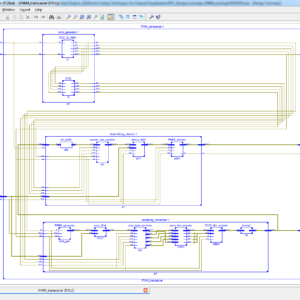
Line Coding Techniques for Channel Equalization: Integrated Pulse-Width Modulation and Consecutive Digit Chopping
Abstract:
This paper presents two new line-coding schemes, integrated pulse width modulation (iPWM) and consecutive digit chopping (CDC) for equalizing lossy wire line channels with the aim of achieving energy efficient wire line communication. The proposed technology friendly encoding schemes are able to overcome the fundamental limitations imposed by Manchester or pulse-width modulation encoding on high-speed wire line transceivers. A highly digital encoder architecture is leveraged to implement the proposed iPWM and CDC encoding. Energy-efficient operation of the proposed encoding is demonstrated on a high-speed wire line transceiver that can operate from 10 to 18 Gb/s. Fabricated in a 65-nm CMOS process, the transceiver operates with supply voltages of 0.9 V, 1 V, and 1.1 V. With the help of the proposed iPWM encoding, the transceiver can equalize over 27-dB of channel loss while operating at 16 Gb/s with an efficiency of 4.37 pJ/bit. The design occupies an active die area of 0.21 mm2.
List of the following materials will be included with the Downloaded Backup: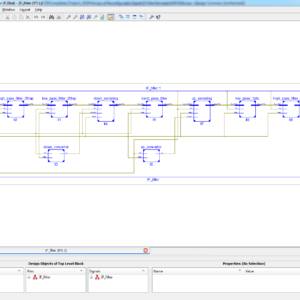
Design of Reconfigurable Digital IF Filter with Low Complexity
Abstract:
Due to limited frequency resources, new services are being applied to the existing frequencies, and service providers are allocating some of the existing frequencies for newly enhanced mobile communications. Because of this frequency environment, repeater and base station systems for mobile communications are becoming more complicated, and frequency interference caused by multiple bands and services is getting worse. Therefore, a heterodyne receiver using IF filters with high selectivity has been used to minimize the interference between frequencies. However, repeater and base station systems in mobile communications employing fixed IF filters cannot actively cope with the usage of multiple frequency bands, the application of various services, and frequency recycling. Therefore, this brief proposes a reconfigurable digital IF filter with variable center frequency and bandwidth while achieving high selectivity as existing IF filters. The center frequency of filter can vary from 10MHz to 62.5MHz, and the filter bandwidth can be selective to one of 10MHz, 15MHz, and 20MHz. The proposed digital filter also reduces the complexity of adders and multipliers by 38.81% and 41.57%, respectively, compared to an existing digital filter by using a filter bank and a multi stage structure. This digital IF filter is fabricated on a 130-nm CMOS process and occupies 5.90 mm2.
List of the following materials will be included with the Downloaded Backup: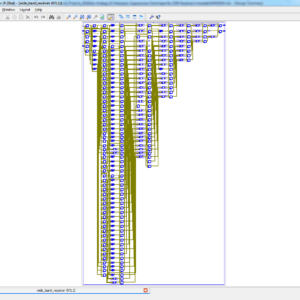
An Analog LO Harmonic Suppression Technique for SDR Receivers
Abstract:
A low-complexity analog technique to suppress the local oscillator (LO) harmonics in software-defined radios is presented. Accurate mathematical analyses show that an effective attenuation of the LO harmonics is achieved by modulating the transconductance of the low-noise transconductance amplifier (LNTA) with a raised-cosine signal. This modulation is performed through the bias network of a cascode device with a negligible increase in the LNTA noise figure. The proposed technique results in a notch at the third harmonic and at least 36 dB of attenuation at the fifth and the seventh harmonics. Experimental results in 130-nm CMOS and post layout simulation results in 65-nm CMOS verify the proper functionality of the proposed technique and the accuracy of the proposed analyses
List of the following materials will be included with the Downloaded Backup: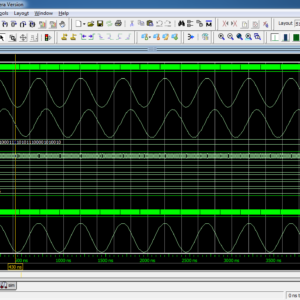
FIR Filter Design based on FPGA
Abstract:
FIR (Finite Impulse Response) Filters: the finite impulse response filter is the most basic components in digital signal processing systems are widely used in communications, image processing, and pattern recognition. Based on FPGA(editable logic device) to achieve FIR filter, not only take into account the fixed -function DSP-specific chip real-time, but also has the DSP processor flexibility. The combination of FPGA and DSP technology can further improve integration, increase work speed and expand system capabilities.
List of the following materials will be included with the Downloaded Backup: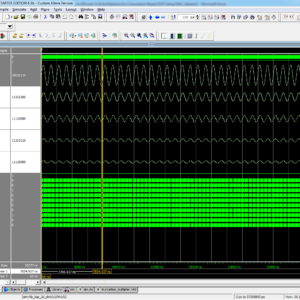
An Efficient VLSI Architecture for Convolution Based DWT Using MAC
Abstract:
The modern real time applications related to image processing and etc., demand high performance discrete wavelet transform (DWT). This paper proposes the floating point multiply accumulate circuit (MAC) based 1D/2D-DWT, where the MAC is used to find the outputs of high/low pass FIR filters. The proposed technique is implemented with 45 nm CMOS technology and the results are compared with various existing techniques. The proposed 8 × 8-point floating point 2-levels 2D-DWT achieves 27.6% and 83.7% of reduction in total area and net power respectively as compared with existing DWT.
List of the following materials will be included with the Downloaded Backup: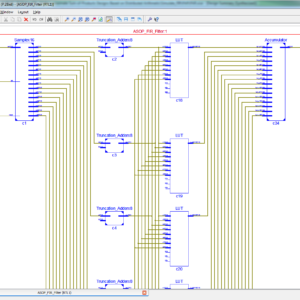
Approximate Sum-of-Products Design Based on Distributed Arithmetic
Proposed Abstract:
Approximate circuits provide high performance and require low power. Sum-of-products (SOP) units are key elements in many digital signal processing applications. In this brief, three approximate SOP (ASOP) models which are based on the distributed arithmetic are proposed. They are designed for different levels of accuracy. First model of ASOP achieves an improvement up to 64% on area and 70% on power, when compared with conventional unit. Other two models provide an improvement of 32% and 48% on area and 54% and 58% on power, respectively, with a reduced error rate compared with the first model. Third model achieves the mean relative error and normalized error distance as low as 0.05% and 0.009%, respectively. Performance of approximate units is evaluated with a noisy image smoothing application, where the proposed models are capable of achieving higher peak signal to-noise ratio than the existing state-of-the-art techniques. It is shown that the proposed approximate models achieve higher processing accuracy than existing works but with significant improvements in power and performance.
List of the following materials will be included with the Downloaded Backup:
Low-Complexity VLSI Design of Large Integer Multipliers for Fully Homomorphic Encryption
Abstract:
Large integer multiplication has been widely used in fully homomorphic encryption (FHE). Implementing feasible large integer multiplication hardware is thus critical for accelerating the FHE evaluation process. In this paper, a novel and efficient operand reduction scheme is proposed to reduce the area requirement of radix-r butterfly units. We also extend the single port, merged-bank memory structure to the design of number theoretic transform (NTT) and inverse NTT (INTT) for further area minimization. In addition, an efficient memory addressing scheme is developed to support both NTT/INTT and resolving carries computations. Experimental results reveal that significant area reductions can be achieved for the targeted 786 432- and 1 179 648-bit NTT-based multipliers designed using the proposed schemes in comparison with the related works. Moreover, the two multiplications can be accomplished in 0.196 and 2.21 ms, respectively, based on 90-nm CMOS technology. The low-complexity feature of the proposed large integer multiplier designs is thus obtained without sacrificing the time performance.
List of the following materials will be included with the Downloaded Backup: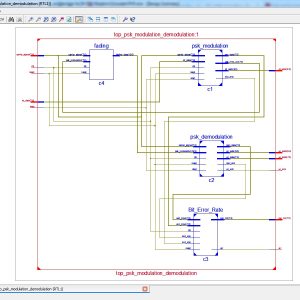
High Performance VLSI architecture for M-PSK modems
Abstract:
M-PSK (phase shift keying) modulation schemes are used in many high-speed applications like satellite communication, as they are more bandwidth and power efficient compared with other schemes. This study presents very large scale integrated circuits (VLSI) architectures for modulators and demodulators of quadrature phase shift keying (QPSK), 4PSK, 8PSK and 16PSK systems, based on the principle of direct digital synthesis. The proposed modulators do not use any multiplier in contrast to the conventional modulators and hence they are relatively fast and area efficient. Based on the coherent detection technique, this study proposes new demodulation algorithms for 4PSK, 8PSK and 16PSK systems which can be implemented both in analogue and digital domains. This study also presents VLSI architectures for all the proposed algorithms. The proposed architectures are described in VHDL and implemented on Xilinx field programmable gate arrays (FPGAs). The simulation results verify their functional validity and implementation results show the suitability of the proposed architectures for satellite communications.
List of the following materials will be included with the Downloaded Backup: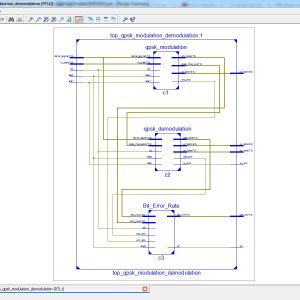
QPSK Modulator on FPGA
Abstract:
The paper presents the theoretical backgrounds of a QPSK Modulation. The QPSK Modulator is then simulated using Modelsim and Xilinx environment tool for FPGA design as well as implemented on a Spartan 6 LX9 FPGA. The modulator algorithm has been implemented on FPGA using the Verilg HDL language on Xilinx ISE 14.2. The local clock oscillator of the board is 50Mhz which corresponds with a period of 20ns. The frequency of the QPSK carrier is 31,250 kHz and because the QPSK symbol is made of two bits, the output frequency is 62,50kbps. The modulator has been designed and simulated and its performances were evaluated by measurements.
List of the following materials will be included with the Downloaded Backup: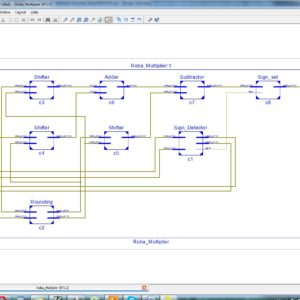
RoBA Multiplier A Rounding Based Approximate Multiplier for High Speed yet Energy Efficient Digital Signal Processing
Abstract:
In this paper, we propose an approximate multiplier that is high speed yet energy efficient. The approach is to round the operands to the nearest exponent of two. This way the computational intensive part of the multiplication is omitted improving speed and energy consumption at the price of a small error. The proposed approach is applicable to both signed and unsigned multiplications. We propose three hardware implementations of the approximate multiplier that includes one for the unsigned and two for the signed operations. The efficiency of the proposed multiplier is evaluated by comparing its performance with those of some approximate and accurate multipliers using different design parameters. In addition, the efficacy of the proposed approximate multiplier is studied in two image processing applications, i.e., image sharpening and smoothing.
List of the following materials will be included with the Downloaded Backup:
Low Power Split Radix FFT Processors Using Radix 2 Butterfly Units
Split radix fast Fourier Transform (SRFFT) is an ideal candidate for the implementation of a low power FFT processor, because it has the lowest number of arithmetic operation among all the FFT algorithms. In the design of such processors, an efficient addressing scheme for FFT data as well as twiddle factors is required. The signal flow graph of SRFFT is the same as radix-2 FFT, and therefore, the conventional address generation schemes of FFT data could also be applied to SRFFT. However SRFFT has irregular locations of twiddle factors and forbids the application of radix-2 address generation methods. This brief presents a shared memory low power SRFFT processor architecture. The SRFFT can be computed by using a modified radix-2 butterfly unit. The butterfly unit exploits the multiplier-gating technique to save dynamic power at the expense of using more hardware resources. In addition, two novel address generation algorithm for both the trivial and nontrivial twiddle factors are developed. In this paper We increases the architecture size, of radix-4 and 2048 point complex valued transform, and shown the performance of area, power and delay, and synthesized xilinx FPGA on s6lx16-2csg225.
List of the following materials will be included with the Downloaded Backup: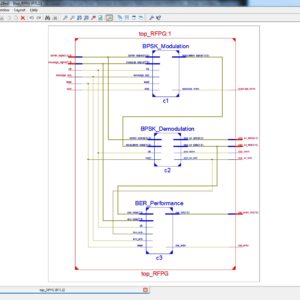
RF Power Gating A Low Power Technique for Adaptive Radios
Low Power System for Detection of Symptomatic Patterns in Audio Biological Signals
We present a low-power, efficacious, and scalable system for the detection of symptomatic patterns in biological audio signals. The digital audio recordings of various symptoms, such as cough, sneeze, and so on, are spectrally analyzed using a discrete wavelet transform. Subsequently, we use simple mathematical metrics, such as energy, quasi-average, and coastline parameter for various wavelet coefficients of interest depending on the type of pattern to be detected. Furthermore, a mel-frequency cepstrum-based analysis is applied to distinguish between signals, such as cough and sneeze, which have a similar frequency response and, hence, occur in common wavelet coefficients. Algorithm-circuit codesign methodology is utilized in order to optimize the system at algorithm and circuit levels of design abstraction. This helps in implementing a low-power system as well as maintaining the efficacy of detection. The system is scalable in terms of user specificity as well as the type of signal to be analyzed for an audio symptomatic pattern. The proposed architecture of this paper analysis the logic size, area and power consumption using Xilinx 14.2.
List of the following materials will be included with the Downloaded Backup: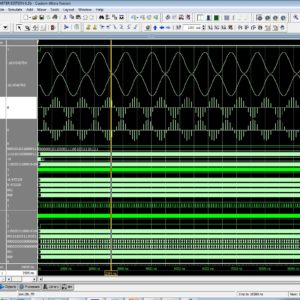
Floating Point Butterfly Architecture Based on Binary Signed Digit Representation
Fast Fourier transform (FFT) coprocessor, having a significant impact on the performance of communication systems, has been a hot topic of research for many years. The FFT function consists of consecutive multiply add operations over complex numbers, dubbed as butterfly units. Applying floating-point (FP) arithmetic to FFT architectures, specifically butterfly units, has become more popular recently. It offloads compute-intensive tasks from general-purpose processors by dismissing FP concerns (e.g., scaling and overflow/underflow). However, the major downside of FP butterfly is its slowness in comparison with its fixed-point counterpart. This reveals the incentive to develop a high-speed FP butterfly architecture to mitigate FP slowness. This brief proposes a fast FP butterfly unit using a devised FP fused-dot product-add (FDPA) unit, to compute AB±CD±E, based on binary signed-digit (BSD) representation. The FP three-operand BSD adder and the FP BSD constant multiplier are the constituents of the proposed FDPA unit. A carry-limited BSD adder is proposed and used in the three-operand adder and the parallel BSD multiplier so as to improve the speed of the FDPA unit. Moreover, modified Booth encoding is used to accelerate the BSD multiplier. The synthesis results show that the proposed FP butterfly architecture is much faster than previous counterparts but at the cost of more area. The proposed architecture of this paper analysis the logic size, area and power consumption using Xilinx 14.2.
List of the following materials will be included with the Downloaded Backup: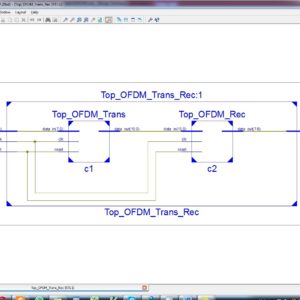
Design and Development of OFDM Baseband Transceiver using VIRTEX 6 FPGA Family
Broadband Wireless Access (BWA) is a successful technology which offers high speed voice, internet connection and video. One of the leading candidates for Broadband Wireless Access is Wi-MAX; it is a technology that compiles with the IEEE 802.16 family of standards. This paper mainly focused towards the hardware Implementation of Wireless MAN-OFDM Physical Layer of IEEE Std 802.16d Baseband Transceiver on FPGA. The RTL coding of VHDL was used, which provides a high level design-flow for developing and validating the communication system protocols and it provides flexibility of changes in future in order to meet real world performance evaluation. This proposed system is analysis area and power. Also the outputs are verified using Xilinx 14.2.
List of the following materials will be included with the Downloaded Backup:
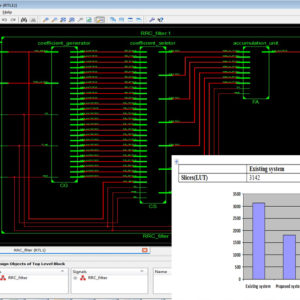
An Efficient VLSI Architecture of a Reconfigurable Pulse Shaping FIR Interpolation
This brief proposes a two-step optimization technique for designing a reconfigurable VLSI architecture of an interpolation filter for multi-standard digital up converter (DUC) to reduce the power and area consumption. The proposed technique initially reduces the number of multiplications per input sample and additions per input sample by 83% in comparison with individual implementation of each standard’s filter while designing a root-raised-cosine finite-impulse response filter for multi-standard DUC for three different standards. In the next step, a 2-bit binary common sub-expression (BCS)-based BCS elimination algorithm has been proposed to design an efficient constant multiplier, which is the basic element of any filter. This technique has succeeded in reducing the area and power usage by 41% and 38%, respectively, along with 36% improvement in operating frequency over a 3-bit BCS-based technique reported earlier, and can be considered more appropriate for designing the multi-standard DUC. The proposed architecture of this paper analysis the logic size, area and power consumption using Xilinx 14.2.
List of the following materials will be included with the Downloaded Backup:
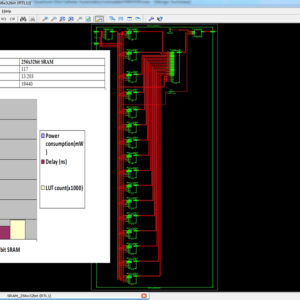
A Novel Quantum Dot Cellular Automata X bit × 32 bit SRAM
Application of quantum-dot cellular automata (QCA) technology as an alternative to CMOS technology on the nanoscale has a promising future; QCA is an interesting technology for building memory. The proposed design and simulation of a new memory cell structure based on QCA with a minimum delay, area, and complexity is presented to implement a static random access memory (SRAM). This paper presents the design and simulation of a 16-bit × 32-bit SRAM with a new structure in QCA. Since QCA is a pipeline, this SRAM has a high operating speed. The 16-bit × 32-bit SRAM has a new structure with a 32-bit width designed and implemented in QCA. It has the ability of a conventional logic SRAM that can provide read/write operations frequently with minimum delay. The 16-bit × 32-bit SRAM is generalized and an n × 16-bit × 32-bit SRAM is implemented in QCA. Novel 16-bit decoders and multiplexers (MUXs) in QCA are presented that have been designed with a minimum number of majority gates and cells. The new SRAM, decoders, and MUXs are designed, implemented, and simulated in QCA using a signal distribution network to avoid the coplanar problem of crossing wires. The QCA-based SRAM cell was compared with the SRAM cell based on CMOS. Results show that the proposed SRAM is more efficient in terms of area, complexity, clock frequency, latency, throughput, and power consumption.
List of the following materials will be included with the Downloaded Backup:
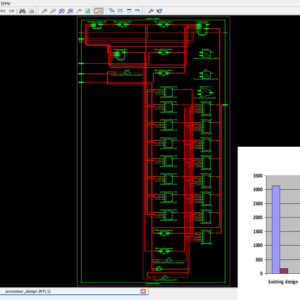
A High Speed FPGA Implementation of an RSD Based ECC Processor
In this paper, an exportable application-specific instruction-set elliptic curve cryptography processor based on redundant signed digit representation is proposed. The processor employs extensive pipelining techniques for Karatsuba–Ofman method to achieve high throughput multiplication. Furthermore, an efficient modular adder without comparison and a highthrough put modular divider, which results in a short datapath for maximized frequency, are implemented. The processor supports the recommended NIST curve P256 and is based on an extended NIST reduction scheme. The proposed architecture of this paper analysis the logic size, area and power consumption using Xilinx 14.2.
List of the following materials will be included with the Downloaded Backup:
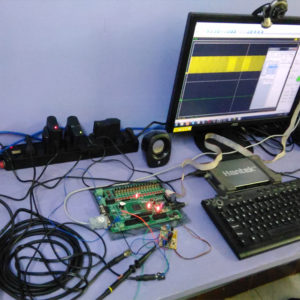
A Multiuser Detection Algorithm in the Uplink SCFDMA System for Green Communication network
In mobile network the multiuser detection mostly in 5G networks with using communication of CDMA, SC-FDMA, UTMS, EDGE, FDMA, WI-MAX etc,. Here SC-FDMA (Single Carrier FDMA) plays major role in 5G networks even the performance of improving Low Power Consumption in Low Peak to average ratio of RF Signal Transmission. The iteration of signal transmission in the same manner of Multi User SC-FDMA requires traditional parallel and serial interference cancellation algorithm for achieving the result in large, where the algorithm is consumed to be low power consumption. In the same manner to eliminate the Multiple access RF communication, here the proposed algorithm is introduces in named Optical Weighted Parallel Interference Cancellation (OWPIC). As a result to implement the SC-FDMA with high precision then traditional Parallel Interference Cancellation(PIC) with Multi User SC-FDMA using OWPIC, and also implement this architecture in FPGA (S5LX9) and finally analysis the logic size, low power consumption, high frequency interference, radio signal interference.
List of the following materials will be included with the Downloaded Backup:
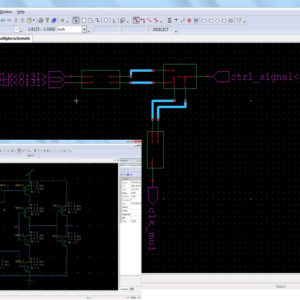
High Speed Low Power and Highly Reliable Frequency Multiplier for DLL Based Clock Generator
To propose a novel frequency multiplier with high-speed, low-power, and highly reliable design for a delay-locked loop-based clock generator to generate a multiplied clock with a high frequency and wide frequency range. The proposed edge combiner achieves a high-speed and highly reliable operation using a hierarchical structure and an overlap canceller. In addition, by applying the logical effort to the pulse generator and multiplication-ratio control logic design, the proposed frequency multiplier minimizes the delay difference between positive- and negative-edge generation paths, which causes a deterministic jitter. Finally, a numerical analysis is performed to analyze and compare the performance of the proposed frequency multiplier with that of previous frequency multipliers. The proposed frequency multiplier is fabricated using a 0.13-µm CMOS process technology, and has the multiplication ratios of 1, 2, 4, 8, and 16, and an output range of 50 MHz–3.3 GHz. The frequency multiplier achieves power consumption is 17.49mW. The proposed architecture of this paper is analysis the logic size, area and power consumption using tanner tool.
List of the following materials will be included with the Downloaded Backup:
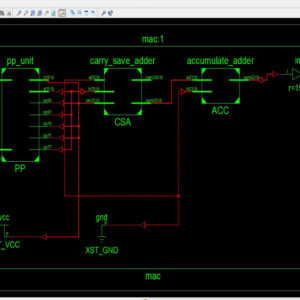
Low Power Compressor Based MAC Architecture for DSP Applications
This paper presents the low power compressor based Multiply-Accumulate (MAC) architecture for DSP applications. In VLSI, highly computed arithmetic cells including adders and multipliers are the most copiously used components. Efficient implementation of arithmetic logic units, floating point units and other dedicated functional components are utilized in most of the microprocessors and digital signal processors (DSPs). Thus in this brief, compressor circuit has been illustrated for the low power applications and also the impact of datapath circuits has been demonstrated. The proposed low power compressor architecture was applied to MAC unit and compared against the conventional compressor based MAC units and observed that the proposed architecture has reduced significant amount of leakage power. The proposed architecture of this paper analysis the logic size, area and power consumption using Xilinx 14.2.
List of the following materials will be included with the Downloaded Backup:
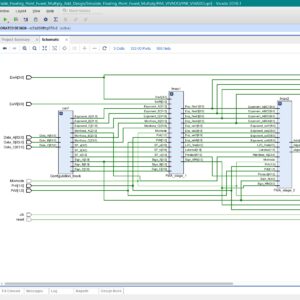
A Configurable Floating-Point Fused Multiply-Add Design with Mixed Precision for AI Accelerators
Base Paper Abstract:
Hardware accelerators for deep learning in artificial intelligence applications must often meet stringent constraints for accuracy and throughput. In addition to architecture/algorithm improvements, high performance computational techniques such as mixed precision are also required. In this paper, a floating-point (FP) fused multiply-add (FMA) unit supporting mixed/multiple precision is proposed. A wide range of conventional FP formats (such as half and single) as well as emerging formats (including E4M3, E5M2, DLFloat, BFLoat16 and TF32) are supported in the proposed design. In addition to all these formats, the proposed design is flexible in manipulating the exponent and mantissa lengths for 8, 16 and 32-bit FP numbers based on the needs of an application. The proposed FMA can be configured to support either multiple normal FMA operations, or alternatively mixed precision in ASIC. It is fully pipelined and in each cycle, the input bit streams are processed based on the provided configuration, so independent of the previous cycles. For normal FMA operations, the proposed design utilizes sharing of resources to parallelize multiple operations based on the available hardware and required precision. For mixed precision the FMA accumulates the lower precision dot products into higher precision to avoid overflow/underflow. It improves computational accuracy by adding all possible dot products at the same time while decreasing the number of rounding operations to prevent rounding errors. An innovative method to accumulate the dot products and the aligned addend is also proposed. By, considering tradeoffs between reusing the available hardware and removing unnecessary complex units, a more efficient and flexible design is attained in terms of hardware metrics and supported different precision computation compared to other designs found in the technical literature. Extensive simulation results for comparative analysis are provided.
List of the following materials will be included with the Downloaded Backup: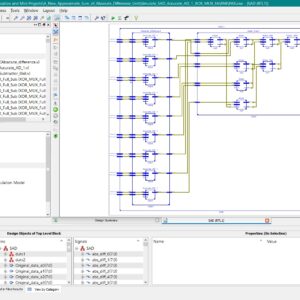
An Efficient Approximate Sum of Absolute Differences Hardware for FPGAs
Proposed Abstract:
Sum of Absolute Differences (SAD) is mainly applied in block-matching tasks such as motion estimation for video compression, stereo matching for depth/disparity calculation, template matching in image/object detection, image registration (including medical imaging), and lightweight optical-flow/tracking systems, because it is simple, fast, and hardware-friendly. The Traditional accurate SAD hardware provides exact results but consumes high power and requires large area, while existing approximate designs reduce cost but often suffer from high errors and poor FPGA-specific optimization. To overcome these limitations, this work proposes an improved SAD hardware architecture that replaces the conventional full adder with a lightweight XOR–MUX structure. This change reduces delay, minimizes area, and increases speed by removing redundant logic and optimizing FPGA resource utilization. The novelty of the design lies in combining approximation with FPGA-aware optimization, achieving bounded error, reduced power consumption, and higher operating frequency. The proposed system is implemented in Verilog HDL and tested on a Xilinx FPGA, showing improvements in LUT usage, clock frequency, and power efficiency, making it suitable for real-time video and image processing applications.
List of the following materials will be included with the Downloaded Backup: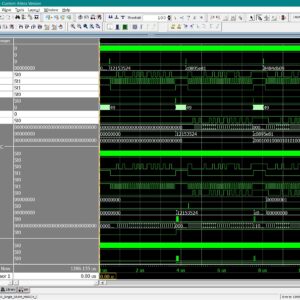
Scalable JTAG-Based 32-Bit Memory Test Architecture with MATS+ and MATS++/March-C Fault Detection
Proposed Abstract:
Embedded memories are increasingly used in advanced System-on-Chip (SoC) designs for applications such as networking, automotive control, and medical imaging, where reliability and performance are critical. Ensuring fault-free operation of these memories is essential, yet memory testing remains a major challenge. Conventional MBIST architectures, while effective, often introduce significant silicon overhead, add design complexity, and lack flexibility for post-fabrication updates. In addition, existing memory test algorithms have their own drawbacks: March-C is widely applied and provides high fault coverage, but it requires long test times due to bit-oriented operations and large numbers of read–write cycles; MATS+ is simple and efficient but suffers from lower coverage, particularly for coupling and complex dynamic faults; and MATS++ improves on MATS+ with better detection capability, yet it still trades off hardware cost and scalability when applied to larger 32-bit word-oriented memories. Furthermore, most existing implementations are optimized for small SRAMs and are not easily scalable to clustered embedded memories in SoCs, nor do they fully exploit standard boundary-scan infrastructure for low-cost testing. To address these problems, this work proposes a scalable JTAG-based 32-bit memory test architecture that reuses IEEE 1149.1 boundary-scan resources to apply and compare March-C, MATS+, and MATS++ algorithms in both single-bit and multi-bit test modes. The proposed framework minimizes additional hardware cost by integrating BIST control into boundary-scan registers, while enabling algorithm programmability and flexibility for different memory clusters. The novelty lies in providing a detailed performance comparison of these algorithms under a unified boundary-scan-based architecture, focusing on trade-offs between fault coverage, test time, and silicon overhead. The design is implemented in Verilog HDL and synthesized on an FPGA using Xilinx Vivado, where parameters such as area, power, and latency are evaluated to validate efficiency and practical applicability for SoC-level memory testing.
List of the following materials will be included with the Downloaded Backup: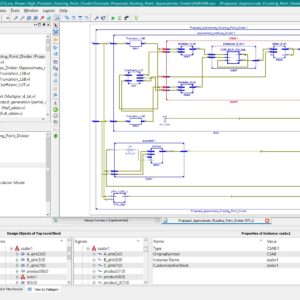
Low-Power High Precision Floating-Point Divider with Bidimensional Linear Approximation
Base Paper Abstract:
In this paper we propose a novel approximate floating-point divider based on bi-dimensional linear approximation. In our approach, the mantissa quotient is seen as a function of the two input mantissas of the divider. The domain of this two-variable function is partitioned into nx × ny subregions, named tiles, where nx, ny are chosen as powers of two. In each tile the quotient is approximated with a linear combination of the input mantissas. To achieve fine accuracy, an optimization problem is formulated within each tile to determine the optimal coefficients for the linear combination, which minimize the Mean Relative Error Distance (MRED) of the divider. Furthermore, to make hardware implementation more effective, the minimization problem is appropriately modified to search for optimal quantized coefficients. The hardware structure of the divider only requires a small look-up table to store the linear approximation coefficients, and a carry save adder tree. The proposed architecture is highly tunable at design-time over a wide range of accuracy, depending on the number of tiles chosen for the approximation. The obtained results demonstrate error performance and hardware features superior to the state-of-the-art. The proposed dividers define the Pareto front, considering the trade-off between power-delay-product vs. MRED and area-delay-product vs. MRED, for MRED in the range of 4 × 10⁻³ − 2 × 10⁻². Application results for JPEG compression and tone mapping further highlight the strength of our proposal, which exhibits Structural Similarity Index (SSIM) very close to 1 in all cases and Peak Signal-to-Noise Ratio (PSNR) up to 45 db. Index Terms: Floating-point divider, approximate computing, error correction, low-power.
List of the following materials will be included with the Downloaded Backup: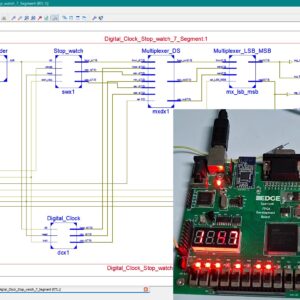
Design and Implementation of a Unified Digital Clock and Stopwatch System Using FSM and Multiplexed Seven-Segment Display
Proposed Abstract:
Digital clocks and stopwatches are widely used in daily applications such as consumer electronics, embedded devices, portable medical instruments, and time monitoring systems, as they provide simple and accurate time tracking functions. These systems offer advantages like low cost, user-friendly operation, and high reliability; however, they often face disadvantages such as hardware redundancy, higher power consumption, and limited integration when clock and stopwatch functions are implemented separately. The main problem addressed in this work is the lack of a unified architecture that can perform both digital clock and stopwatch operations using shared resources, which leads to inefficient hardware utilization and increased complexity in existing designs. Conventional systems generally use independent controllers and dedicated display drivers, resulting in additional overhead. To overcome this limitation, we propose a finite state machine based architecture that integrates both digital clock and stopwatch modules into a single design with common display hardware. The system employs multiplexers and control signals to switch seamlessly between clock and stopwatch modes, while states such as idle, hour, minute, second, and pause are clearly managed through FSM logic. The novelty of this work lies in the resource-sharing approach where a common seven-segment display is driven by multiplexed outputs, thereby reducing area, power, and switching complexity without compromising accuracy. The proposed design is implemented and tested using hardware description language coding and simulated on FPGA-based platforms, ensuring precise timing, functional correctness, and display reliability. Performance evaluation confirms that the system achieves efficient utilization of logic resources, accurate real-time operation, and flexibility for future extension in low-power VLSI and IoT-based applications.
List of the following materials will be included with the Downloaded Backup:
FPGA Implementation of Intelligent Elevator System for AI Applications
Proposed Abstract:
Intelligent elevator systems are used in many smart buildings, offices, hospitals, and tall apartments to move people quickly, reduce waiting time, and save energy. They have many advantages, like faster operation, better safety, and the ability to handle requests from many floors at the same time. But there are also some disadvantages, such as slow response when many people use them, fixed movement patterns that cannot adjust to real-time needs, weak security for restricted floors, and no use of advanced AI features for learning and prediction. Most existing elevator systems are built using microcontrollers with fixed scheduling methods, which cannot easily change their operation or add smart features. The problem in this work is to create an elevator system that works faster, is more secure, can adjust to different situations, and is ready for AI use, while also keeping passengers safe. In this project, we design an elevator controller on FPGA using a finite state machine. The system includes floor request handling, priority scheduling, emergency stop, overload detection, automatic door timing, floor number display, passcode access for special floors, and a fire alarm mode. The new idea in this work is to use the speed and flexibility of FPGA hardware along with an FSM design that can later connect to AI for learning passenger habits and predicting movement needs. This makes the system quick, safe, and adaptable. The design is written in Verilog HDL, tested in ModelSim, and implemented on a Xilinx FPGA board. We measure performance by checking response time, scheduling efficiency, and safety accuracy, and the results show it is suitable for future smart building use.
List of the following materials will be included with the Downloaded Backup:
A Pipelined Fused Multiply-Add Architecture for Configurable FP16 Multi-Operand Operations
Base Paper Abstract:
Multiple precision modes are needed for a floating-point processing element (PE) because they provide flexibility in handling different types of numerical data with varying levels of precision and performance metrics. Performing high-precision floating-point operations has the benefits of producing highly precise and accurate results while allowing for a greater range of numerical representation. Conversely, low-precision operations offer faster computation speeds and lower power consumption. In this paper, we propose a configurable multi-precision processing element (PE) which supports Half Precision, Single Precision, Double Precision, BrainFloat-16 (BF-16) and TensorFloat-32 (TF-32). The design is realized using GPDK 45 nm technology and operated at 281.9 MHz clock frequency. The design was also implemented on Xilinx ZCU104 FPGA evaluation board. Compared with previous state-of-the-art (SOTA) multiprecision PEs, the proposed design supports two more floating point data formats namely BF-16 and TF-32. It achieves the best energy performance with 2368.91 GFLOPS/W and offers 63% improvement in operating
List of the following materials will be included with the Downloaded Backup:
Energy Efficient Compact Approximate Multiplier for Error-Resilient Applications
Base Paper Abstract:
The primary goal of approximate computing is enhancing system performance, such as energy efficiency, speed, and form factor. Despite the growing use of approximate multipliers, the design of efficient approximate compressors — a fundamental multiplier block — remains a significant challenge. In this brief, 8-transistor and 14-transistor 4:2 compressors are proposed. Both compressors exploit CMOS technology and a constant and conditional approximation of selected inputs, exhibiting fewer negative errors. As a result, a resource-expensive error recovery module is eliminated, yielding superior performance as compared with prior art. The 14-transistor architecture yields a lower error rate compared to the 8-transistor architecture, trading off lower area for higher accuracy. The compressor tailored circuit architecture is also proposed and evaluated using image multiplication. The proposed multiplier exhibits 50% area savings and 93% lower power-delay-product compared to the exact multiplier, as well as higher accuracy, and 38% PDP enhancement compared with the state-of-the-art.
List of the following materials will be included with the Downloaded Backup: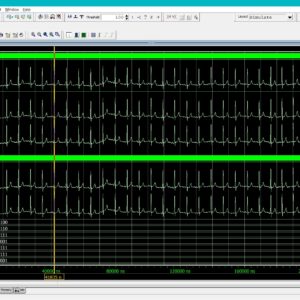
A Unified Approach for Realization of IIR Filters in Delta Domain
Base Paper Abstract:
In this paper, digital realization of IIR filters is concentrated in discrete delta domain. Whenever, a continuous time filter is discretized at fast sampling rate, corresponding discrete time filter in conventional z-domain realization fails to provide meaningful information. In other way, the delta domain based system provides the continuous time results at fast sampling rate leading to the development of a unified method for filter realization in digital domain. Realization of the digital filter using delta operator is having very good finite word length performance under high sampling rate. Three different types of IIR filters are considered for the digital realization in delta domain. The transposed delta direct form II (DDFT-II) structure is used to realize the filters, as it is the most suitable structure for digital filter realization. Butterworth, Chebyshev -2 and Elliptic filters are considered as example and MATLAB Simulink is used to realize the digital filter in delta domain. The frequency
List of the following materials will be included with the Downloaded Backup: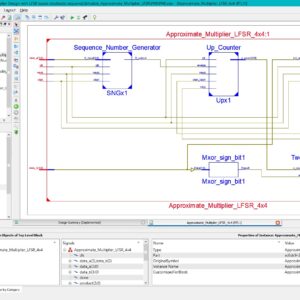
Approximate Multiplier Design with LFSR-Based Stochastic Sequence Generators for Edge AI
Base Paper Abstract:
This letter introduces an innovative approximate multiplier (AM) architecture that leverages stochastically generated bit streams through the Linear Feedback Shift Register (LFSR). The AM is applied to matrix-vector multiplication (MVM) in Neural Networks (NNs). The hardware implementations in 90 nm CMOS technology demonstrate superior power and area efficiency compared to state-of-the-art designs. Additionally, the study explores applying stochastic computing to LSTM NNs, showcasing improved energy efficiency and speed.
List of the following materials will be included with the Downloaded Backup: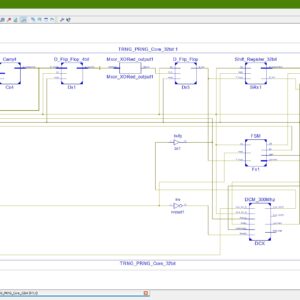
A Hybrid TRNG-PRNG Architecture for High-Performance and Resource-Efficient Random Number Generation on FPGA
Base Paper Abstract:
True random number generators (TRNGs) are fundamentals in many important security applications. Though they exploit randomness sources that are typical of the analog domain, digital-based solutions are strongly required especially when they have to be implemented on Field Programmable Gate Array (FPGA)-based digital systems. This paper describes a novel methodology to easily design a TRNG on FPGA devices. It exploits the runtime capability of the Digital Clock Manager (DCM) hardware primitives to tune the phase shift between two clock signals. The presented auto-tuning strategy automatically sets the phase difference of two clock signals in order to force on one or more flip-flops (FFs) to enter the metastability region, used as a randomness source. Moreover, a novel use of the fast carry-chain hardware primitive is proposed to further increase the randomness of the generated bits. Finally, an effective on-chip post-processing scheme that does not reduce the TRNG throughput is described. The proposed TRNG architecture has been implemented on the Xilinx Zynq XC7Z020 System on Chip (SoC). It passed all the National Institute of Standards and Technology (NIST) SP 800-22 statistical tests with a maximum throughput of 300×106 bit per second. The latter is considerably higher than the throughput of other previously published DCM based TRNGs.
List of the following materials will be included with the Downloaded Backup: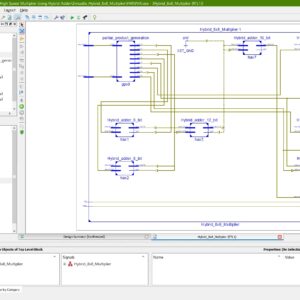
A Novel Design of High Speed Multiplier Using Hybrid Adder Technique
Base Paper Abstract:
Electronic devices are necessary in small spaces in order to provide fast speed and low power consumption. Arithmetic operations determine how quickly electronics operate. In many applications involving VLSI signal processing, multiplication is a necessary arithmetic operation. Thus, to create any kind of signal processing module, a high-speed multiplier is a prerequisite. Every individual has different needs and goals, which has led to the development of different multipliers according to the need of application. In this paper, a Hybrid multiplier is proposed and designed using hybrid adders which is a mixture of Brent Kung adder and Kogge Stone adder which results in less delay i.e. 4.062ns compared to other multipliers existed.
List of the following materials will be included with the Downloaded Backup: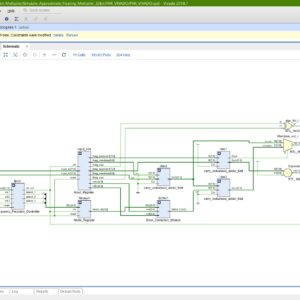
Efficient Approximate Floating-Point Multiplier with Runtime Reconfigurable Frequency and Precision
Base Paper Abstract:
Deep Neural Networks (DNNs) perform intensive matrix multiplications but can tolerate inaccurate intermediate results to some degree. This makes them a perfect target for energy reduction by approximate computing. However, current research in this direction requires DNNs redesign and does not provide the flexibility for users to trade accuracy for energy saving. In this brief, we propose a runtime reconfigurable approximate floating-point multiplier and present details of its hardware implementation. The flexible computation precision is provided by our error correction module, which is controlled by reconfigurable clock signals. The circuit design solves the glitch and metastability problems. The proposed approximate multiplier with three precision levels is evaluated on Synopsys design compiler and Xilinx FPGA platforms. Experimental results demonstrate the advantages of our approach in terms of speed, hardware overhead, and power consumption, while ensuring a controllable accuracy loss for DNNs inferences.
List of the following materials will be included with the Downloaded Backup: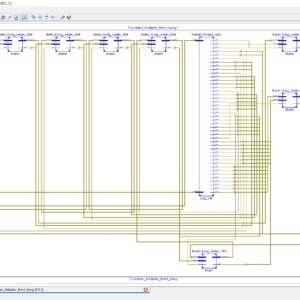
FPGA Implementation of 8×8 Truncated Multiplier Using Brent Kung Parallel Prefix Adder
Proposed Abstract:
Multiplication is a critical operation in many digital signal processing and machine learning applications, where fast and efficient computation is essential. However, conventional multipliers that compute n x n bit products result in significant hardware overhead and increased power consumption. To address these challenges, this paper proposes an FPGA implementation of an 8x8 truncated multiplier utilizing the Brent-Kung parallel prefix adder to improve both speed and resource efficiency. The proposed truncated multiplier limits the output to n bits, discarding the least significant bits and utilizing a variable correction technique to minimize the error introduced by truncation. By selectively summing the most significant columns, the design achieves a balance between accuracy and hardware efficiency, providing a reduced-area solution for approximate computing. The Brent-Kung parallel prefix adder is integrated into the multiplier architecture to optimize the carry propagation stage, reducing the overall critical path delay. This adder is known for its logarithmic depth, which significantly improves the speed of the summation process while using fewer logic gates compared to traditional adders. This design was implemented in Verilog HDL and synthesized on a Xilinx Virtex-5 FPGA platform. Comparative analysis with a conventional multiplier shows that the proposed truncated multiplier achieves a notable reduction in FPGA resource utilization, including logic elements and power consumption, without sacrificing significant accuracy. The architecture particularly suitable for applications where speed and low power consumption are paramount, such as real-time image processing, DSP systems, and machine learning accelerators.
List of the following materials will be included with the Downloaded Backup: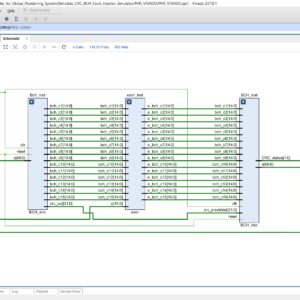
Efficient CRC-BCH Unified Encoder for Global Positioning System
Base Paper Abstract:
GPS uses ECCs to see if an error occurs when the data sent from the satellite reaches the user. Each message structure uses ECCs such as Hamming Code, CRC, BCH Code, and LDPC Code. If the satellite contains all of the encoders, it has a negative impact to the area and power consumption. Therefore, in this paper, we propose a CRC-BCH unified encoder for GPS, which is efficient in terms of space and power consumption. Since both the CRC and BCH encoders use shift registers, the design was made using this part. To replace the existing encoder, the CRC-BCH encoder must have the same output. To validate this, we used individual CRC and BCH encoders and confirmed that the generated output was identical to the output of the proposed encoder. The proposed CRC-BCH unified encoder was synthesized at an operating frequency of 400 MHz using the CMOS 28nm process. The synthesis results showed that it used 16.67% less area and consumed 19.68% less power than the existing encoder. Therefore, the proposed CRC-BCH unified encoder offers advantages in terms of satellite weight and energy efficiency.
List of the following materials will be included with the Downloaded Backup: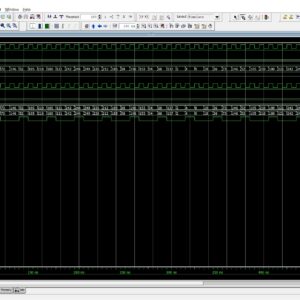
FPGA Implementation of Comparative Analysis and Performance Evaluation for Different LFSR Techniques
Proposed Abstract:
In this study, we explore the implementation and performance evaluation of various Linear Feedback Shift Register (LFSR) techniques on Field Programmable Gate Arrays (FPGAs). LFSRs are fundamental components in numerous digital applications, including cryptography, pseudorandom number generation, error detection, and secure communications. We specifically focus on five different LFSR methodologies: Fibonacci LFSR, Galois LFSR, Non-Linear Feedback Shift Register (NLFSR), Modular LFSR and Masked LFSR. Each technique is implemented on an FPGA platform, utilizing Verilog HDL for design specification and synthesis. The study begins with a detailed examination of the theoretical underpinnings and operational mechanisms of each LFSR technique, followed by their FPGA implementations. We then conduct a comprehensive performance analysis, focusing on critical parameters such as area utilization, power consumption, throughput, and randomness quality. The analysis reveals the strengths and trade-offs associated with each method, providing insights into their suitability for various applications. Our results demonstrate that while Fibonacci and Galois LFSRs offer simplicity and ease of implementation, more advanced techniques like NLFSR and Masked LFSR provide enhanced security features at the cost of increased complexity. The study concludes with recommendations on selecting the appropriate LFSR technique based on the specific requirements of the application, highlighting the balance between security, performance, and resource efficiency in FPGA-based designs.
List of the following materials will be included with the Downloaded Backup:
Design and Implementation of 32-bit CSPRNG using the PRESENT cipher with Dual Polynomial PRNG for Enhanced Randomness and Precision
Base Paper Abstract:
Random Number Generators (RNGs) are substantially used in many security domains, providing a fundamental source of unpredictability essential for tasks such as cryptography, simulations, and statistical analyses. The efficiency and quality of an RNG directly impact the reliability and security of diverse applications, making advancements in RNG design, as explored in this study, of significant importance for enhancing computational processes. This paper presents an innovative Pseudo-Random Number Generator (PRNG) that leverages the efficiency of two carefully selected Linear Feedback Shift Registers (LFSRs) and a connecting XOR gate. The investigation of five polynomials identified an optimal pair, resulting in a notable improvement of over 200X in the length of random bit sequences compared to a single LFSR-based PRNG. The Basys3 FPGA board with the xc7a35tcpg236-1 FPGA chip was used to implement and synthesize the proposed design. Two significant findings emerge from this research. Firstly, using variable polynomials demonstrates a huge enhancement in the duration of randomness, outperforming the impact of variable seeds. A noteworthy observation is that employing the same polynomials in different branches does not result in optimal results. Secondly, managing more seeds is associated with an increased area cost, underscoring the efficiency of handling two polynomials.
List of the following materials will be included with the Downloaded Backup:
Efficient Pseudo Random Number Generator (PRNG) Design on FPGA
Proposed Abstract:
Random Number Generators (RNGs) are substantially used in many security domains, providing a fundamental source of unpredictability essential for tasks such as cryptography, simulations, and statistical analyses. The efficiency and quality of an RNG directly impact the reliability and security of diverse applications, making advancements in RNG design, as explored in this study, of significant importance for enhancing computational processes. This paper presents an innovative Pseudo-Random Number Generator (PRNG) that leverages the efficiency of two carefully selected Linear Feedback Shift Registers (LFSRs) and a connecting XOR gate. The investigation of five polynomials identified an optimal pair, resulting in a notable improvement of over 200X in the length of random bit sequences compared to a single LFSR-based PRNG. The Basys3 FPGA board with the xc7a35tcpg236-1 FPGA chip was used to implement and synthesize the proposed design. Two significant findings emerge from this research. Firstly, using variable polynomials demonstrates a huge enhancement in the duration of randomness, outperforming the impact of variable seeds. A noteworthy observation is that employing the same polynomials in different branches does not result in optimal results. Secondly, managing more seeds is associated with an increased area cost, underscoring the efficiency of handling two polynomials.
List of the following materials will be included with the Downloaded Backup:
Optimized Dual Accumulator based RISC Architecture with Advanced Memory and Peripheral Operations
Proposed Abstract:
This paper presents an optimized Reduced Instruction Set Computer (RISC) architecture that leverages a dual accumulator design to enhance computational efficiency and performance. The architecture is scheduled to support advanced memory management and peripheral operations, addressing the growing need for high-speed data processing in embedded systems. The dual accumulator approach allows for parallel execution of arithmetic operations, reducing the number of instruction cycles and improving overall throughput. The architecture is designed with a focus on optimizing area, delay, and power consumption, making it suitable for resource-constrained environments. The proposed design is implemented using Verilog HDL and synthesized on the Xilinx Vivado platform targeting the Zynq FPGA. The architecture’s performance is verified through extensive simulation in Modelsim, and a comparative analysis is conducted to evaluate the improvements in key parameters such as area utilization, processing delay, and power efficiency. The results demonstrate that the optimized dual accumulator-based RISC architecture significantly outperforms traditional single accumulator designs, making it an ideal solution for modern embedded applications that require both high performance and low power consumption.
List of the following materials will be included with the Downloaded Backup:
Hardware-Efficient Logarithmic Floating-Point Multipliers for Error-Tolerant Applications
Base Paper Abstract:
The increasing computational intensity of important new applications poses a challenge for their use in resource restricted devices. Approximate computing using power-efficient arithmetic circuits is one of the emerging strategies to reach this objective. In this article, five hardware-efficient logarithmic floating-point (FP) multipliers are proposed, which all use simple operators, such as adders and multiplexers, to replace complex and costlier conventional FP multipliers. Radix-4 logarithms are used to further reduce the hardware complexity. These designs produce double-sided error distributions to mitigate error accumulation in complex computations. The proposed multipliers provide superior trade-offs between accuracy and hardware, with up to 30.8% higher accuracy than a recent logarithmic FP design or up to 68× less energy than the conventional FP multiplier. Using the proposed FP logarithmic multipliers in JPEG image compression achieves higher image quality than a recent logarithmic multiplier design with up to 4.7 dB larger peak signal-to-noise ratio. For training in benchmark NN applications, the proposed FP multipliers can slightly improve the classification accuracy while achieving 4.2× less energy and 2.2× smaller area than the state-of-the-art design.
List of the following materials will be included with the Downloaded Backup: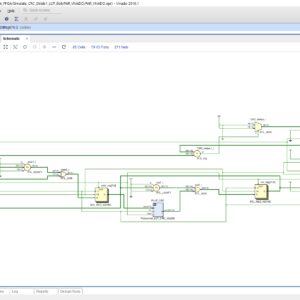
A High Speed CRC-32 Implementation on FPGA
Base Paper Abstract:
Cyclic Redundancy Check (CRC) is widely used for transmission error detection in various communication interfaces. As the transmission rate increases, accelerating CRC with lower resource consumption for high-speed interfaces becomes significant. This paper analyzes and implements a typical CRC algorithm (Stride-x) and designs a padding-zero strategy to support the input data length with multiples of byte. Besides, experiments are conducted to validate the proposed algorithm on Xilinx FPGA platforms. When stride is 1, the proposed algorithm outperforms a typical parallel CRC algorithm in throughput and resource consumption with various input bus widths (32/128/256 bits).
List of the following materials will be included with the Downloaded Backup: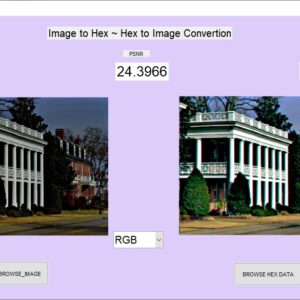
Efficient Image Conversion and Restoration System with Hexadecimal Encoding and Quality Evaluation
Abstract:
The proposed work aims to facilitate the conversion of images into a hexadecimal format for efficient storage and manipulation, and subsequently restore them to their original form. This conversion is beneficial for reducing storage space and simplifying data transmission. The system supports multiple color spaces, including grayscale, RGB, and YCbCr, enhancing its versatility in image processing tasks. Users select an image file, which the system processes according to the selected mode: converting the image or its channels to a hexadecimal format and saving the data to files. During restoration, the system reads the hexadecimal files, reconstructs the image, and displays it. To ensure the fidelity of the restored images, the system computes and displays quality metrics such as Peak Signal-to-Noise Ratio (PSNR), Mean Squared Error (MSE), and Structural Similarity Index (SSIM). This comprehensive solution provides an efficient method for image data handling and quality assessment, ensuring accurate and reliable image restoration.
Proposed System:The proposed system aims to facilitate the conversion of images into a hexadecimal format and subsequently restore them to their original form. This system supports multiple color spaces, including grayscale, RGB, and YCbCr, and evaluates the quality of the restored images using metrics such as Peak Signal-to-Noise Ratio (PSNR), Mean Squared Error (MSE), and Structural Similarity Index (SSIM).
List of the following materials will be included with the Downloaded Backup: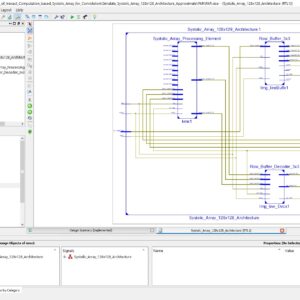
Design and Evaluation of Inexact Computation based Systolic Array for Convolution
Base Paper Abstract:
Systolic Array (SA) architecture is a unique computation architecture where the inputs are continuously flowing, and the processing elements perform the desired computations in parallel. SA’s are prominently investigated due to the emergence of heavy and large processing elements for modern-day Convolution Neural Network (CNN) applications. Taking this cue, SA architectures of the order of kernel size and configured with approximate multipliers are investigated for image processing applications. The approximate array multiplier derived from approximate 4-2 compressors were employed to achieve hardware benefits without losing on the image quality metrics. The SA architecture is configured to the same size as filter kernels in a view to achieve maximum utilization, and the same is compared with other existing SA architectures for hardware metrics. The computational time for processing an image of size 256 × 256 was evaluated for approximated SA. This work investigates approximate SA for Gaussian smoothing and image outline feature extraction applications to showcase the reliability of the design. The novel approximate SA architecture is a step toward designing compact sized SoC designs for real-time image and video processing applications.
List of the following materials will be included with the Downloaded Backup: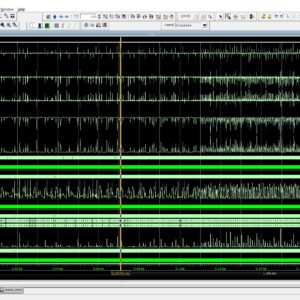
Implementation of High-Precision MFCC Feature Extraction Using FPGA for Speech Recognition
Proposed Abstract:
Speaker recognition is one of the technologies that may be used for biometric identification, and it offers higher application possibilities in many sectors. At the moment, the implementation of the speaker identification algorithm on the hardware is mostly dependent on the SOC of the FPGA. An FPGA-based real-time technique for extracting acoustic characteristics is presented in this research. The method is based on MFCC, which stands for Mel Frequency Cepstral Coefficients. The trials have shown that the FPGA-based MFCC calculation has a high level of accuracy; the purpose of this study is to enhance the performance assessment of MFCC by making use of novelty-based architecture. In this study, a technique for FPGA-based speech recognition is provided. This approach was developed by investigation and analysis of the speaker recognition algorithm. The IFFT, the Mell filter, the DFT, the derivatives, and the Hamming Window with pre-emphasis are every aspect of this approach. This proposed MFCC will be constructed with an AHB interface in order to facilitate higher access DMA Controller when it is used in SOC applications. This work was carried out using Verilog HDL, and it was generated with Xilinx Vivado FPGA. Additionally, all of the parameters were analyzed and compared with regard to area, latency, and power.
List of the following materials will be included with the Downloaded Backup: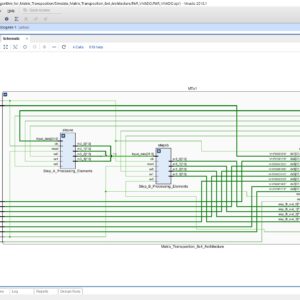
Parallel Pipelined Architecture and Algorithm for Matrix Transposition Using Registers
Base Paper Abstract:
In this brief, we present a new algorithm and architecture for continuous-flow matrix transposition using registers. The algorithm supports P-parallel matrix transposition. The hardware architecture reaches the theoretical minimums in terms of latency and memory. It is composed of a group of identical cascaded basic swap circuits, whose stages are determined by the corresponding algorithm, and can be controlled via a set of counters. Compared with the state-of-the-art architecture, the proposed architecture supports matrices whose rows and columns are integer multiples of P. Here P can be arbitrary, including but not limited to power-of-two integers. Moreover, our results provide additional insight into continuous-flow non-square matrix transposition.
List of the following materials will be included with the Downloaded Backup: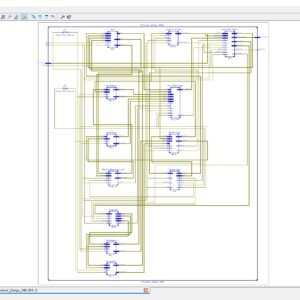
A Reversible Processor Architecture and Its Reversible Logic Design
Proposed Abstract:
This paper presents the design and FPGA implementation of a 16-bit reversible processor architecture employing Fredkin, Feynman, and PERES gate architectures for reversible logic design. Reversible computing offers promising advantages in terms of energy efficiency and information loss prevention, making it suitable for various emerging computing paradigms. The proposed processor architecture encompasses a carefully crafted instruction set, data path, and control logic, all realized using reversible logic gates. Key components such as the ALU, register file, and memory elements are designed with an emphasis on reversibility. The design is implemented using Hardware Description Languages (HDLs), targeting a specific FPGA platform. The paper outlines the design methodology, gate-level implementation details, memory design considerations, FPGA synthesis, and testing procedures. Furthermore, it discusses optimization strategies and presents simulation results to validate the functionality and efficiency of the proposed reversible processor architecture. This work contributes to the advancement of reversible computing and provides insights into the practical realization of reversible processor architectures on FPGA platforms.
List of the following materials will be included with the Downloaded Backup: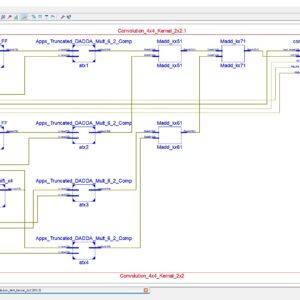
Design and Analysis of a Majority Logic Based Imprecise 6-2 Compressor for Approximate Multipliers
Base Paper Abstract:
Approximate computing is an emerging paradigm for trading off computing accuracy to reduce energy consumption and design complexity in a variety of applications, for which exact computation is not a critical requirement. Different from conventional designs using AND-OR and XOR gates, the majority gate is widely used in many emerging nanotechnologies. An ultra-efficient 6-2 compressor is proposed in this paper. It is composed of two majority gates that lead to low energy consumption and high hardware efficiency. The proposed compressor is utilized in the approximate partial product reduction of a modified 8×8 Dadda multiplier with a truncated structure. Experimental results show that this multiplier realizes a significant reduction in hardware cost, especially in terms of power and area, on average by up to 40% and 31% respectively, compared to exact and state-of-the-art designs. The application of image multiplication is also presented to assess the practicability of the multiplier. The results show that the proposed multiplier results in images with higher quality in peak signal to noise ratio (PSNR) and mean structural similarity index metric (MSSIM) compared to other designs.
List of the following materials will be included with the Downloaded Backup: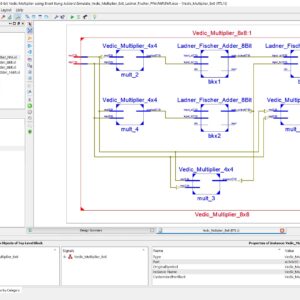
Design of High Speed 8-bit Vedic Multiplier using Brent Kung Parallel Prefix Adder
Base Paper Abstract:
One of the primary purposes of a digital signal processing system is multiplication. The multiplier’s performance affects the DSP system’s overall performance. Therefore, it is crucial to create an effective and quick multiplier implementation design. Vedic mathematics can be used to simplify complex computations so that they are easier to perform verbally. Urdhva Triyambakam is the multiplication algorithm used in Vedic math. In this paper, we employing Brent Kung adder to enhance the Vedic multiplier’s performance. The Urdhva Tiryagbhyam sutra is being used in place of other multiplication strategies since it applies to all instances of algorithms for N x N bit numbers and produces the least amount of latency. Four 4-bit vedic multipliers, two 8-bit Brent Kung adders, one 4-bit Brent Kung adder, and an OR gate are used to create an 8-bit vedic multiplier. A 4-bit vedic multiplier is created similarly by combining four 2-bit vedic multipliers, two 4-bit Brent Kung Adders, one 2-bit Brent Kung Adder, and one OR gate. These four-bit vedic multipliers are then combined to form an eight-bit vedic multiplier. After that, Xilinx Vivado Software is used to simulate and synthesis the 8 x 8 Vedic Multiplier, which was coded in Verilog HDL. The proposed Vedic Multiplier is outperformed in terms of speed when compared to related works.
List of the following materials will be included with the Downloaded Backup: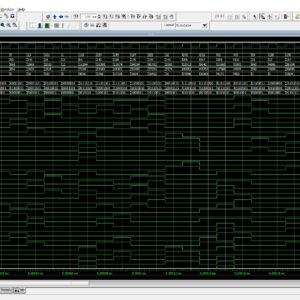
Design and Implementation of an 8-bit Approximate Wallace Tree Multiplier for Energy Efficient Deep Neural Networks
Base Paper Abstract:
Approximate arithmetic computing circuits and architectures have been proven to be energy efficient designs for Deep Neural Networks (DNNs) which are error resilient. In this paper, an approximate 8-bit Wallace Multiplier has been proposed and designed in 90nm CMOS technology for energy efficiency. The proposed 8-bit approximate multiplier design consumes ~32% less energy in comparison to an accurate 8-bit Wallace Tree multiplier with less than 20% Mean Relative Error (MRE).
List of the following materials will be included with the Downloaded Backup: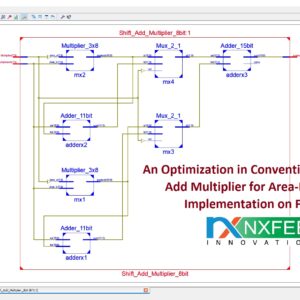
An Optimization in Conventional Shift &Add Multiplier for Area-Efficient Implementation on FPGA
Base Paper Abstract:
FPGA is familiar with prototyping and implementing simple to complex DSP systems. The FPGA based design may be highly affected by factors that include selection of an FPGA board, Electronic Design Automation Tool and the Programming Techniques to optimize the algorithm. The algorithm optimization results in a more compact design regarding the area and achieved frequency. In DSP algorithms optimization, the major bottleneck is the multiplier complexity evident in, for example - FIR, IIR, FFT, and others. Research shows much work on multiplier optimization. Despite all possible optimization techniques, the multiplier consumes tremendous resources when translated on hardware, with more power consumption and observed delay. The proposed work is novel in that it brings resources optimization in a familiar shift and add multiplier algorithm by implementing the design in FPGA and comparing the results with the existing shift, and add a multiplier. In the implementation of the design, Xilinx Vertex -7 FPGA is used along with ISE 14.2 simulators. The parameters to compare are the Lookup tables (Logic element of FPGA), adder/subtractors and the multiplexers, along with performance characters, like the operating frequency, delay and total levels of logic (path travelled by the signal in register transfer level). The output shows that the anticipated design is an excellent alternative to the conventional shift and add algorithm.
List of the following materials will be included with the Downloaded Backup: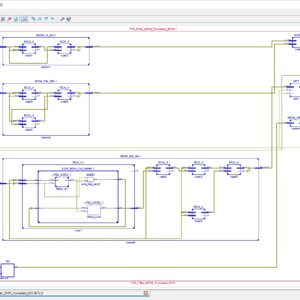
Toward the Multiple Constant Multiplication at Minimal Hardware Cost
Base Paper Abstract:
Multiple Constant Multiplication (MCM) over integers is a frequent operation arising in embedded systems that require highly optimized hardware. An efficient way is to replace costly generic multiplication by bit-shifts and additions, i. e. a multiplier less circuit. In this work, we improve the state of-the-art optimal approach for MCM, based on Integer Linear Programming (ILP). We introduce a new low-level hardware cost metric, which counts the number of one-bit adders and demonstrate that it is strongly correlated with the LUT count. This new model permitted us to consider intermediate truncations that permit to significantly save resources when a full output precision is not required. We incorporate the error propagation rules into our ILP model to guarantee a user-given error bound on the MCM results. The proposed ILP models for multiple flavors of MCM are implemented as an open-source tool and, combined with an automatic code generator, provide a complete coefficient-to-VHDL flow. We evaluate our models in extensive experiments, and propose an in-depth analysis of the impact that design metrics have on synthesized hardware.
List of the following materials will be included with the Downloaded Backup: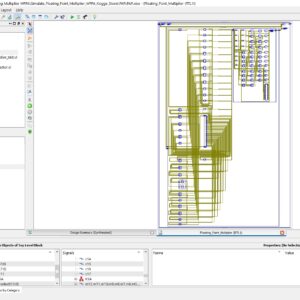
FPGA Implementation of Single Precision Floating Point Multiplier using High Speed Parallel Prefix Adder based Wallace Tree Multiplier
Base Paper Abstract:
In this paper present, an efficient implementation of single precision method of floating point multiplier target for Xilinx Vertex 5 FPGA using Verilog HDL. The floating point implementation will cover up with 23-bit exponent, 8-bit mantissa, and 1 sign bit. This proposed architecture implement with high speed parallel prefix adder based Wallace Tree Multiplier. a Wallace tree multiplication will provide effective terms of low logic sizes and more speed of operations. In a recent arithmetic applications based circuit design will have more demand with high speed and low area, in this manner the proposed approach of this work will improve the speed of Wallace tree multiplier using 4:2 compressor method without degrading its area parameter. Thus, the proposed method will integrate more efficient and more reliable Kogge stone parallel prefix, Brent kung parallel prefix, Sklansky parallel prefix addition operation in the Wallace tree multiplication on final addition stage at 16-bit data width. Finally, done this floating point multiplier architecture with Wallace tree architecture included normalized rounding method and to reduce area, delay and power. The error difference will have analyzed using Modelsim Software, and analyses optimized logic size's, delay and power consumptions.
List of the following materials will be included with the Downloaded Backup: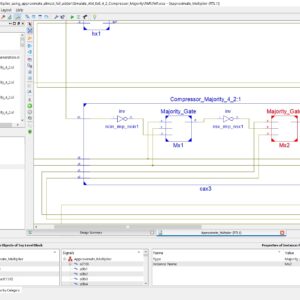
Low power Dadda multiplier using approximate almost full adder and Majority logic based adder compressors
Base Paper Abstract:
An Approximate computing is widely used to have energy-efficient system design in Very Large-Scale Integration (VLSI). This approach is best suited for signal processing and multimedia applications where low power consumption is the main concern. Faster and significant results can be obtained from an approximate computing at the cost of reduced accuracy. In this work, we proposed a very novel design approaches based on various monolithic 4:2 compressors. Proposed approach is applied to have reduced stages in the partial product multiplication. Proposed Monolithic compressor had outperformed over various 4:2 compressors. Our proposed method is based on majority logic based with the use of Dadda multiplication. A new-partial product reduction format is implemented by this multiplier, which reduces the maximum output delay. This method of approach significantly reduces the utilization of number of MOSFETs compared to other multiplier such as Wallace Tree Multipliers. Simulation results are compared with conventional Dadda multiplier and ML based 4:2 compressors. Proposed approximate computing based almost full adder based majority logic based Dadda multiplier achieves reduction of 60.93% in area utilization 72.48% reduction in dynamic power reduction while processing time is also reduced by 72.98%. Dadda multiplication outperforms the other compressors.
List of the following materials will be included with the Downloaded Backup:
Two Efficient Approximate Unsigned Multipliers by Developing New Configuration for Approximate 4:2 Compressors
Base Paper Abstract:
Approximate computing is a promising approach for reducing power consumption and design complexity in applications that accuracy is not a crucial factor. Approximate multipliers are commonly used in error-tolerant applications. This paper presents three approximate 4:2 compressors and two approximate multiplier designs, aiming at reducing the area and power consumption, while maintaining acceptable accuracy. The paper seeks to develop approximate compressors that align positive and negative approximations for input patterns that have the same probability. Additionally, the proposed compressors are utilized to construct approximate multipliers for different columns of partial products based on the input probabilities of the two compressors in adjacent columns. The proposed approximate multipliers are synthesized using the 28nm technology. Compared to the exact multiplier, the first proposed multiplier improves power × delay and area × power by 91% and 86%, respectively, while the second proposed multiplier improves the two parameters by 90% and 84%, respectively. The performance of the proposed approximate methods was assessed and compared with the existing methods for image multiplication, sharpening, smoothing and edge detection. Also, the performance of the proposed multipliers in the hardware implementation of the neural network was investigated, and the simulation results indicate that the proposed multipliers have appropriate accuracy in these applications.
List of the following materials will be included with the Downloaded Backup:
Optimizing Ternary Multiplier Design with Fast Ternary Adder
Base Paper Abstract:
Existing ternary multiplier designs are difficult to use in ternary systems. Thus, ternary Wallace tree multipliers that reduce the number of transistors by using 4-input ternary adders are proposed to improve the performance of existing ternary multipliers. A ternary carry-select adder is also proposed to reduce the carry propagation delay, used as a carry-chain adder of the Wallace tree. The proposed multipliers are designed with a custom ternary standard cell library synthesized by multi-threshold complementary metal-oxide-semiconductor (CMOS) with a 28 nm process. Power and delay are verified via HSPICE simulation. The proposed 36 × 36 ternary multiplier shows 79.3% power-delay product improvement over the previous ternary multiplier. The proposed 40 × 40 ternary multiplier shows a power-delay product comparable with that of the 64 × 64 binary multiplier synthesized using Synopsys Design Compiler.
List of the following materials will be included with the Downloaded Backup: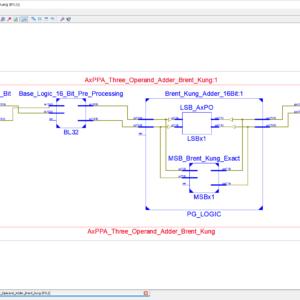
AxPPA: Approximate Parallel Prefix Adders
Base Paper Abstract:
Addition units are widely used in many computational kernels of several error-tolerant applications such as machine learning and signal, image, and video processing. Besides their use as stand-alone, additions are essential building blocks for other math operations such as subtraction, comparison, multiplication, squaring, and division. The parallel prefix adders (PPAs) is among the fastest adders. It represents a parallel prefix graph consisting of the carry operator nodes, called prefix operators (POs). The PPAs, in particular, are among the fastest adders because they optimize the parallelization of the carry generation (G) and propagation (P). In this work, we introduce approximate PPAs (AxPPAs) by exploiting approximations in the POs. To evaluate our proposal for approximate POs (AxPOs), we generate the following AxPPAs, consisting of a set of four PPAs: approximate Brent–Kung (AxPPA-BK), approximate Kogge–Stone (AxPPAKS), Ladner-Fischer (AxPPA-LF), and Sklansky (AxPPA-SK). We compare four AxPPA architectures with energy-efficient approximate adders (AxAs) [i.e., Copy, error-tolerant adder I (ETAI), lower-part OR adder (LOA), and Truncation (trunc)]. We tested them generically in stand-alone cases and embedded them in two important signal processing application kernels: a sum of squared differences (SSDs) video accelerator and a finite impulse response (FIR) filter kernel. The AxPPA-LF provides a new Pareto front in both energy-quality and area-quality results compared to state-of-the-art energy-efficient AxAs.
List of the following materials will be included with the Downloaded Backup: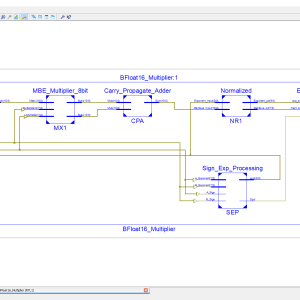
Variable-Precision Approximate Floating-Point Multiplier for Efficient Deep Learning Computation
Base Paper Abstract:
In this brief, a variable-precision approximate floating-point multiplier is proposed for energy efficient deep learning computation. The proposed architecture supports approximate multiplication with BFloat16 format. As the input and output activations of deep learning models usually follow normal distribution, inspired by the posit format, for numbers with different values, different precisions can be applied to represent them. In the proposed architecture, posit encoding is used to change the level of approximation, and the precision of the computation is controlled by the value of product exponent. For large exponent, smaller precision multiplication is applied to mantissa and for small exponent, higher precision computation is applied. Truncation is used as approximate method in the proposed design while the number of bit positions to be truncated is controlled by the values of the product exponent. The proposed design can achieve 19% area reduction and 42% power reduction compared to the normal BFloat16 multiplier. When applying the proposed multiplier in deep learning computation, almost the same accuracy as that of normal BFloat16 multiplier can be achieved.
List of the following materials will be included with the Downloaded Backup: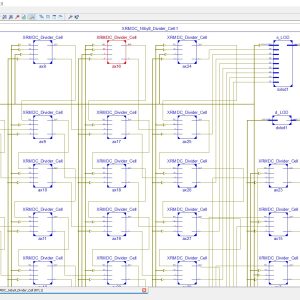
Power Efficient Approximate Divider Architecture for Error Resilient Applications
Base Paper Abstract:
Approximate computing is an emerging paradigm in error-tolerant applications that leads to power-efficient designs without significant loss in quality. The divider in these applications have complex hardware and more latency among the computational blocks resulting in power consumption. Hence approximating the division module would lead to designs with vastly improved power efficiency. A new approximate subtractor (AxSUB) is proposed in this paper with the intent to reduce the hardware complexity while achieving accuracy within permissible limits. The proposed AxSUB and existing approximate subtractor units are used in the restoring array division (RAD) architecture to prove the efficacy of the AxSUB. Comprehensive error and synthesis analysis are performed on RAD architectures implemented using AxSUB, and existing methods. Our proposed design achieved a 21% decrease in area and a 28% decrease in power consumption compared to the exact design. The proposed and existing RAD architectures is implemented on change detection applications to validate the quality-effort tradeoff.
List of the following materials will be included with the Downloaded Backup: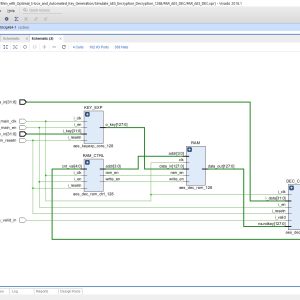
Advanced Encryption Standard Algorithm with Optimal S-box and Automated Key Generation
Base Paper Abstract:
Advanced Encryption Standard (AES) algorithm plays an important role in a data security application. In general S-box module in AES will give maximum confusion and diffusion measures during AES encryption and cause significant path delay overhead. In most cases, either LUTs or embedded memories are used for S- box computations which are vulnerable to attacks that pose a serious risk to real-world applications. In this paper, implementation of the composite field arithmetic-based Sub-bytes and inverse Sub-bytes operations in AES is done. The proposed work includes an efficient multiple round AES cryptosystem with higher-order transformation and composite field s-box formulation with some possible inner stage pipelining schemes which can be used for throughput rate enhancement along with path delay optimization. Finally, input biometric-driven key generation schemes are used for formulating the cipher key dynamically, which provides a higher degree of security for the computing devices.
List of the following materials will be included with the Downloaded Backup:
Power Efficient Tiny Yolo CNN Using Reduced Hardware Resources Based on Booth Multiplier and WALLACE Tree Adders
Base Paper Abstract:
Convolutional Neural Network (CNN) has attained high accuracy and it has been widely employed in image recognition tasks. In recent times, deep learning-based modern applications are evolving and it poses a challenge in research and development of hardware implementation. Therefore, hardware optimization for efficient accelerator design of CNN remains a challenging task. A key component of the accelerator design is a processing element (PE) that implements the convolution operation. To reduce the amount of hardware resources and power consumption, this article provides a new processing element design as an alternate solution for hardware implementation. Modified BOOTH encoding (MBE) multiplier and WALLACE tree-based adders are proposed to replace bulky MAC units and typical adder tree respectively. The proposed CNN accelerator design is tested on Zynq-706 FPGA board which achieves a throughput of 87.03 GOP/s for Tiny-YOLO-v2 architecture. The proposed design allows to reduce hardware costs by 24.5% achieving a power efficiency of 61.64 GOP/s/W that outperforms the previous designs.
List of the following materials will be included with the Downloaded Backup: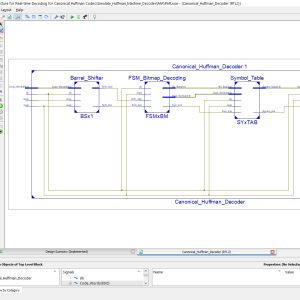
Reconfigurable Architecture for Real-time Decoding of Canonical Huffman Codes
Base Paper Abstract:
Data compression is an important algorithm which has found its use in modern day algorithms such as Convolutional Neural Networks (CNNs). Reconfigurable platforms (like FPGAs) have strong capabilities to implement time complex tasks like CNNs, however, these algorithms present a big challenge due to high resource demand. Data compression is one of the most utilized techniques to reduce memory utilization in FPGAs. The weights of CNN architecture are usually encoded to store in FPGA. In this paper, we propose design of an efficient decoder based on Canonical Huffman that can be utilized for the efficient decompression of weights in CNN. The proposed design makes use of Hash functions to effectively decode the weights eliminating the need for searching dictionary. The proposed design decodes a single weight in a single clock cycle. Our proposed design has a maximum frequency of 408.97MHz utilizing 1% of system LUTs when tested for Aritix 7 platform.
List of the following materials will be included with the Downloaded Backup:
Energy-Efficient VLSI Realization of Binary64 Division With Redundant Number Systems
Base Paper Abstract:
VLSI realizations of digit-recurrence binary division usually use redundant representation of partial remainders and quotient digits. The former allows for fast carry-free computation of the next partial remainder, and the latter leads to less number of the required divisor multiples. In studying the previous relevant works, we have noted that the binary carry save (CS) number system is prevalent in the representation of partial remainders, and redundant high radix representation of quotient digits is popular in order to reduce the cycle count. In this paper, we explore a design space containing four division architectures. These are based on binary CS or radix-16 signed digit (SD) representations of partial remainders. On the other hand, they use full or partial pre computation of divisor multiples. The latter uses smaller multiplexer at the cost two extra adders, where one of the operands is constant within all cycles. The quotient digits are represented by radix-16 [−9,9]SDs. Our synthesis-based evaluation of VLSI realizations of the best previous relevant work and the four proposed designs show reduced power and energy figures in the proposed designs at the cost of more silicon area and delay measures. However, our energy-delay product is 26%–35% less than that of the reference work.
List of the following materials will be included with the Downloaded Backup: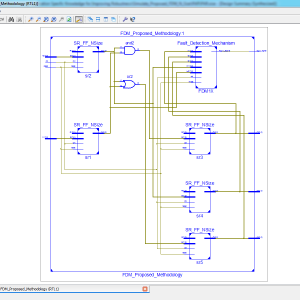
Determining Application-Specific Knowledge for Improving Robustness of Sequential Circuits
Base Paper Abstract:
Due to their shrinking feature sizes as well as environmental influences, such as high-energy radiation, electrical noise, and particle strikes, integrated circuits are getting more vulnerable to transient faults. Accordingly, how to make those circuits more robust has become an essential step in today’s design flows. Methods increasing the robustness of circuits against these faults already exist for a long period of time but either introduce huge additional logic, change the timing behavior of the circuit, or are applicable for dedicated circuits such as microprocessors only. In this paper, we propose an alternative method, which overcomes these drawbacks by determining application specific knowledge of the circuit, namely the relations of flip-flops and when they assume the same value. By this, we exploit partial redundancies, which are inherent in most circuits anyway (even the optimized ones), to frequently compare the circuit signals for their correctness—eventually leading to an increased robustness. Since determining the correspondingly needed information is a computationally hard task, formal methods, such as bounded model checking, satisfiability-based automatic test pattern generation, and binary decision diagrams, are utilized for this purpose. The resulting methodology requires only a slight increase in additional hardware, does only influence the timing behavior of the circuit negligibly, and is automatically applicable to arbitrary circuits. Experimental evaluations confirm these benefits.
List of the following materials will be included with the Downloaded Backup:
Approximate Multiplier Design Using Novel Dual-Stage 4 : 2 Compressors
Base Paper Abstract:
High speed multimedia applications have paved way for a whole new area in high speed error-tolerant circuits with approximate computing. These applications deliver high performance at the cost of reduction in accuracy. Furthermore, such implementations reduce the complexity of the system architecture, delay and power consumption. This paper explores and proposes the design and analysis of two approximate compressors with reduced area, delay and power with comparable accuracy when compared with the existing architectures. The proposed designs are implemented using 45 nm CMOS technology and efficiency of the proposed designs have been extensively verified and projected on scales of area, delay, power, Power Delay Product (PDP), Error Rate (ER), Error Distance (ED), and Accurate Output Count (AOC). The proposed approximate 4 : 2 compressor shows 56.80% reduction in area, 57.20% reduction in power, and 73.30% reduction in delay compared to an accurate 4 : 2 compressor. The proposed compressors are utilised to implement 8 × 8 and 16 × 16 Dadda multipliers. These multipliers have comparable accuracy when compared with state-of-the-art approximate multipliers. The analysis is further extended to project the application of the proposed design in error resilient applications like image smoothing and multiplication.
List of the following materials will be included with the Downloaded Backup:
Algorithm Level Error Detection in Low Voltage Systolic Array
Base Paper Abstract:
In this brief an approach is proposed to achieve energy savings from reduced voltage operation. The solution detects timing-errors by integrating Algorithm Based Fault Tolerance (ABFT) into a digital architecture. The approach has been studied with a systolic array matrix multiplier operating at reduced voltages, detecting errors on-the-fly to avoid energy demanding memory round-trips. The analysis of the solution has been done using analog-digital co-simulation to extract the transient behavior under different voltages and clock frequencies. HSPICE simulations using 90nm CMOS transistor models, and experiments by reducing operation voltage of an FPGA device were carried out. HSPICE simulations, showed possibility of 10x increase in energy-efficiency by approaching near-threshold region.
List of the following materials will be included with the Downloaded Backup:
Probability-Driven Evaluation of Lower-Part Approximation Adders
Abstract:
Parallel prefix adder topologies suffer from carry chains forming critical paths, limiting the performance and therefore the efficiency. We study approximation methods that offload the lower-part of calculation to an approximate unit and shorten the carry chain. We derive their accuracy models using probability theory. These models can replace Monte Carlo simulations. Furthermore, they can reveal better accuracy trade-offs without going through the RTL design, synthesis, and simulation of each unit and approximation level individually. Thus, they can eliminate the required design and simulation time and effort. After analyzing area-wise comparisons at varying number of approximated bits, we show that choosing a design that outperforms the others probabilistically also outperforms them in terms of accuracy, power, and performance trade-offs.
List of the following materials will be included with the Downloaded Backup:
A High-Throughput VLSI Architecture Design of Canonical Huffman Encoder
Abstract:
In this brief, a high-throughput Huffman encoder VLSI architecture based on the Canonical Huffman method is proposed to improve the encoding throughput and decrease the encoding time required by the Huffman code word table construction process. We proposed parallel computing architectures for frequency-statistical sorting and code-size computational sorting. This architecture results in a process of building a tree and assigning symbols that can be completed by scanning the data only once. This solves the problem of the low efficiency of the traditional algorithm, which needs to scan the data twice. Consequently, in addition to the advantages of the high compression ratio inherited from the Canonical Huffman, the proposed architecture has overridden advantages for a high parallelism processing capacity. The experimental results showed that the proposed architecture decreased the encoding time by 26.30% compared to the available Huffman encoder using the standard algorithm when encoding 256 8-bit symbols. Furthermore, the VLSI architecture could further decrease the encoding time when encoding more 8-bit symbols. In particular, when encoding 212,642 8-bit symbols, the proposed VLSI architecture could reduce the encoding time by 87.40%. Thus, compared with the traditional Huffman encoders, this brief achieved the improvement of coding efficiency.
List of the following materials will be included with the Downloaded Backup:
A Novel In-Memory Wallace Tree Multiplier Architecture Using Majority Logic
Abstract:
In-memory computing using emerging technologies such as resistive random-access memory (ReRAM) addresses the ‘von Neumann bottleneck’ and strengthens the present research impetus to overcome the memory wall. While many methods have been recently proposed to implement Boolean logic in memory, the latency of arithmetic circuits (adders and consequently multipliers) implemented as a sequence of such Boolean operations increases greatly with bit-width. Existing in-memory multipliers require O(n2) cycles which is inefficient both in terms of latency and energy. In this work, we tackle this exorbitant latency by adopting Wallace Tree multiplier architecture and optimizing the addition operation in each phase of the Wallace Tree. Majority logic primitive was used for addition since it is better than NAND/NOR/IMPLY primitives. Furthermore, high degree of gate-level parallelism is employed at the array level by executing multiple majority gates in the columns of the array. In this manner, an in-memory multiplier of O(n.log(n)) latency is achieved which outperforms all reported in-memory multipliers. Furthermore, the proposed multiplier can be implemented in a regular transistor-accessed memory array without any major modifications to its peripheral circuitry and is also energy-efficient.
List of the following materials will be included with the Downloaded Backup: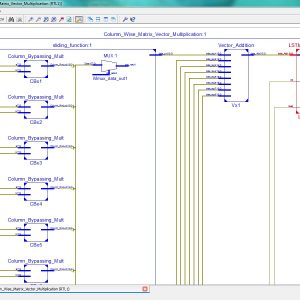
Recurrent Neural Networks With Column-Wise Matrix–Vector Multiplication on FPGAs
Abstract:
This article presents a reconfigurable accelerator for Recurrent Neural networks with fine-grained Column Wise matrix–vector multiplication (RENOWN). We propose a novel latency-hiding architecture for recurrent neural network (RNN) acceleration using column-wise matrix–vector multiplication (MVM) instead of the state-of-the-art row-wise operation. This hardware (HW) architecture can eliminate data dependencies to improve the throughput of RNN inference systems. Besides, we introduce a configurable checkerboard tiling strategy which allows large weight matrices, while incorporating various configurations of element-based parallelism (EP) and vector-based parallelism (VP). These optimizations improve the exploitation of parallelism to increase HW utilization and enhance system throughput. Evaluation results show that our design can achieve over 29.6 tera operations per second (TOPS) which would be among the highest for field-programmable gate array (FPGA)-based RNN designs. Compared to state-of-the-art accelerators on FPGAs, our design achieves 3.7–14.8 times better performance and has the highest HW utilization.
List of the following materials will be included with the Downloaded Backup: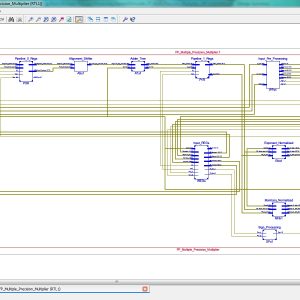
A Configurable Floating Point Multiple Precision Processing Element for HPC and AI Converged Computing
Abstract:
There is an emerging need to design configurable accelerators for the high-performance computing (HPC) and artificial intelligence (AI) applications in different precisions. Thus, the floating-point (FP) processing element (PE), which is the key basic unit of the accelerators, is necessary to meet multiple-precision requirements with energy-efficient operations. However, the existing structures by using high-precision-split (HPS) and low-precision-combination (LPC) methods result in low utilization rate of the multiplication array and long multi term processing period, respectively. In this article, a configurable FP multiple-precision PE design is proposed with the LPC structure. Half precision, single precision, and double precision are supported. The 100% multiplier utilization rate of the multiplication array for all precisions is achieved with improved speed in the comparison and summation process. The proposed design is realized in a 28-nm process with 1.429-GHz clock frequency. Compared with the existing multiple-precision FP methods, the proposed structure achieves 63% and 88% areasaving performance for FP16 and FP32 operations, respectively. The 4× and 20× maximum throughput rates are obtained when compared with fixed FP32 and FP64 operations. Compared with the previous multiple-precision PEs, the proposed one achieves the best energy-efficiency performance with 975.13 GFLOPS/W.
List of the following materials will be included with the Downloaded Backup: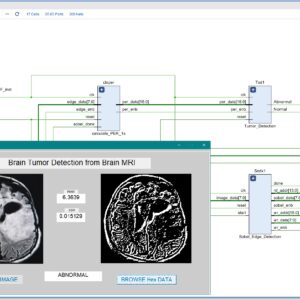
FPGA-Based Brain Tumor Detection from MRI Using 3×3 Convolution Soft IP Core with Stride 1
Base Paper Abstract:
This paper presents an efficient FPGA-based system for automatic brain tumor detection from MRI images using a 3x3 convolutional edge detection method with stride 1. The proposed architecture is developed as a soft IP core in Verilog HDL and synthesized on a Xilinx Zynq 7000 FPGA platform. The system applies a customized 3x3 convolution kernel over each MRI image with stride 1, ensuring that every pixel is processed and fine image details are preserved for accurate tumor detection. Edge detection results are used to segment and highlight abnormal regions, and a thresholding mechanism is employed to differentiate between normal and abnormal images. Hardware resource utilization—including look-up tables (LUTs), flip-flops (FFs), and power consumption—is analyzed after synthesis to verify system efficiency. Experimental results confirm that the proposed FPGA implementation provides real-time processing and reliable brain tumor detection with low power usage, making it suitable for portable and embedded medical devices. The stride 1 approach guarantees maximum detection accuracy and detailed edge representation in all test cases.
List of the following materials will be included with the Downloaded Backup: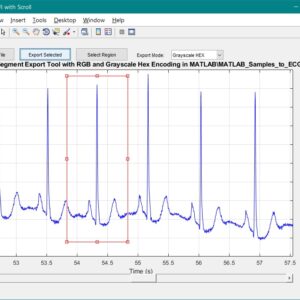
A Dual-Mode ECG Segment Export Tool with RGB and Grayscale Hex Encoding in MATLAB
Project Details :
Electrocardiography (ECG) is a vital non-invasive diagnostic technique used to record the electrical activity of the heart. With increasing emphasis on digital healthcare and remote diagnostics, automated and efficient ECG data handling systems are becoming crucial. This work presents a MATLAB-based Graphical User Interface (GUI) framework designed for interactive ECG waveform analysis, segment selection, image generation, and hexadecimal encoding. The system accepts standard ECG data files in .txt format, processes them for visual inspection, and provides an intuitive scrollable interface to examine long-duration signals. A region of interest can be manually selected using a resizable rectangle tool. Upon selection, the user can export the waveform as a clean image (without axis ticks, titles, or grid lines) in a standardized resolution of 256×256 pixels. To accommodate further integration with embedded systems, AI pipelines, or hardware implementations, the application allows users to convert the exported image into either grayscale or RGB hexadecimal representations. The system supports two modes: RGB HEX (outputs R.txt, G.txt, B.txt) and Grayscale HEX (outputs Grayscale.txt), where each pixel’s intensity is encoded in two-digit hexadecimal format. This dual-format capability is controlled via a dropdown menu for easy toggling. The GUI is fully compatible with MATLAB R2018a and includes legacy support by replacing newer functions (such as writematrix) with older equivalents like dlmwrite. The application provides a real-time, interactive ECG visualization platform while also serving as a data preparation tool for machine learning models, microcontroller visualization, and FPGA-based healthcare signal processing. Its ability to convert waveform data into structured visual and hexadecimal forms bridges the gap between clinical signal acquisition and computational processing. This flexible, open-ended tool is particularly beneficial for researchers working in biomedical signal processing, embedded systems, and AI-based ECG classification.
List of the following materials will be included with the Downloaded Backup: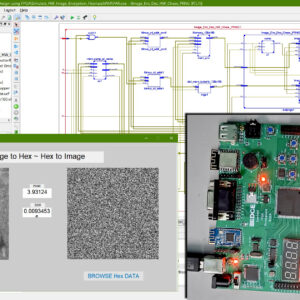
Image Encryption on FPGA Using Chaotic PRNG and LFSR: TFT Display Integration
Proposed Abstract:
Image encryption plays a crucial role in securing digital communication, especially with the rise of cyber threats and data breaches. This research focuses on implementing a Chaos-based Pseudorandom Number Generator (PRNG) for image encryption and compares its performance with Fibonacci and Galois-based Linear Feedback Shift Registers (LFSRs). The proposed system is developed using Verilog HDL and synthesized on a Xilinx Spartan-6 FPGA, with a real-time TFT display interface for encrypted and decrypted image visualization. Traditional LFSR-based PRNGs are widely used due to their simplicity and speed; however, they suffer from predictable periodicity and lower security strength. In contrast, Chaos-based PRNGs provide higher randomness and security, making them ideal for cryptographic applications. In this work, different PRNG approaches are analyzed based on randomness quality using the NIST test suite, hardware resource utilization (LUTs, FFs, power consumption), and encryption security (correlation, entropy, and key sensitivity). The Chaos-based PRNG is then integrated into a stream cipher encryption system, where image pixels are transformed using bitwise XOR and chaotic substitution-permutation operations. The encrypted images are decrypted using the inverse transformation and displayed on a TFT display, ensuring real-time validation. Experimental results confirm that the Chaos-based PRNG outperforms LFSR-based PRNGs in security strength and randomness, while maintaining efficient FPGA resource utilization. This work demonstrates a practical hardware-based image encryption system, suitable for real-time, secure multimedia applications such as IoT, medical imaging, and defense systems. Future enhancements include optimizing chaos-based PRNGs for high-speed cryptographic applications and exploring AI-based encryption techniques for enhanced security.
List of the following materials will be included with the Downloaded Backup: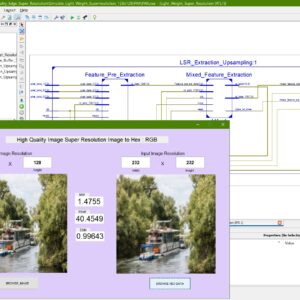
Hardware-Optimized High-Quality Super-Resolution Accelerator for Real-Time Edge Computing
Base Paper Abstract:
Super-resolution (SR) techniques have been employed to construct high-definition images from low-quality images. Various neural networks have demonstrated excellent image-reconstruction quality in SR accelerators. However, deploying SR networks on edge devices is limited by resources and power consumption induced by significant algorithm parameters, computation complexity, and external memory accesses. This work explores the hardware algorithm co-design techniques to provide an end-to-end platform with a lightweight super-resolution network (LSR) and an efficient, high-quality SR accelerator HDSuper. For algorithm design, the improved depth-wise separable convolution and pixel shuffle layers are developed to reduce network size and computation complexity by considering the hardware constraints. Also, the improved channel attention (CA) blocks enhance the image reconstruction quality. For hardware accelerator design, we design a unified computing core (UCC) combined with an efficient flattening-and allocation (F-A) mapping strategy to support various operators with high computational utilization. In addition, we design the patch computing scheme to reduce the external memory access of the hardware architecture. Based on the evaluation, the proposed algorithm achieves high-quality image reconstruction with 37.44d B PSNR. Finally, the FPGA demonstration and ASIC layout under UMC 55nm are achieved with low power consumption (2.08 W and 152mW) under the lowest hardware resources compared to the state-of-the-art works.
List of the following materials will be included with the Downloaded Backup: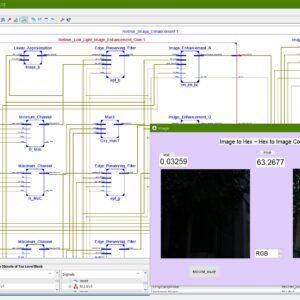
A Low Cost FPGA Implementation of Retinex Based Low-Light Image Enhancement Algorithm
Base Paper Abstract:
Real-time low-light image enhancement has several potential applications, such as advanced driver assistance systems (ADAS), remote sensing, object tracking, etc. The Retinex-based algorithms are mostly used to restore the visibility of low-light images. However, they perform complex mathematical operations over a large spatial window. Consequently, their hardware realization is tedious, and few researchers have attempted to address this problem. In this brief, we propose a Retinex-based algorithm that employs a low-cost edge-preserving filter for illumination estimation. Although certain approximations are used to curtail the hardware logic resource requirement, the quality of the enhanced image is not compromised. The proposed architecture requires only 10868 LUTs and 7409 registers when implemented on ZynQ 7 FPGA. Moreover, it can process HD images (1920×1080) at the rate of 60 frames per second (fps).
List of the following materials will be included with the Downloaded Backup:
FPGA Implementation of TFT 1.8 inch SPI 128×160 Display ROM Interface
Simple Description:
This ST7735R is a display controller used in small TFT (Thin-Film Transistor) LCD displays. It is often used in combination with microcontrollers or FPGAs to drive these displays. The controller supports the Serial Peripheral Interface mode of communication for sending commands and data to the display. This TFT display helps with a greater number of image and video processing applications. Here we have implemented this TFT display in FPGA hardware implementation using Verilog HDL with a novelty-based architecture design. Finally shown the output with TFT Display.
List of the following materials will be included with the Downloaded Backup: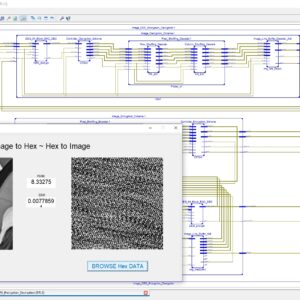
An Efficient Image Encryption Algorithm Based on Innovative DES Structure and Hyperchaotic Keys
Base Paper Abstract:
In fact, as a traditional encryption method, DES has been certified as an unsuitable tool for ciphering due to its smaller key space. Further, in concern of the real-time encryption in the current fast communication era, such as 5G, long-time as well as large computational level processes are not gotten into the consideration. As a result, an innovative encryption structure with hyperchaotic keys for efficient encryption is constructed, where the frame of DES structure is applied, the plain image is shuffled through row and column directions in the first round, and then rearranged to be 64 blocks to fit into the frame of DES structure for 4 rounds ciphering with hyperchaotic subkeys. Also, in order to encrypt the content of the image at the block level, a set of alternative S-box has been produced in this article as well. The simulation results indicate that the proposed scheme is feasible and reliable for digital image encrypting, not only a large key space can be obtained, but also the low correlation of the adjacent contents can be achieved, and further, in comparison of several existing approaches, less-computational resource can be proven as well. In particular, due to the innovative DES structure, the computational speed is significantly faster than the original DES algorithm and many other chaos-based image ciphering schemes.
List of the following materials will be included with the Downloaded Backup: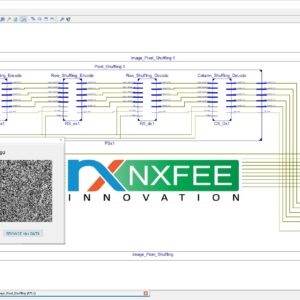
An Innovative Area Efficient Pixel Shuffling Method for Image Encryption Algorithm
Proposed Abstract:
In image processing and computer vision, pixel shuffling is a method used to increase an image's resolution without adding more parameters or network complexity. With this technique, a low-quality image's pixels are rearranged to produce an output with a better resolution. Pixel shuffling has proven successful in a number of applications, such as image synthesis, super-resolution, and style transfer. Its simplicity and efficiency make it an attractive option for tasks where increasing image resolution is essential, while avoiding the computational overhead associated with more complex architectures. The image line buffer based pixel shuffling technique presented in this study is an alternative to the classic method, which takes up more logic space in VLSI implementations. This proposed method splits and reconstructs the source photos using a 5x5 image line buffer. With the use of block interleave techniques, this pixel shuffling approach handled row and column sequence using this 5x5 picture line buffer. In conclusion, this study was compared with the PSNR and SSIM value; comparisons of logic sizes for area, latency, and power were also examined.
List of the following materials will be included with the Downloaded Backup: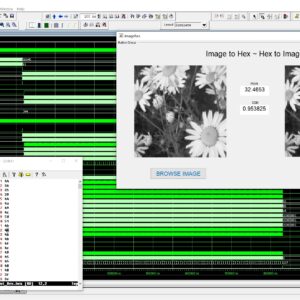
FPGA Implementation of Image Line Buffer to Split and reconstruct a 3×3 size of image pixel with using FIFO Design
Proposed Abstract:
Image line buffers are used in several kinds of image processing applications, particularly where operations must be executed on a per-line basis in order to optimize efficiency. There are many typical applications associated with this technology, including real-time video processing, image filtering, edge detection, computer vision, memory optimization, parallel processing, compression algorithms, and medical imaging. In the context of image and video processing applications, the use of image line buffers may contribute to the optimization of operations when dealing with a continuous stream of frames processed in real time. In the context of image processing, convolutional processes are often used for tasks like as image filtering and blurring. These operations are typically carried out on a per-pixel basis, wherein the value assigned to each pixel is determined by the values of its adjacent pixels. The proposed structure was created using a First-In-First-Out (FIFO) based approach, aiming to decrease the number of logic sizes and complexity in Very Large Scale Integration (VLSI) design architecture. The conversion of design images to hexadecimal and hexadecimal to image format is accomplished using MATLAB GUI applications. These applications also facilitate the comparison of Peak Signal-to-Noise Ratio (PSNR) and Structural Similarity Index Measure (SSIM) values. The internal architecture of the system is implemented using Verilog Hardware Description Language (HDL). Additionally, the simulation is conducted using Modelsim. Furthermore, the system's performance parameters, including area, delay, and power consumption, are compared with those of the Xilinx Vertex-5 Field Programmable Gate Array (FPGA).
List of the following materials will be included with the Downloaded Backup: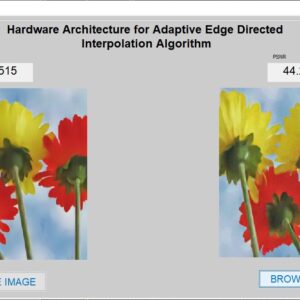
Hardware Architecture for Adaptive Edge Directed Interpolation Algorithm
Base Paper Abstract:
Demosaicking refers to the reconstruction of full color image by the incomplete color samples produced by the single-chip image sensor. So there is a need of interpolation to obtain the missing color pixels. In this work a hardware architecture has been proposed for the adaptive edge-directed interpolation algorithm which uses an edge estimator for the interpolation. The proposed hardware architecture is implemented in Verilog HDL (Hardware Description Language) and synthesized using Cadence Genus compiler with 90nm technology in typical mode. For the proposed architecture, the power dissipation is found to be 26 mW, delay is 7.2 ns and requires 2.3 mm2 area. The demosaicked images obtained using the proposed architecture is observed to have better image quality in terms of peak signal-to-noise ratio and structural similarity while comparing with existing architectures.
List of the following materials will be included with the Downloaded Backup: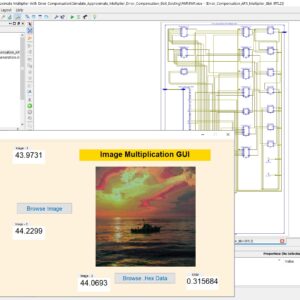
An Ultra-Efficient Approximate Multiplier with Error Compensation for Error-Resilient Applications
Base Paper Abstract:
Approximate computing is a promising paradigm for trading off accuracy to improve hardware efficiency in error-resilient applications such as neural networks and image processing. This brief presents an ultra-efficient approximate multiplier with error compensation capability. The proposed multiplier considers the least significant half of the product a constant compensation term. The other half is calculated precisely to provide an ultra-efficient hardware-accuracy tradeoff. Furthermore, a low-complexity but effective error compensation module (ECM) is presented, significantly improving accuracy. The proposed multiplier is simulated using HSPICE with 7nm tri-gate Fin FET technology. The proposed design significantly improves the energy-delay product, on average, by 77% and 54% compared to the exact and existing approximate designs. Moreover, the proposed multiplier’s accuracy and effectiveness in neural networks and image multiplication are evaluated using MATLAB simulations. The results indicate that the proposed multiplier offers high accuracy comparable to the exact multiplier in NNs and provides an average PSNR of more than 51dB in image multiplication. Accordingly, it can be an effective alternative for exact multipliers in practical error-resilient applications.
List of the following materials will be included with the Downloaded Backup: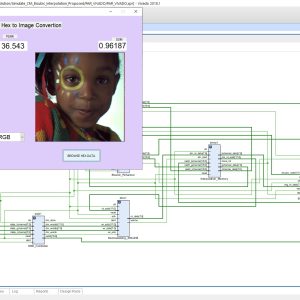
Image Demosaicking using Super Resolution Techniques
Base Paper Abstract:
Limitations do exist on capturing the full color information in a scene, apart from the resolution of captured images. Therefore, mosaic images are the preferred format in digital cameras, where incomplete set of color information is acquired. In this paper, a super resolution demosaicking (SRD) approach is proposed to reconstruct an enhanced-resolution full-color image from the observed samples, robustly and without the need for a training process. The acquisition model assumes degraded observations using known blur and noise. The reconstruction approach iteratively estimates the unknown registration parameters and the demosaicking image simultaneously. Qualitative and quantitative experiments performed on synthetic observations reveal high performance images.
List of the following materials will be included with the Downloaded Backup: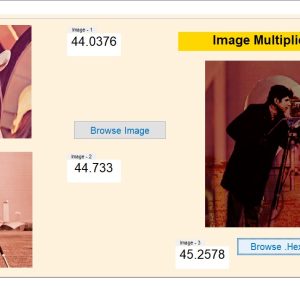
Area and Power Efficient Truncated Booth Multipliers Using Approximate Carry-Based Error Compensation
Base Paper Abstract:
Approximate computing is a promising technique to elevate the performance of digital circuits at the cost of reduced accuracy in numerous error-resilient applications. Multipliers play a key role in many of these applications. In this brief, we propose a truncation based Booth multiplier with a compensation circuit generated by selective modifications in k-map to circumvent the carry appearing from the truncated part. By judicious mapping, hardware pruning and output error reduction is achieved simultaneously. In the quest of power and accuracy trade-off, Truncated and Approximate Carry based Booth Multipliers (TACBM) are proposed with a range of designs based on truncation factor w. When compared with the state-of-the-art multipliers, TACBM outperforms in terms of accuracy and Area Power savings. TACBM (w = 10) provides with 0.02% MRED and 23% reduction in Area-Power product compared to exact Booth multiplier. The multipliers are evaluated using image blending and Multilayer perceptron (MLP) neural network and a high value of accuracy (95.63%) for MLP is achieved.
List of the following materials will be included with the Downloaded Backup: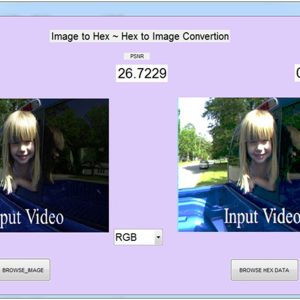
A Low Cost and High Throughtput FPGA Implementation of the Retinex Algorithm for Real Time Video Enhancement
Abstract:
For video applications in a special environment such as medical imaging, space exploration, and underwater exploration, the video captured by an image sensor is often deteriorated because of low lighting conditions. Therefore, it is necessary to enhance the part of the image that is too dark to distinguish details while maintaining the remaining part with the same brightness. The retinex algorithm is widely used to restore naturalness of a video, especially exhibiting outstanding performance in the enhancement of a dark area. However, it demands large computational complexity because of its intricate structure, such as the Gaussian filter and exponentiation operations, and consequently, it is difficult to process in real time. This article presents a low-cost and high-throughput design of the retinex video enhancement algorithm. The hardware (HW) design is implemented using a field-programmable gate array (FPGA), and it supports a throughput of 60 frames/s for a 1920 × 1080 image with negligible latency. The proposed FPGA design minimizes HW resources while maintaining the quality and the performance by using a small line buffer instead of a frame buffer, by applying the concept of approximate computing for the complex Gaussian filter, and by designing a new and nontrivial exponentiation operation. The proposed design makes it possible to significantly reduce HW resources (up to 79.22% of total resources) compared to existing systems and is compatible with commercialized devices through the standard HDMI/DVI video ports.
List of the following materials will be included with the Downloaded Backup: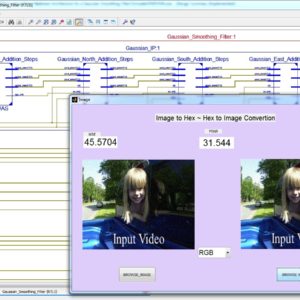
Constant Time Hardware Architecture for a Gaussian Smoothing Filter
Abstract:
In this paper a new and highly efficient hardware architecture for a bit-serial implementation of a 3*3 filter on FPGA is developed and presented. The concept is implemented on a Gaussian blur spatial filter and it can be extended to other filters with similar characteristics. The proposed Single Instruction Multiple Data (SIMD) architecture provides a constant operating time independent of the size of the given image while the arithmetic operations are limited to the operations of addition. The Multiple Instruction Multiple Data (MIMD) performance is achieved in a near fraction of the cost. Thus, the hardware’s utilization is optimized. The total time needed to perform the filter of interest on the given image is solely dependent on the working clock frequency. The proposed design is evaluated using a small image and is implemented on two FPGA families with various sizes of an image. Also, it is compared with other architectures.
List of the following materials will be included with the Downloaded Backup: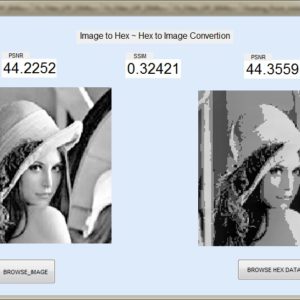
Floating-point discrete wavelet transform-based image compression on FPGA
Abstract:
In the era of data transmission through internet, image compression is considered an active research topic, decreasing the amount of data storage for faster data transfer. In this paper, the hardware implementation of an image compression system using Discrete Wavelet Transform (DWT) is presented. The transposed form Finite Impulse Response (FIR) filter is employed for performing the convolution process, on which the DWT is based. The design is generic to fit for different wavelet types and symmetric to expand for filters of multiple taps. The architecture is implemented on FPGA using IEEE-754 single precision. Floating-Point representation offered higher precision and better accuracy compared to scaled integer values. The proposed hardware design is implemented on Virtex 5 FPGA achieving 243.6 MHz clock frequency.
List of the following materials will be included with the Downloaded Backup: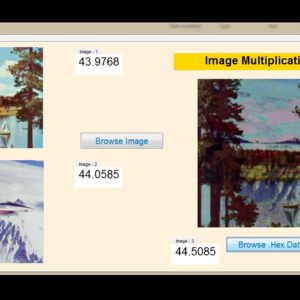
Design of ultra-low power consumption approximate 4-2 compressors based on the compensation characteristic
Abstract:
Approximate computing is tentatively applied in some digital signal processing applications which have an inherent tolerance for erroneous computing results. The approximate arithmetic blocks are utilized in them to improve the electrical performance of these circuits. Multiplier is one of the fundamental units in computer arithmetic blocks. Moreover, the 4-2 compressors are widely employed in the parallel multipliers to accelerate the compression process of partial products. In this paper, three novel approximate 4-2 compressors are proposed and utilized in 8-bit multipliers. Meanwhile, an error-correcting module (ECM) is presented to promote the error performance of approximate multiplier with the proposed 4-2 compressors. In this paper, the number of the approximate 4-2 compressor’s outputs is innovatively reduced to one, which brings further improvements in the energy efficiency. Compared with the exact 4-2 compressors, the simulation results indicate that the proposed approximate compressors UCAC1, UCAC2, UCAC3 achieve 24.76%, 51.43%, and 66.67% reduction in delay, 71.76%, 83.06%, and 93.28% reduction in power and 54.02%, 79.32%, and 93.10% reduction in area, respectively. And the utilization of these proposed compressors in 8-bit multipliers brings 49.29% reduction of power consumption on average.
List of the following materials will be included with the Downloaded Backup: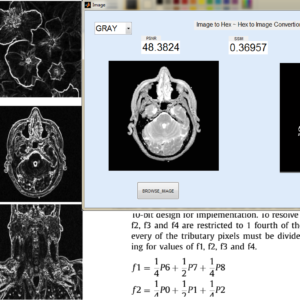
FPGA implementation of low power and high speed image edge detection algorithm
Abstract:
Image processing is a vital task in data processing system for applications in medical fields, remote sensing, microscopic imaging etc., Algorithms for processing image exist except for real time system style, hardware implementation is most popular principally. This paper presents a design for Sobel filter based edge detection on Field Programmable Gate Array (FPGA) board. Hardware implementation of the Sobel edge detection algorithm is chosen because it presents an honest scope for similarity over software package. On the opposite hand, Sobel edge detection will work with less deterioration in high level of noise. Edges are primarily the noticeable variation of intensities in a picture. Edges facilitate to spot the placement of an object and also the boundary of a selected entity within the image. It conjointly helps in feature extraction and pattern recognition. Hence, edge detection is of nice importance in pc vision. The planned design for edge detection exploitation Sobel algorithm is designed using structural Verilog lipoprotein synthesized exploitation Cadence Genus and enforced using Cadence Innovus. The practicality of the planning is verified exploitation normal pictures by FPGA implementation. The proposed architecture reduce the power, delay and space complexity compare to three existing architectures.
List of the following materials will be included with the Downloaded Backup: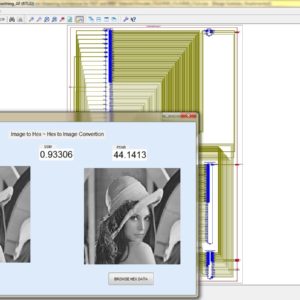
Area-Time Efficient Streaming Architecture for FAST and BRIEF Detector
Abstract:
The combination of FAST corners and BRIEF descriptors provide highly robust image features. We present a novel detector for computing the FAST-BRIEF features from streaming images. To reduce the complexity of the BRIEF descriptor, we employ an optimized adder tree to perform summation by accumulation on streaming pixels for the smoothing operation. Since the window buffer used in existing designs for computing the BRIEF point-pairs are often poorly utilized, we propose an efficient sampling scheme that exploits register reuse to minimize the number of registers. Synthesis results based on 65- nm CMOS technology show that the proposed FAST-BRIEF core achieves over 40% reduction in area-delay product compared to the baseline design. In addition, we show that the proposed architecture can achieve 1.4x higher throughput than the baseline architecture with slightly lower energy consumption.
List of the following materials will be included with the Downloaded Backup: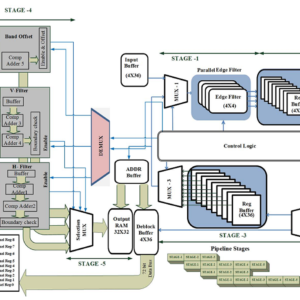
Design and Implementation of Efficient Streaming Deblocking and SAO Filter for HEVC Decoder
We have also Code for 720 x 576 Image Resolution using 64 x 64 Block Size of HEVC. Cost of this Update work in High Resolution Rs. 45,000/- ( Rs. 45,000/- + Rs. 35,000/- ) : Total Cost : Rs. 80,000/-
Abstract:
This paper aims to design an efficient mixed serial five-stage pipeline processing hardware architecture of deblocking filter (DBF) and sample adaptive offset (SAO) filter for high efficiency video coding decoder. The proposed hardware is designed to increase the throughput and reduce the number of clock cycles by processing the pixels in a stream of 4 × 36 samples in which edge filters are applied vertically in a parallel fashion for processing of luma/chroma samples. Subsequently these filtered pixels are transposed and reprocessed through vertical filter for horizontal filtering in a pipeline fashion. Finally, the filtered block transposed back to the original orientation and forwarded to a three-stage pipeline SAO filter. The proposed architecture is implemented in field programmable gate array and application specific integrated circuit platform using 90-nm library. Experimental results illustrate that the proposed DBF and SAO architecture decreases the processing cycles (172) required for processing each 64 × 64 or large coding unit compared with the state-of-the-art literature with the increase of gate count (593.32K) including memory. The results show that the throughput of the proposed filter can successfully decode ultrahigh definition video sequences at 200 frames/s at 341 MHz.
List of the following materials will be included with the Downloaded Backup: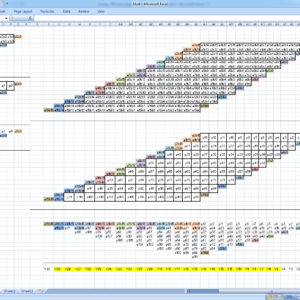
Energy-Efficient Approximate Multiplier Design using Bit Significance-Driven Logic Compression
Abstract:
Approximate arithmetic has recently emerged as a promising paradigm for many imprecision-tolerant applications. It can offer substantial reductions in circuit complexity, delay and energy consumption by relaxing accuracy requirements. In this paper, we propose a novel energy-efficient approximate multiplier design using a significance-driven logic compression (SDLC) approach. Fundamental to this approach is an algorithmic and configurable lossy compression of the partial product rows based on their progressive bit significance. This is followed by the commutative remapping of the resulting product terms to reduce the number of product rows. As such, the complexity of the multiplier in terms of logic cell counts and lengths of critical paths is drastically reduced. A number of multipliers with different bit-widths (4-bit to 128-bit) are designed in System Verilog and synthesized using Synopsys Design Compiler. Post-synthesis experiments showed that up to an order of magnitude energy savings, and reductions of 65% in critical delay and almost 45% in silicon area can be achieved for a 128-bit multiplier compared to an accurate equivalent. These gains are achieved with low accuracy losses estimated at less than 0.00071 mean relative error. Additionally, we demonstrate the energy-accuracy trade-offs for different degrees of compression, achieved through configurable logic clustering. In evaluating the effectiveness of our approach, a case study image processing application showed up to 68.3% energy reduction with negligible losses in image quality expressed as peak signal-to-noise ratio (PSNR).
List of the following materials will be included with the Downloaded Backup: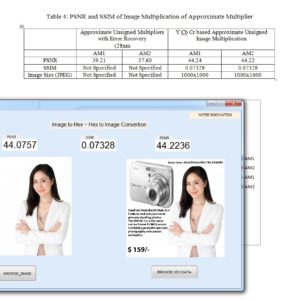
Low-Power Approximate Unsigned Multipliers with Configurable Error Recovery
Abstract:
Approximate circuits have been considered for applications that can tolerate some loss of accuracy with improved performance and/or energy efficiency. Multipliers are key arithmetic circuits in many of these applications including digital signal processing (DSP). In this paper, a novel approximate multiplier with a low power consumption and a short critical path is proposed for high-performance DSP applications. This multiplier leverages a newly designed approximate adder that limits its carry propagation to the nearest neighbors for fast partial product accumulation. Different levels of accuracy can be achieved by using either OR gates or the proposed approximate adder in a configurable error recovery. The multipliers using these two error reduction strategies are referred to as approximate multiplier 1 (AM1) and approximate multiplier 2 (AM2), respectively. Both AM1 and AM2 have a low mean error distance, i.e., most of the errors are not significant in magnitude. Compared to a Wallace multiplier optimized for speed, an 8×8 AM1 with 4 MSBs (most significant bits) for error reduction and synthesized using a 28 nm CMOS process shows a 60% reduction in delay (when optimized for delay) and a 42% reduction in power dissipation (when optimized for area). In a 16×16 design, half of the least significant partial products are truncated for AM1 and AM2, which are thus denoted as TAM1 and TAM2, respectively. Compared with the Wallace multiplier, TAM1 and TAM2 save from 50% to 66% in power, when optimized for area. Compared to existing approximate multipliers, AM1, AM2, TAM1 and TAM2 show significant advantages in accuracy with a high performance. AM2 has a better accuracy compared to AM1 but with a longer delay and higher power consumption. Image processing applications including image sharpening and smoothing are considered to show the quality of the approximate multipliers in error-tolerant applications. By utilizing an appropriate error recovery, the proposed approximate multipliers achieve similar processing accuracy as traditional exact multipliers, but with significant improvements in power.
List of the following materials will be included with the Downloaded Backup: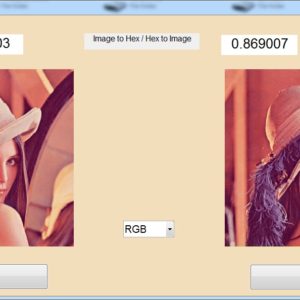
A Real-Time FHD Learning Based Super Resolution System Without a Frame Buffer
Abstract:
The main aim of the Single image (SR) super-resolution is to generate (HR) high-resolution images from (LR) low-resolution images. This paper briefly presents a concept of real time super resolution method of FHD based image extended and scaling processor. The super resolution system includes three blocks of operations. The first is a low-frequency interpolation stage, where bicubic interpolation is used for reconstructing the low-frequency parts of HR images. The second stage generates high-frequency patches by choosing the highest related pre-trained regression function according to each HR low frequency patch. In the third stage, with the high-frequency information, the low-frequency image patches are enhanced and overlapped to construct the SR result. These operations for gaining a high-frequency result are applied to the Y-luminance channel only, while the high-resolution Cb and Cr channels are generated by bicubic interpolation. The proposed system generates the output image resolution of 1920 X 1080 (FHD) by the input of 800 X 800 image size. The proposed architecture performs an anchored neighborhood regression algorithm that generates a high-resolution image from a low-resolution image input using only numbers of line buffers. Finally, super resolution technique is implemented in VHDL and Synthesized in the XILINX VERTEX-5 FPGA and shown the comparison for power, area and delay reports.
List of the following materials will be included with the Downloaded Backup: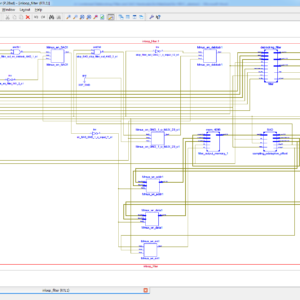
A Combined Deblocking Filter and SAO Hardware Architecture for HEVC
Abstract:
The latest video coding standard high-efficiency video coding (HEVC) provides 50% improvement in coding efficiency compared to H.264/AVC to meet the rising demands for video streaming, better video quality, and higher resolution. The deblocking filter (DF) and sample adaptive offset (SAO) play an important role in the HEVC encoder, and the SAO is newly adopted in HEVC. Due to the high throughput requirement in the video encoder, design challenges such as data dependence, external memory traffic, and on-chip memory area become even more critical. To solve these problems, we first propose an interlacing memory organization on the basis of quarter-LCU to resolve the data dependence between vertical and horizontal filtering of DF. The on-chip SRAM area is also reduced to about 25% on the basis of quarter-LCU scheme without throughput loss. We also propose a simplified bitrate estimation method of rate-distortion cost calculation to reduce the computational complexity in the mode decision of SAO. Our proposed hardware architecture of combined DF and SAO is designed for the HEVC intraencoder, and the proposed simplified bitrate estimation method of SAO can be applied to both intra- and intercoding. As a result, our design can support ultrahigh definition 7680 × 4320 at 40 f/s applications at merely 182 MHz working frequency. Total logic gate count is 103.3 K in 65 nm CMOS process.
List of the following materials will be included with the Downloaded Backup: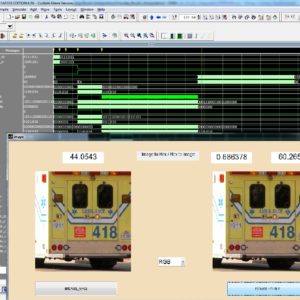
Efficient Super Resolution Algorithm using Overlapping Bi-cubic Interpolation
Abstract:
In practical CCTV applications, there are problems of the camera with low resolution, camera fields of view, and lighting environments. These could degrade the image quality and it is difficult to extract useful information for further processing. Super-resolution techniques have been proposed widely by the researchers. However, many approaches are complex and are difficult to use in practical scenarios. In this paper, we propose an efficient Super-resolution algorithm using overlapping bi-cubic for hardware implementation. Experimental results are verified using processing time and reconstructed images that can be used in real time applications.
List of the following materials will be included with the Downloaded Backup:
Dual Quality 4:2 Compressor for Utilizing in Dynamic Accuracy Configurable Multipliers
Abstract:
In this paper, we propose four 4:2 compressors, which have the flexibility of switching between the exact and approximate operating modes. In the approximate mode, these dual-quality compressors provide higher speeds and lower power consumptions at the cost of lower accuracy. Each of these compressors has its own level of accuracy in the approximate mode as well as different delays and power dissipations in the approximate and exact modes. Using these compressors in the structures of parallel multipliers provides configurable multipliers whose accuracies (as well as their powers and speeds) may change dynamically during the runtime. The proposed multiplier saves few adder circuits in partial products, and this proposed multiplier is evaluated with an image processing application. In existing thing, to using this multiplier to design image processing evaluation on only luminance based application, but here the proposed work is modified with Gaussian noise reduction with luminance and chrominance based application, this design to implemented in VHDL, and synthesized in Xilinx S6LX9 FPGA and shown the power, area and delay reports.
List of the following materials will be included with the Downloaded Backup:
VLSI Implementation of an Edge-Oriented Image Scaling Processor
Abstract:
Image scaling is a very important technique and has been widely used in many image processing applications. In this paper, we present an edge-oriented area-pixel scaling processor. To achieve the goal of low cost, the area-pixel scaling technique is implemented with a low-complexity VLSI architecture in our design. A simple edge catching technique is adopted to preserve the image edge features effectively so as to achieve better image quality. Compared with the previous low-complexity techniques, our method performs better in terms of both quantitative evaluation and visual quality. The seven-stage VLSI architecture of our image scaling processor contains 10.4-K gate counts and yields a processing rate of about 200 MHz by using TSMC 0.18- m technology.
List of the following materials will be included with the Downloaded Backup:
Design of Power and Area Efficient Approximate Multipliers
Abstract:
Approximate computing can decrease the design complexity with an increase in performance and power efficiency for error resilient applications. This brief deals with a new design approach for approximation of multipliers. The partial products of the multiplier are altered to introduce varying probability terms. Logic complexity of approximation is varied for the accumulation of altered partial products based on their probability. The proposed approximation is utilized in two variants of 16-bit multipliers. Synthesis results reveal that two proposed multipliers achieve power savings of 72% and 38%, respectively, compared to an exact multiplier. They have better precision when compared to existing approximate multipliers. Mean relative error figures are as low as 7.6% and 0.02% for the proposed approximate multipliers, which are better than the previous works. Performance of the proposed multipliers is evaluated with an image processing application, where one of the proposed models achieves the highest peak signal to noise ratio.
List of the following materials will be included with the Downloaded Backup:
A Deblocking Filter Hardware Architecture for the High Efficiency Video Coding Standard
The new deblocking filter (DF) tool of the next generation High Efficiency Video Coding (HEVC) standard is one of the most time consuming algorithms in video decoding. In order to achieve real-time performance at low-power consumption, we developed a hardware accelerator for this filter. This paper proposes high throughput hardware architecture for HEVC deblocking filter employing hardware reuse to accelerate filtering decision units with a low area cost. Our architecture achieves either higher or equivalent throughput with 5X-6X lower area compared to state of-the-art deblocking filter architectures. The proposed architecture of this paper analysis the logic size, area and power consumption using Xilinx 14.2.
List of the following materials will be included with the Downloaded Backup:
Low Power FPGA Design Using Memoization Based Approximate Computing
Field-programmable gate arrays (FPGAs) are increasingly used as the computing platform for fast and energy efficient execution of recognition, mining, and search applications. Approximate computing is one promising method for achieving energy efficiency. Compared with most prior works on approximate computing, which target approximate processors and arithmetic blocks, this paper presents an approximate computing methodology for FPGA-based design. It studies memoization as a method for approximation on FPGA and analyzes different architectural and design parameters that should be considered. The proposed design flow leverages on high-level synthesis to enable memoization-based microarchitecture generation, thus also facilitating a C-to-register-transfer-level synthesis. When compared with the previous approaches of bit-width truncation and approximate multipliers, memoization-based approximate computation on FPGA achieves a significant dynamic power saving (around 20%) with very small area overhead (<5%) and better power-to-signal noise ratio values for the studied image processing benchmarks. The proposed architecture of this paper is verified using vivado HLS..
List of the following materials will be included with the Downloaded Backup:
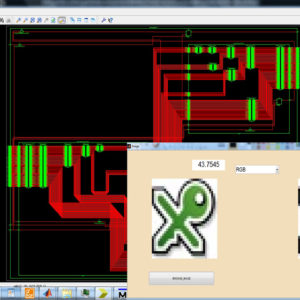
A Computation and Energy Reduction Technique for HEVC Discrete Cosine Transform
In this paper, a novel computation and energy reduction technique for High Efficiency Video Coding (HEVC) Discrete Cosine Transform (DCT) for all Transform Unit (TU) sizes is proposed. The proposed technique reduces the computational complexity of HEVC DCT significantly at the expense of slight decrease in PSNR and slight increase in bit rate by only calculating several pre-determined low frequency coefficients of TUs and assuming that the remaining coefficients are zero. It reduced the execution time of HEVC HM software encoder up to 12.74%, and it reduced the execution time of DCT operations in HEVC HM software encoder up to 37.27%. In this paper, a low energy HEVC 2D DCT hardware for all TU sizes is also designed and implemented using Verilog HDL. The proposed hardware, in the worst case, can process 53 Ultra HD (7680x4320) video frames per second. The proposed technique reduced the energy consumption of this hardware up to 18.9%. Therefore, it can be used in portable consumer electronics products that require a real-time HEVC encoder. The proposed architecture of this paper analysis the logic size, area and power consumption using Xilinx 14.2.
List of the following materials will be included with the Downloaded Backup:
Block Interleaver Design for High Data Rate Wireless Networks
With increasing data rates in wireless communication, quality of service (QoS) has become a major issue. This is more with fading channels transmitting huge volumes of data. QoS is degraded by inter-symbol interference (ISI) and related errors. One of the simplest and convenient techniques to overcome such errors is interleaving, which is used efficiently in wireless applications. It has found applications for combating burst errors that creeps up in the channel during transmission. In this paper, an efficient model of a block interleaver using a hardware description language (Verilog) is proposed. The proposed technique reduces consumption of FPGA resources to a large extent, which implies low power consumption. The proposed architecture of this paper analysis the logic size, area and power consumption using Xilinx 14.2.
List of the following materials will be included with the Downloaded Backup: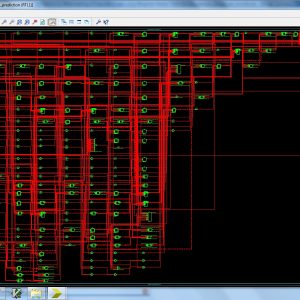
A VLSI Architecture for Watermarking of Gray scale Images using Weighted Median Prediction
Abstract:
Watermarking the digital data is a familiar technique to authenticate and resolve the copyright issues of multimedia data. This paper proposes a new VLSI architecture for watermarking grayscale images using weighted median prediction operation, as this mechanism will have a minimum computation complexity. In this VLSI based data hiding process the secret digital signature is hidden in the host image and analyzed with the PSNR value and Payload capacity.
List of the following materials will be included with the Downloaded Backup: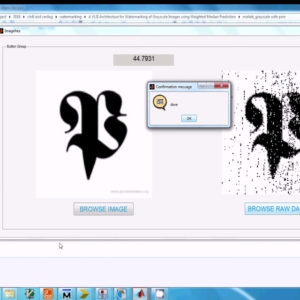
VLSI Implementation of Efficient Image Watermarking Algorithm
Abstract:
The watermarking is the important multimedia content for authentication and security in nowadays. We are proposed to implement the watermarking in FPGA with VLSI architecture. And also use the Haar discrete wallet transform and bit plane slicing for creating the water marking images and extracted watermark images. The area, power, delay of the proposed architecture is analysis using Xilinx 14.2.
List of the following materials will be included with the Downloaded Backup: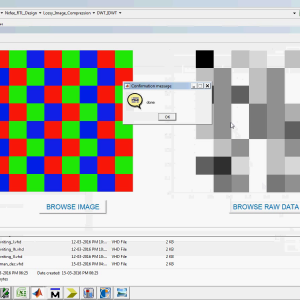
VLSI-Oriented Lossy Image Compression Approach using DA-Based 2D-Discrete Wavelet
We introduced a Discrete Wavelet Transform (DWT) based VLSI-oriented lossy image compression approach, widely used as the core of digital image compression. Here, Distributed Arithmetic (DA) technique is applied to determine the wavelet coefficients, so that the number of arithmetic operation can be reduced substantially. As well, the compression rate is enhanced with the aid of introducing RW block that blocks some of the coefficients obtained from the high pass filter to zero. Subsequently, Differential Pulse-Code Modulation (DPCM) and huffman-encoding are applied to acquire the binary sequence of the image. The proposed architecture of this paper analysis the logic size, area and power consumption using Xilinx 14.2.
List of the following materials will be included with the Downloaded Backup: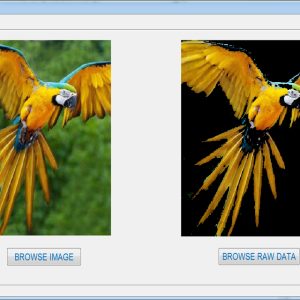
JF-Cut: A Parallel Graph Cut Approach for Large-Scale Image and Video
Graph cut has proven to be an effective scheme to solve a wide variety of segmentation problems in vision and graphics community. The main limitation of conventional graph-cut implementations is that they can hardly handle large images or videos because of high computational complexity. Even though there are some parallelization solutions, they commonly suffer from the problems of low parallelism (on CPU) or low convergence speed (on GPU). In this paper, we present a novel graph-cut algorithm that leverages a parallelized jump flooding technique and an heuristic push-relabel scheme to enhance the graph-cut process, namely, back-and-forth relabel, convergence detection, and block-wise push-relabel. The entire process is parallelizable on GPU, and outperforms the existing GPU-based implementations in terms of global convergence, information propagation, and performance. We design an intuitive user interface for specifying interested regions in cases of occlusions when handling video sequences. Experiments on a variety of data sets, including images (up to 15 K×10 K), videos (up to 2.5K×1.5K×50), and volumetric data, achieve highquality results and a maximum 40-fold (139-fold) speedup over conventional GPU (CPU-)-based approaches.
List of the following materials will be included with the Downloaded Backup: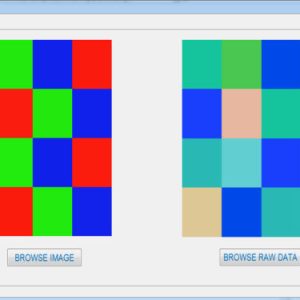
A New Parallel VLSI Architecture for Real-time Electrical Capacitance Tomography
This paper presents a fixed-point reconfigurable parallel VLSI hardware architecture for real-time Electrical Capacitance Tomography (ECT). Another FPGA module performs the inverse steps of the tomography algorithm. A dual port built-in memory banks store the sensitivity matrix, the actual value of the capacitances, and the actual image with RGB format. A two dimensional (2D) core multiprocessing elements (PE) engine intercommunicates with these memory banks via parallel buses. We are focus only on the FPGA module because the design is decide the power consumption and cost. The proposed architecture of this paper analysis the logic size, area and power consumption using Xilinx 14.2.
List of the following materials will be included with the Downloaded Backup:
Design and Analysis of Approximate Compressors for Multiplication
Inexact computing is particularly interesting for computer arithmetic designs. Implementation of 8X8 truncated multipliers using Very High Speed Integrated Circuit Hardware Description Language (VHDL). Truncated multipliers can be used in the image multiplication application. This multiplier is automatically truncating the output and reduces the power consumption and are comparing to other multipliers. The proposed architecture of this paper analysis the logic size, area and power consumption using Xilinx 14.2.
List of the following materials will be included with the Downloaded Backup:
Fully Pipelined Low-Cost and High-Quality Color Demosaicking VLSI Design for Real-Time Video Applications
This system presents a fully pipelined color demosaicking design. To improve the quality of reconstructed images, a linear deviation compensation scheme was created to increase the correlation between the interpolated and neighboring pixels. Furthermore, immediately interpolated green color pixels are first to be used in hardware-oriented color demosaicking algorithms, which efficiently promoted the quality of the reconstructed image. A boundary detector and boundary mirror machine were added to improve the quality of pixels located in boundaries. In addition, a hardware sharing technique was used to reduce the hardware costs of three interpolators. Finally these are implemented and get the simulated result is compared to the previous architecture. The code are simulated and power, area, cost are taken using Xilinx 14.2 software and MATLAB. Compared with the previous low complexity designs, this work has the benefits in terms of low cost, low power consumption, and high performance.
List of the following materials will be included with the Downloaded Backup:
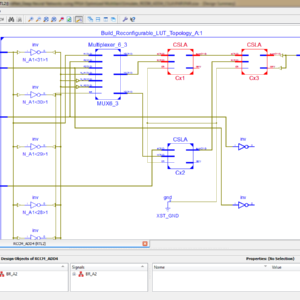
AddNet: Deep Neural Networks Using FPGA-Optimized Multipliers
Abstract:
Low-precision arithmetic operations to accelerate deep-learning applications on field-programmable gate arrays (FPGAs) have been studied extensively, because they offer the potential to save silicon area or increase throughput. However, these benefits come at the cost of a decrease in accuracy. In this article, we demonstrate that reconfigurable constant coefficient multipliers (RCCMs) offer a better alternative for saving the silicon area than utilizing low-precision arithmetic. RCCMs multiply input values by a restricted choice of coefficients using only adders, subtractors, bit shifts, and multiplexers (MUXes), meaning that they can be heavily optimized for FPGAs. We propose a family of RCCMs tailored to FPGA logic elements to ensure their efficient utilization. To minimize information loss from quantization, we then develop novel training techniques that map the possible coefficient representations of the RCCMs to neural network weight parameter distributions. This enables the usage of the RCCMs in hardware, while maintaining high accuracy. We demonstrate the benefits of these techniques using AlexNet, ResNet-18, and ResNet-50 networks. The resulting implementations achieve up to 50% resource savings over traditional 8-bit quantized networks, translating to significant speedups and power savings. Our RCCM with the lowest resource requirements exceeds 6-bit fixed point accuracy, while all other implementations with RCCMs achieve at least similar accuracy to an 8-bit uniformly quantized design, while achieving significant resource savings.
List of the following materials will be included with the Downloaded Backup:
In-Field Test for Permanent Faults in FIFO Buffers of NoC Routers
Abstract:
This brief proposes an on-line transparent test technique for detection of latent hard faults which develop in first input first output buffers of routers during field operation of NoC. The technique involves repeating tests periodically to prevent accumulation of faults. A prototype implementation of the proposed test algorithm has been integrated into the router-channel interface and on-line test has been performed with synthetic self-similar data traffic. The performance of the NoC after addition of the test circuit has been investigated in terms of throughput while the area overhead has been studied by synthesizing the test hardware. In addition, an on-line test technique for the routing logic has been proposed which considers utilizing the header flits of the data traffic movement in transporting the test patterns.
List of the following materials will be included with the Downloaded Backup:[us_separator type=”short” icon=”fa-star-o”]
[vc_row_inner columns_type=”small”][vc_column_inner][vc_column_text]
[vc_custom_heading text=”Terms & Conditions:” font_container=”tag:h2|font_size:22|text_align:left” google_fonts=”font_family:Droid%20Sans%3Aregular%2C700|font_style:700%20bold%20regular%3A700%3Anormal”]
- Customer are advice to watch the project video file output, before the payment to test the requirement, correction will be applicable.
- Once customers will paid amount, it will not refund at any circumstances, because its research investment, So must check output video, if satisfied output then customers pay amount.
- After payment, if any correction in the Project is accepted, but requirement changes is applicable with updated charges based upon the requirement.
- After payment the student having doubts, correction, software error, hardware errors, coding doubts are accepted.
- Online support will not be given more than 5 times.
- Extra Charges For duplicate bill copy. Bill must be paid in full, No part payment will be accepted.
- After payment, to must send the payment receipt to our email id.
- Powered by NXFEE INNOVATION, Pondicherry.
[/vc_column_text][/vc_column_inner][/vc_row_inner]
[us_separator type=”short” icon=”fa-star-o”]
[vc_row_inner columns_type=”small”][vc_column_inner][vc_column_text]
[vc_custom_heading text=”Payment Method:” font_container=”tag:h2|font_size:22|text_align:left” google_fonts=”font_family:Droid%20Sans%3Aregular%2C700|font_style:700%20bold%20regular%3A700%3Anormal”]
- Pay Add to Cart Method on this Page
- Deposit Cash/Cheque on our a/c.
- Pay Google Pay/Phone Pay : +91 9789443203
- Send Cheque through courier
- Visit our office directly
[/vc_column_text][/vc_column_inner][/vc_row_inner]
[vc_row_inner columns_type=”small”][vc_column_inner][vc_column_text]
[vc_custom_heading text=” International Payment Method:” font_container=”tag:h2|font_size:22|text_align:left” google_fonts=”font_family:Droid%20Sans%3Aregular%2C700|font_style:700%20bold%20regular%3A700%3Anormal”]
- Pay using Paypal : Click here to get NXFEE-PayPal link
[/vc_column_text][/vc_column_inner][/vc_row_inner]
[us_separator type=”short” icon=”fa-star-o”]
[vc_row_inner][vc_column_inner width=”1/2″][vc_custom_heading text=”Bank Accounts” font_container=”tag:h2|font_size:22|text_align:left” google_fonts=”font_family:Droid%20Sans%3Aregular%2C700|font_style:700%20bold%20regular%3A700%3Anormal”][vc_column_text]
HDFC BANK ACCOUNT:
- NXFEE INNOVATION,
HDFC BANK, MAIN BRANCH, PONDICHERRY-605004.
INDIA,
ACC NO. 50200013195971,
IFSC CODE: HDFC0000407.
[/vc_column_text][/vc_column_inner][vc_column_inner width=”1/2″]
[vc_row_inner][vc_column_inner width=”1/2″][vc_custom_heading text=” ” font_container=”tag:h2|font_size:22|text_align:left” google_fonts=”font_family:Droid%20Sans%3Aregular%2C700|font_style:700%20bold%20regular%3A700%3Anormal”]
[vc_column_text]
“BUY VLSI PROJECTS ON ON-LINE”
AND
REFER YOUR FRIENDS
EARN Rs.1,000/- per VLSI Projects
[/vc_column_text]
[/vc_column_inner][/vc_row_inner][/vc_column][/vc_row][vc_row height=”auto”][vc_column][us_separator size=”small” icon=”fa-star-o”]
[/vc_column][/vc_row]
Copyright © 2026 Nxfee Innovation.